
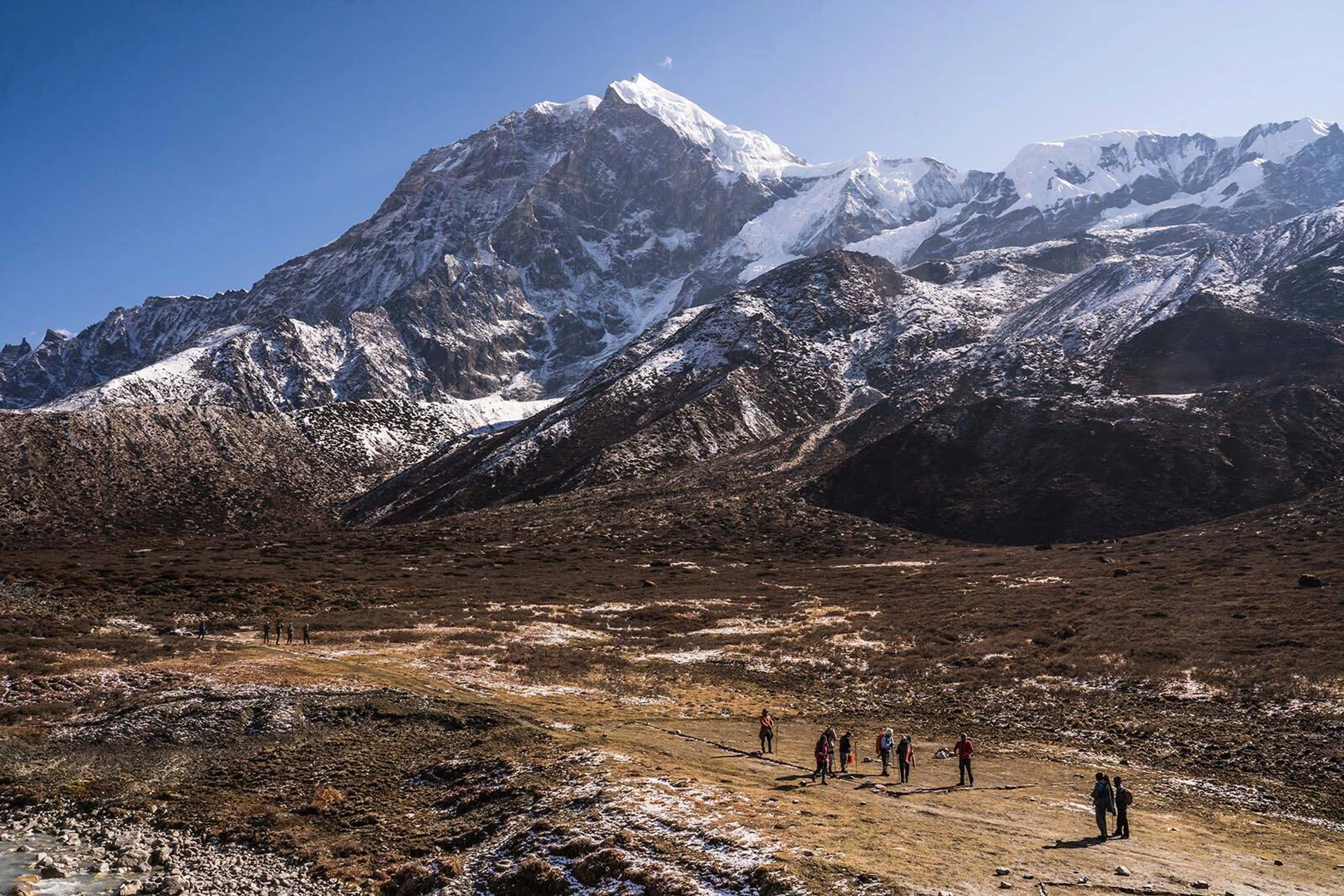
How Difficult is the Goechala Trek? A Realistic Guide for First-Time Trekkers
Introduction: This is Not Just Another Trekking Holiday
For many international travellers, trekking in India often begins with a dream—standing face-to-face with the Himalayas. And among all Himalayan trekking routes, the Goechala Trek in Sikkim stands apart. It offers one of the closest, most dramatic views of Mount Kanchenjunga, the third-highest mountain in the world, without requiring technical climbing.
But here’s the truth that most blogs soften: Goechala is not an easy trek.
It is often described as “moderate to difficult,” but that label doesn’t fully capture the experience. The challenge is not in technical climbing—there are no ropes or mountaineering skills required—but in the combination of altitude, distance, terrain, and sustained physical effort over multiple days.
Over roughly 8–11 days and 70–90 km of trekking, you move through dense forests, steep ascents, alpine meadows, and eventually into high-altitude glacial terrain.
This guide is designed specifically for first-time Himalayan trekkers and foreign travellers, especially those discovering India through curated journeys like ExperienceHimalaya. It doesn’t romanticize the trek—it prepares you for it.
Because the Goechala trekking experience is not about whether you can do it.
It’s about whether you’re ready to do it right.
What Actually Makes the Goechala Trek Difficult?
At first glance, the Goechala Trek may not look extreme. There are no vertical climbs, no technical sections, and no need for specialized mountaineering equipment. But difficulty in Himalayan trekking is rarely about technicality—it is about accumulation.
Table: Difficulty Breakdown of Goechala Trek
|
Factor |
Reality on the Trek |
Why It Matters |
|
Altitude |
Up to ~4,600–4,900 m |
Oxygen levels drop significantly |
|
Duration |
8–11 days |
Fatigue builds gradually |
|
Distance |
~70–90 km |
Long daily trekking hours |
|
Terrain |
Forest, steep climbs, rocky paths |
Constant physical adaptation |
|
Remoteness |
High |
Limited exit options |
The first thing to understand is that difficulty builds slowly. The initial days—walking through forest trails from Yuksom to Sachen and Tshoka—can feel manageable, even enjoyable. But that’s deceptive.
By the time you reach Dzongri (around 4,000 m), the trek shifts dramatically. The air becomes thinner, your pace slows down, and even small inclines begin to feel exhausting.
This is where many first-time trekkers misjudge the trek. They expect one “hard day.” Instead, Goechala delivers continuous moderate strain, which becomes intense only because it is sustained over time.
And then comes the summit push—often the longest and most demanding day, involving 10–14 hours of trekking in cold, thin air, often starting before sunrise.
So the real answer is this:
Goechala is difficult not because of one extreme challenge—but because of everything combined.
The Trek Route: What You Actually Experience Day by Day
Understanding the route is essential to understanding the difficulty. This is not a single ascent—it is a gradual transition through multiple ecosystems, each adding a new layer of physical and mental demand.
The trek begins in Yuksom (around 1,700–1,800 m), a quiet mountain village that serves as the gateway to the Kanchenjunga National Park.
From here, the journey unfolds in stages.
Table: Typical Goechala Trekking Itinerary
|
Day |
Route |
Altitude |
|
Day 1 |
Arrival at Yuksom |
~1,800 m |
|
Day 2 |
Yuksom → Sachen |
~2,200 m |
|
Day 3 |
Sachen → Tshoka |
~3,000 m |
|
Day 4 |
Tshoka → Dzongri |
~4,000 m |
|
Day 5 |
Acclimatization at Dzongri |
~4,000 m |
|
Day 6 |
Dzongri → Thansing |
~3,900 m |
|
Day 7 |
Thansing → Lamuney |
~4,100 m |
|
Day 8 |
Goechala Viewpoint (~4,600 m) |
Highest point |
What makes this route unique is how dramatically the landscape changes.
- Lower section: Dense forests, suspension bridges, river crossings
- Mid section: Rhododendron forests and steep climbs
- Upper section: Open alpine terrain, rocky moraine, glacial zones
Each shift in terrain requires your body to adapt—not just physically, but mentally.
The most critical section is the climb from Tshoka to Dzongri, where altitude gain is rapid and noticeable. This is often the point where trekkers first feel the impact of high-altitude trekking.
Then comes the summit day—from Thansing or Lamuney to the Goechala viewpoint—which is widely considered the most demanding stretch of the entire trek, both in terms of distance and altitude gain.
Altitude: The Real Reason This Trek Feels Hard
If there is one factor that defines the Goechala trekking experience, it is altitude.
The trek reaches a maximum elevation of around 4,600–4,900 meters, where oxygen levels are significantly lower than at sea level.
This is where trekking transitions from being a physical activity to a physiological challenge.
Table: Altitude vs Risk
|
Altitude Range |
Impact on Body |
|
Below 3,000 m |
Minimal impact |
|
3,000–4,000 m |
Mild symptoms possible |
|
Above 4,000 m |
High risk of AMS |
At these elevations, even basic activities—walking, breathing, sleeping—require more effort. Your body needs time to adapt, which is why acclimatization days are built into the itinerary.
But here’s something many first-time trekkers don’t expect - fitness does not protect you from altitude sickness.
You can be physically fit and still struggle with AMS (Acute Mountain Sickness). Symptoms can include:
Table: Common AMS Symptoms
|
Symptom |
What It Indicates |
|
Headache |
Early warning |
|
Nausea |
Moderate AMS |
|
Fatigue |
Reduced oxygen intake |
|
Breathlessness |
Serious concern |
The rapid altitude gain between camps—especially from Tshoka to Dzongri—makes this trek particularly demanding in terms of acclimatization.
This is also why guided trekking and structured itineraries matter so much. Proper pacing, hydration, and rest are not optional—they are essential survival strategies in high-altitude trekking.
Fitness Requirements: How Prepared Do You Really Need to Be?
One of the most common misconceptions about Himalayan trekking is that it requires extreme athletic ability. The reality is more nuanced. For a trek like Goechala, what you need is not peak fitness—but consistent endurance and recovery capacity over multiple days of trekking and camping in high-altitude conditions.
Unlike short trekking routes, this is a multi-day camping-based trekking experience, where your body does not fully recover overnight. You wake up, often slightly fatigued, and continue trekking for 5 to 8 hours daily, sometimes longer. The cumulative strain is what defines the difficulty.
Table: Practical Fitness Benchmarks for Goechala Trekking
|
Activity |
Recommended Level |
|
Running |
5 km in 35–40 minutes |
|
Stair Climbing |
10–12 floors without stopping |
|
Hiking |
6–8 km with mild elevation gain |
|
Backpack Carry |
5–6 kg comfortably for several hours |
These are not arbitrary numbers—they reflect the baseline stamina required for sustained trekking in the Himalayas.
But fitness alone is not enough. Many physically strong trekkers struggle because they lack pacing discipline. In high-altitude trekking, speed is irrelevant. What matters is rhythm—slow, steady movement that allows your body to adapt.
There is also a psychological dimension. Trekking for hours in changing terrain, often in silence, demands mental endurance. The discomfort—cold mornings, basic camping conditions, unpredictable weather—can wear you down if you are not mentally prepared.
So the real benchmark is this:
Can you stay consistent, patient, and controlled for 8–10 days of trekking in a remote Himalayan environment?
Weather and Terrain: The Unpredictable Variable in Himalayan Trekking
If altitude defines the internal challenge of the Goechala trek, weather and terrain define the external one.
This is not a controlled trekking environment. Conditions change quickly, and often without warning. A clear morning can turn into a cloudy, windy afternoon, and temperatures can drop sharply after sunset. For foreign travellers unfamiliar with Himalayan trekking conditions, this variability often comes as a surprise.
Table: Seasonal Overview for Goechala Trekking
|
Season |
Temperature Range |
Trekking Conditions |
|
Spring (Apr–May) |
-5°C to 10°C |
Clear skies, blooming rhododendrons |
|
Autumn (Oct–Nov) |
-10°C to 8°C |
Stable weather, best visibility |
|
Winter |
Below -15°C |
Harsh, not ideal for first-time trekkers |
|
Monsoon |
Variable |
Slippery trails, landslide risk |
Beyond temperature, the terrain itself evolves constantly throughout the trekking route.
In the early days, you move through dense subtropical forests, crossing wooden bridges and walking alongside rivers. As you ascend, the trail becomes steeper, transitioning into rhododendron forests and rocky paths. By the time you approach Thansing and Lamuney, the landscape opens into alpine meadows and glacial terrain, where vegetation thins and exposure increases.
This constant shift is what makes Goechala a dynamic trekking experience, but also a demanding one. Your body must adjust not just to altitude, but to changing footing, gradients, and environmental conditions.
Another often overlooked factor is wind exposure. At higher camps and near the Goechala viewpoint, wind chill can make temperatures feel significantly lower than they are. Combined with fatigue, this can amplify the perceived difficulty of the trek.
In practical terms, this means that successful trekking here depends as much on adaptability as on preparation.
Permits, Logistics, and Ground Reality for Foreign Trekkers
For international travellers, trekking in Sikkim involves a few additional layers of planning that are important to understand early.
The Goechala trek lies within the Kanchenjunga National Park, a protected region. As a result, foreign nationals require specific permits, including the Inner Line Permit (ILP), along with park entry permissions. These are typically arranged through registered trekking operators.
Table: Key Logistics Snapshot
|
Element |
Details |
|
Starting Point |
Yuksom (West Sikkim) |
|
Nearest Airport |
Bagdogra |
|
Nearest Railhead |
New Jalpaiguri (NJP) |
|
Trek Duration |
8–10 days |
|
Permit Requirement |
Mandatory (ILP + park permit) |
|
Guide Requirement |
Mandatory for foreign trekkers |
Another important reality is that this is a fully camping-based trekking route. There are no hotels or lodges along most sections of the trek. Accommodation is in tents, and facilities are basic.
This is where structured support becomes critical. From campsite setup to food, pacing, and safety, the quality of your trekking experience depends heavily on how well the logistics are managed.
For first-time Himalayan trekkers, especially those travelling internationally, this is often the difference between a stressful experience and a deeply rewarding one.
Common Mistakes First-Time Trekkers Make on Goechala
The difficulty of the Goechala trek is often misunderstood—not because the trek is unpredictable, but because trekkers approach it with incorrect assumptions.
Table: Common Trekking Mistakes and Their Impact
|
Mistake |
Outcome |
|
Underestimating altitude |
AMS symptoms, forced descent |
|
Overpacking |
Increased fatigue, slower pace |
|
Poor hydration |
Headaches, reduced performance |
|
Ignoring acclimatization |
Higher risk of trek failure |
|
Inadequate gear |
Cold stress, discomfort |
One of the most frequent mistakes is treating the trek like a physical challenge to be conquered quickly. In reality, rushing is counterproductive in high-altitude trekking. The slower you go, the better your body adapts.
Another common issue is overpacking. Many first-time trekkers carry unnecessary items, assuming they will need extra layers or gear. But every additional kilogram becomes noticeable over long trekking days.
Hydration is another critical but often neglected factor. At altitude, your body dehydrates faster, even in cold conditions. Insufficient water intake can trigger headaches and fatigue, which are often mistaken for altitude sickness.
What emerges from these patterns is a simple truth:
Most trekkers don’t struggle because the trek is too difficult—they struggle because they are not aligned with how Himalayan trekking actually works.
Preparation Strategy: Physical and Mental Readiness
Preparation for the Goechala trek should begin at least 4 to 6 weeks in advance, focusing on both physical conditioning and mental readiness.
Table: Suggested 4-Week Trekking Preparation Plan
|
Week |
Focus |
|
Week 1 |
Light cardio (walking, jogging) |
|
Week 2 |
Endurance building (long walks, stairs) |
|
Week 3 |
Loaded walks (with backpack) |
|
Week 4 |
Simulation hikes + recovery |
The goal is not to train for speed, but for sustained effort. Activities like stair climbing, long-distance walking, and moderate jogging are particularly effective for building trekking stamina.
Equally important is mental preparation. High-altitude trekking involves:
- Early starts
- Long walking hours
- Limited comfort
- Changing weather conditions
Accepting these realities in advance makes a significant difference to your overall experience.
Mental resilience in trekking is often underestimated. But on a route like Goechala, where conditions evolve daily, your ability to stay calm, patient, and adaptable is just as important as your physical fitness.
Final Reality Check: Is the Goechala Trek Right for You?
The Goechala trek is not designed for casual travellers looking for a comfortable outdoor experience. It is a serious Himalayan trekking journey, involving altitude, endurance, and a willingness to step outside your comfort zone.
It may not be the right choice if you are:
- Completely new to trekking without preparation
- Expecting luxury or easy conditions
- Uncomfortable with basic camping environments
But it is an excellent choice if you are:
- Looking for your first serious high-altitude trekking experience
- Interested in immersive, multi-day trekking in the Himalayas
- Prepared to invest time in training and preparation
For many, this trek becomes more than just a journey. It becomes a reference point—a moment where trekking shifts from being an activity to an experience of scale, patience, and perspective.
Planning Your Goechala Trek with the Right Support
Trekking to Goechala is not just about reaching a viewpoint. It is about navigating altitude, pacing your journey, and managing the realities of a remote Himalayan environment.
This is where local expertise becomes essential.
With structured itineraries, proper acclimatization planning, and experienced on-ground support, trekking in regions like Sikkim becomes significantly safer and more rewarding. For international travellers in particular, having a reliable trekking partner ensures that logistics, permits, and safety protocols are handled seamlessly.
Because in a place like Goechala, the goal is not just to complete the trek—
it is to experience it fully, without unnecessary risk.