
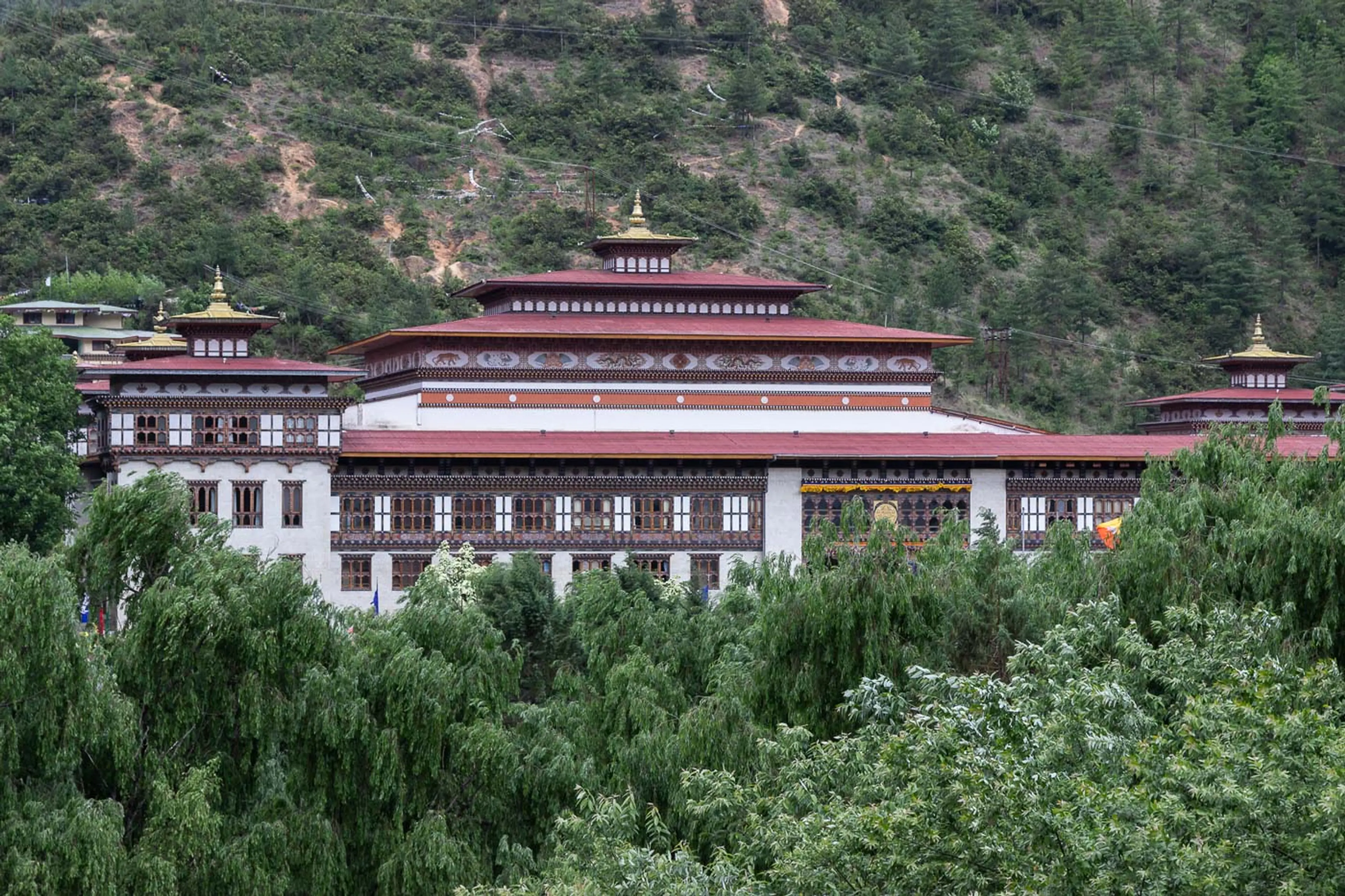
Thimpu
Modernisation with Traditional Values
Situated in the western central part of Bhutan, Thimphu (earlier spelt Thimpu) is the largest city as well as the capital of the country. Spread along a north–south axis on the west bank of the Wang Chhu river, Thimphu occupies a broad Himalayan valley that balances administrative importance with a distinctly cultural atmosphere. The city was formally declared the capital of Bhutan in 1961, a milestone that marked its transition from a quiet settlement into the political and cultural heart of the kingdom. For international travellers following a Thimphu travel guide, the city offers an accessible introduction to Bhutan’s governance, traditions, and everyday life.
Over the decades, Thimphu has gradually transformed itself from a small village in the Thimphu Valley into a thriving cosmopolis, while retaining its cultural roots. Unlike many capital cities, development here has followed a measured path, allowing traditional architecture, religious institutions, and public spaces to coexist with modern offices, cafés, and residential neighbourhoods. This rare coexistence gives Thimphu its distinctive character, where the mythical and the modern continue to live side by side without overwhelming one another. For visitors interested in places to visit in Thimphu, this balance becomes evident in the city’s streets, monasteries, markets, and civic buildings.
Thimphu is also notable for its everyday urban features, which reflect Bhutan’s unique approach to modernisation. It is one of the few cities in the country equipped with ATM facilities, making it a practical base for travellers exploring Bhutan. At the same time, Thimphu is famously the only capital city in the world without traffic lights. Although traffic lights were once installed, residents felt they lacked a human touch and removed them. Today, white-gloved traffic police manage the flow of vehicles entirely through hand gestures. This daily ritual has become one of the most recognisable images associated with the city, and photographs of this distinctive system are among the most popular visual memories visitors take home from Bhutan. For those exploring Thimphu Bhutan beyond its landmarks, such moments offer insight into how tradition subtly shapes even the most practical aspects of urban life.
Enquiry
Guests
Adults
Child
Rooms
Single
Double
Triple
Accommodation Standard
Expected Budget range for the whole tour
Preferred Destinations