
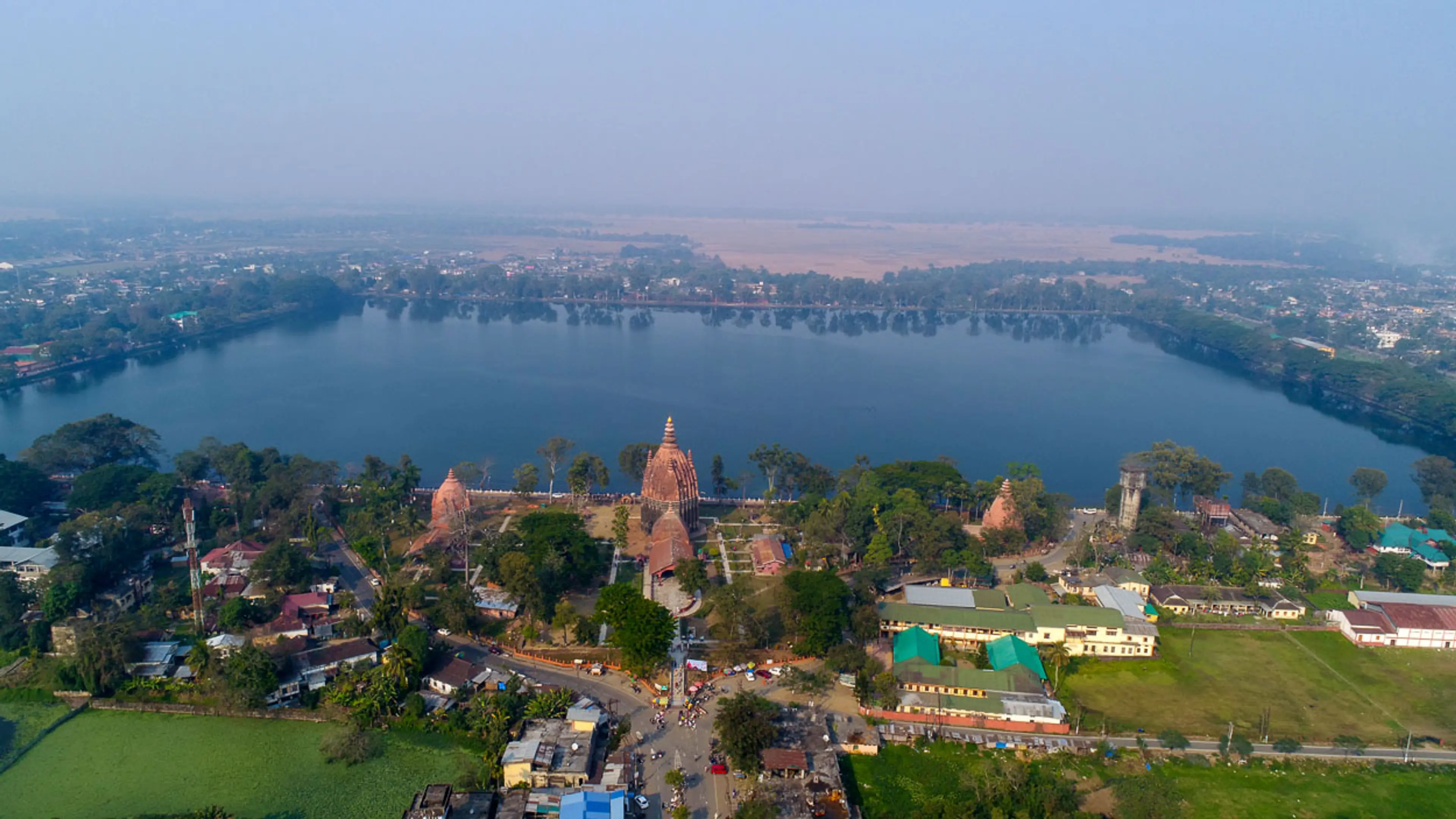
Sivasagar
Attractions in Sivasagar

Tai Museum
Adding a dramatic accent to the mystic atmosphere of Sivasagar, the Tai Museum stands as a repository of stories from ancient Assam. Preserved here are invaluable artefacts of the Ahom Kingdom, representing a significant chapter in the region’s past. As visitors walk through the museum, anticipation builds with each gallery offering insight into the Ahom way of life.
Read More
Joysagar
Joysagar, excavated by the Ahom King Swargadeo Rudra Singha, is recognised as India’s largest human-made tank. Constructed in memory of Joymoti, the king’s mother, the lake is located at Rangpur and was built in 1697. According to records, the entire excavation was completed within 45 days.
Read More
Gaurisagar
Located around 12 kilometres from the Sivasagar city centre, Gaurisagar Tank is among the most visited tourist attractions in the region. Built by the Ahom queen Bor Kuwori Phuleshwari Devi nearly 200 years ago, the tank covers more than 150 acres along with three significant temples on its banks.
Read More
Rudrasagar
Rudrasagar Tank was excavated in 1773 by the Ahom King Swargadeo Lakshmi Singha in memory of his father. Located about eight kilometres from Sivasagar town, the lake is known for the prominent Shiva Temple situated on its banks, which continues to draw attention for its architectural design. In the surrounding areas, visitors also encounter several Satras, Dargahs, and Sakta and Buddhist shrines, erected during the reigns of Ahom, Jaintia, Manipuri, and Shah rulers. Together, these sites reflect the layered religious and cultural influences present in and around Sivasagar.
Read More
Rang Ghar
Among the most remarkable creations of the Ahom builders in Sivasagar is Rang Ghar. This oval-shaped, double-storied structure with an inverted boat-like roof served as an arena constructed by King Swargadeo Pramatta Singha.
Read MoreTalatal Ghar
Situated just four kilometres from Sivasagar city, Talatal Ghar at Rangpur stands as one of the most impressive architectural wonders of Upper Assam. Along with its counterpart Karen Ghar, it remains one of the largest and most admired Ahom structures in the region.
Read More
Ajanpir Dargah
Located about 20 kilometres from Sivasagar town, Ajanpir Dargah is an important religious and historical site. The tomb of a renowned Muslim saint of the seventeenth century, the dargah was constructed during the reign of King Godadhar Singha. The saint arrived at Saraguri with his 120 disciples to propagate Islamic teachings and composed Zikir, devotional songs that continue to hold an important place in Assamese literature. These compositions remain highly regarded for their spiritual and cultural contributions to the region.
Read More