
Paro
Not just a town - a Retreat
The Paro Valley extends from the confluence of the two rivers, Paro Chhu and the Wang Chhu, at Chuzom in the south to Mt. Jhomolhari in the north. This broad stretch forms one of Bhutan’s most recognisable cultural landscapes, defined by open skies, gentle slopes, and a rhythm shaped by agriculture and settlement. The valley is characterised by wide expanses of green terrain dotted with terraced paddy and wheat fields, clear mountain streams, and picturesque hamlets marked by traditional whitewashed houses. For travellers consulting a Paro travel guide, the valley offers a balanced introduction to Bhutan’s rural life and Himalayan geography. Paro is the second most important town in Bhutan and remains one of the country’s most significant tourist destinations.
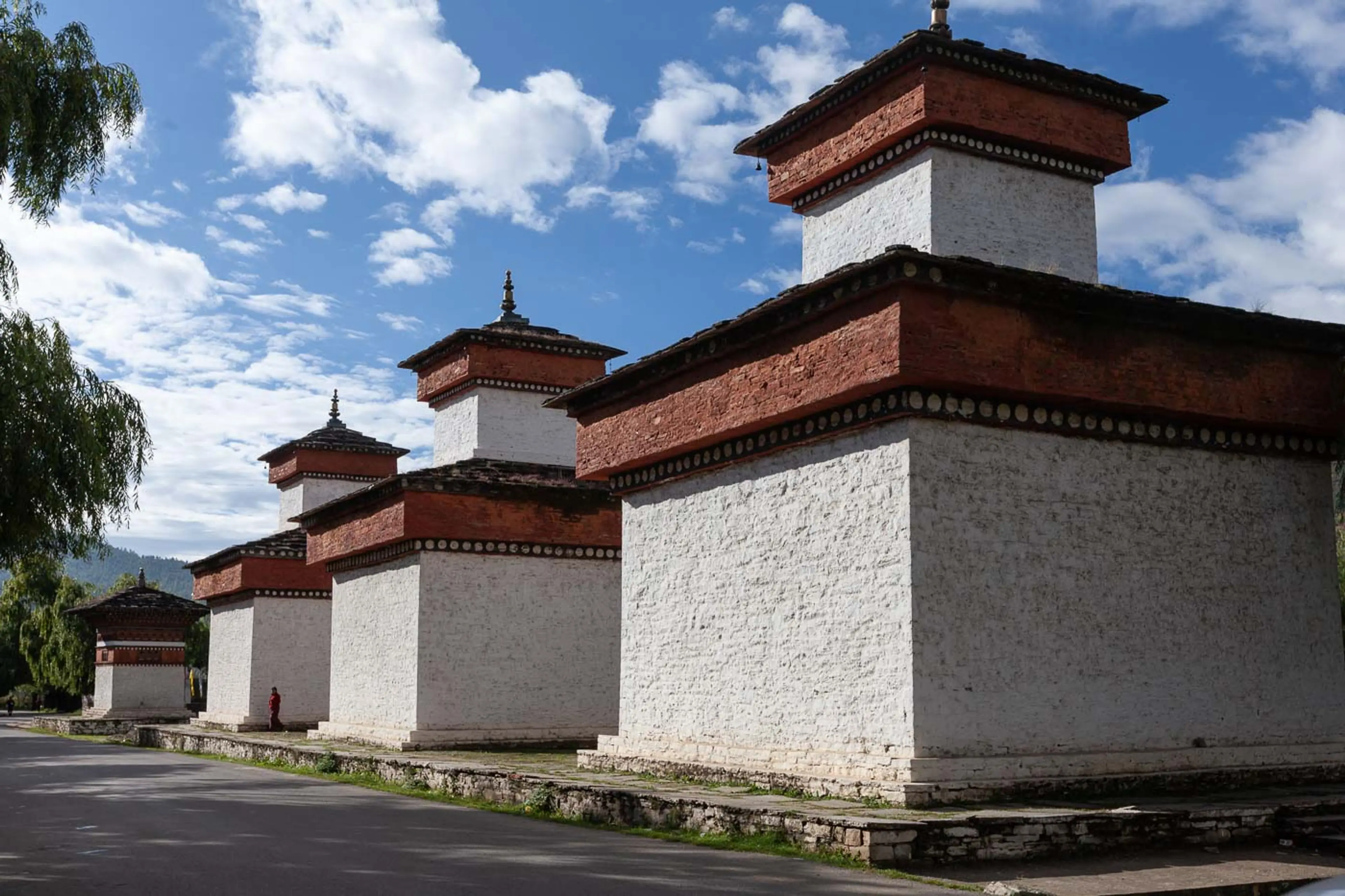
Willow trees and apple orchards line the winding roads that connect Paro with other key destinations across western Bhutan, adding seasonal colour and structure to the valley floor. Scattered throughout the landscape are numerous monasteries, temples, and dzongs, many of which date back to the 14th century. These religious and administrative structures form an essential part of the places to visit in Paro, reflecting centuries of spiritual practice and regional governance. Rather than standing apart from daily life, these sites are woven into the valley’s settlement patterns, reinforcing Paro’s identity as a lived cultural space rather than a preserved showcase.
Paro Valley also serves as Bhutan’s primary international gateway. The country’s only international airport is located here, supporting the steady flow of visitors from around the world. Paro Airport maintains air connections with major Indian cities including New Delhi, Kolkata, Mumbai, Bagdogra, and Guwahati, as well as international links to Bangkok, Singapore, Dhaka, and Kathmandu. For those approaching Bhutan overland, Paro can also be reached easily by road via the Jaigaon–Phuentsholing border with India. This accessibility makes Paro Valley not only a key arrival point but also a practical base for exploring Bhutan’s western regions, while still retaining the quiet, measured character that defines Paro Bhutan for international travellers.
Enquiry
Guests
Adults
Child
Rooms
Single
Double
Triple
Accommodation Standard
Expected Budget range for the whole tour
Preferred Destinations