
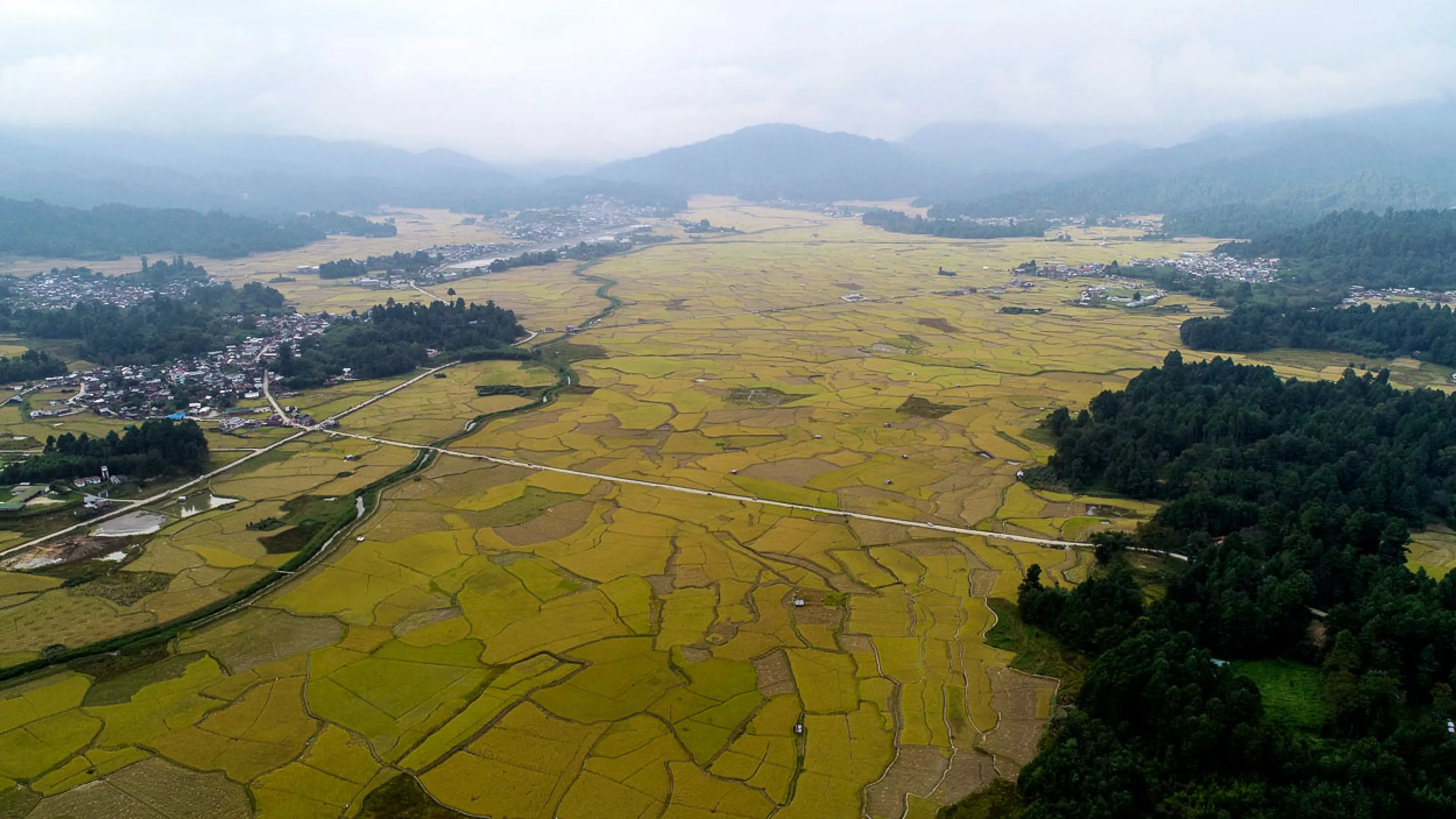
Ziro Valley
The Valley of Abundance and Creativity
Ziro, one of the most beautiful hill stations in Arunachal Pradesh, is located 165 km from Itanagar and serves as the headquarters of the Lower Subansiri District. Set on a broad plateau at an elevation of 1500 meters, Ziro Valley is surrounded by open valleys, gentle hills, and an intricate mosaic of paddy fields, bamboo groves, and pine forests. For travellers consulting a Ziro travel guide, the valley stands out as a rare landscape where agriculture, ecology, and culture remain deeply interwoven. Known as the land of the Apatani people, Ziro Valley offers a distinctive ethnic experience within Arunachal Pradesh. In 2012, the valley was shortlisted for nomination as a UNESCO World Heritage site, recognising its cultural and ecological significance.
Hills and forests encircle Ziro Valley, shaping both its climate and its way of life. The region is marked by a network of small rivulets that sustain paddy-cum pisciculture cultivation, a system that has flourished here for generations. This practice presents a unique experience for eco-tourism–oriented travellers interested in sustainable land use. The terraced paddy fields of Ziro Valley represent an advanced system of poly-culture and water management developed by the Apatani tribe. For visitors exploring places to visit in Ziro, these cultivated landscapes are as visually striking as they are culturally meaningful.
Summer is considered an excellent time to visit Ziro Valley, when the climate remains mild and the plateau reveals its open character. Visitors can walk through pine groves along the gentle hills or follow paths skirting rice fields across the plains. Ziro is inhabited primarily by the Apatani tribe, widely regarded as among the most advanced agriculturists in the region. The Apatanis practice permanent wetland cultivation, a method that distinguishes them from many other tribal communities. Until recent decades, facial tattoos were also part of their cultural identity, reflecting social customs that have since evolved.
Several educational institutes have been established in Ziro due to its favourable environment and stable settlement patterns. However, Ziro Valley is not defined by scenery alone. The role of local communities is central to the valley’s character and appeal. Travellers who take time to understand the inhabitants often gain deeper insight into the historical relationship between human society and the surrounding landscape. This interaction between people and environment forms an essential part of the Ziro Valley Arunachal Pradesh experience.
The unique Apatanis; their lifestyles and beliefs
The principal inhabitants in and around Ziro Valley are the Apatanis, a settled agricultural community with a long history in the region. The Apatanis are known for their disciplined work ethic and expertise in cultivation. Paddy-cum fish culture is widely practised, forming the backbone of their agrarian economy. Unlike many other tribes of Arunachal Pradesh, the Apatani economy is largely self-sufficient, supported by carefully regulated land use.
A meticulous division of land ensures that resources are distributed efficiently, while irrigation systems are designed to prevent even minimal waste of water. These practices reflect a highly evolved approach to wet-rice cultivation, developed through generations of observation and adaptation. Visitors interested in the Apatani tribe often find these agricultural systems as compelling as the valley’s physical beauty, making Ziro Valley a destination where cultural understanding and landscape exploration naturally converge.
Enquiry
Guests
Adults
Child
Rooms
Single
Double
Triple
Accommodation Standard
Expected Budget range for the whole tour
Preferred Destinations