
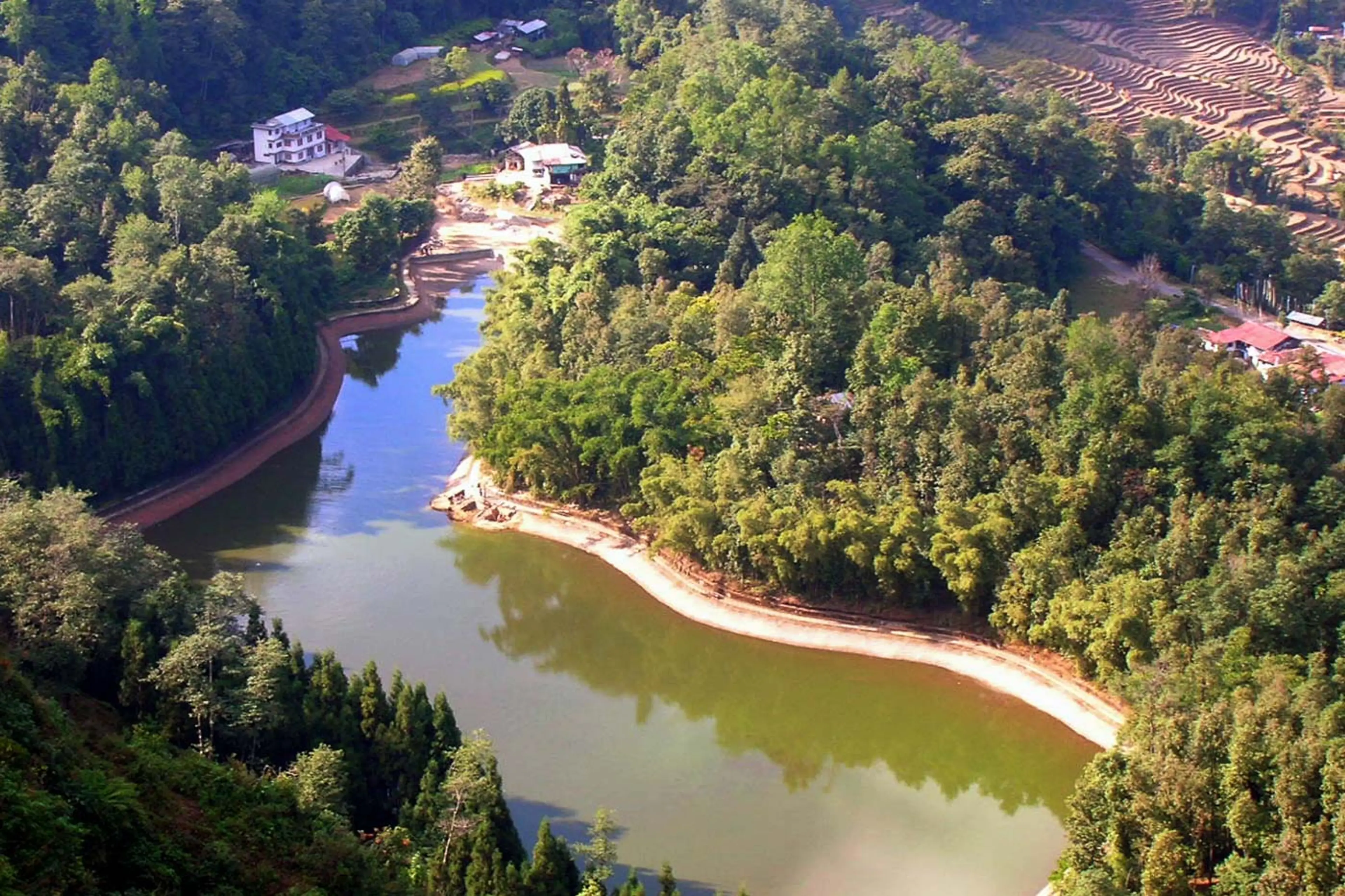
Aritar
Activities in Aritar
Excursion - Aritar provides a quiet base for exploring the higher ridges of eastern Sikkim, where elevation, open roads, and shifting landscapes define the experience rather than fixed attractions. From Aritar, a scenic mountain road ascends toward Kupup, reaching altitudes of around 4,000 metres near the Indo–China border. The journey beyond Aritar is shaped by expansive Himalayan views, with the landscape dominated by the Kanchenjunga Range and a series of alpine lakes encountered along the route. Changes in altitude, light, and terrain create a continuously evolving setting, making travel through this region a rewarding experience for visitors interested in high-altitude Himalayan landscapes rather than destination-driven sightseeing.
Attractions in Aritar
Lampokhri
Popularly known as Aritar Lake, Lampokhri is one of the most recognised tourist attractions in Aritar. Situated at an altitude of about 1,400 metres, it is the only lake in Sikkim that offers a boating facility for tourists. Surrounded by forested hills and village open spaces, the lake remains closely integrated with the local landscape rather than functioning as a standalone recreational site.
Read More
Dak Bungalow
The Dak Bungalow, also known as Ari-Bangla, is a British-built structure with over a century of historical significance. Built in 1895 by Sir James Claude White, the first political officer of Sikkim during British rule in India, the bungalow reflects Aritar’s administrative importance during the colonial period. It also served as Sikkim’s first treasury building, adding another layer to its historical relevance.
Read More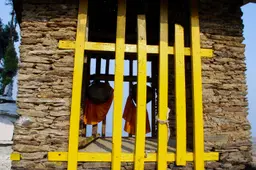
Aritar Gumpa
Aritar Gompa is a monastery of the Kagyuapa order and the most important religious centre in the area. Regarded as one of Sikkim’s holiest and oldest monasteries, it is known for its monastic art and traditional architecture, including carved and painted murals. Despite its modest size, the monastery houses ancient manuscripts and icons, making it a significant cultural and spiritual landmark in East Sikkim.
Read More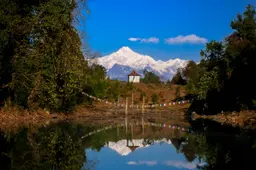
Mankhim Dara
Mankhim is a sacred shrine of the Rai community, located at an altitude of around 2,000 metres on a hilltop overlooking Aritar. It is considered a prime tourist attraction due to its religious importance and elevated setting. From Mankhim, visitors can also travel onward to Hattipilay, a small village situated on a remote hill, reinforcing Aritar’s identity as a landscape shaped by belief, history, and geographic isolation rather than mass tourism.
Read More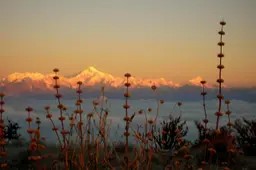
Phushrey Lake
Phushrey Lake is located within forested surroundings on the upper ridges of the Aritar hill, away from village settlements and road corridors. Its setting, defined by dense woodland and elevation, gives the area a quiet, undisturbed character rather than the feel of a developed viewpoint or recreational site. A visit to the lake and its surrounding forest can offer an excellent photographic experience, particularly for travellers interested in natural light, layered vegetation, and the subdued landscapes of East Sikkim. The absence of built structures allows the focus to remain on forest textures, reflections, and seasonal changes rather than curated attractions, making Phushrey Lake a calm extension of Aritar’s broader natural landscape.
Read More