
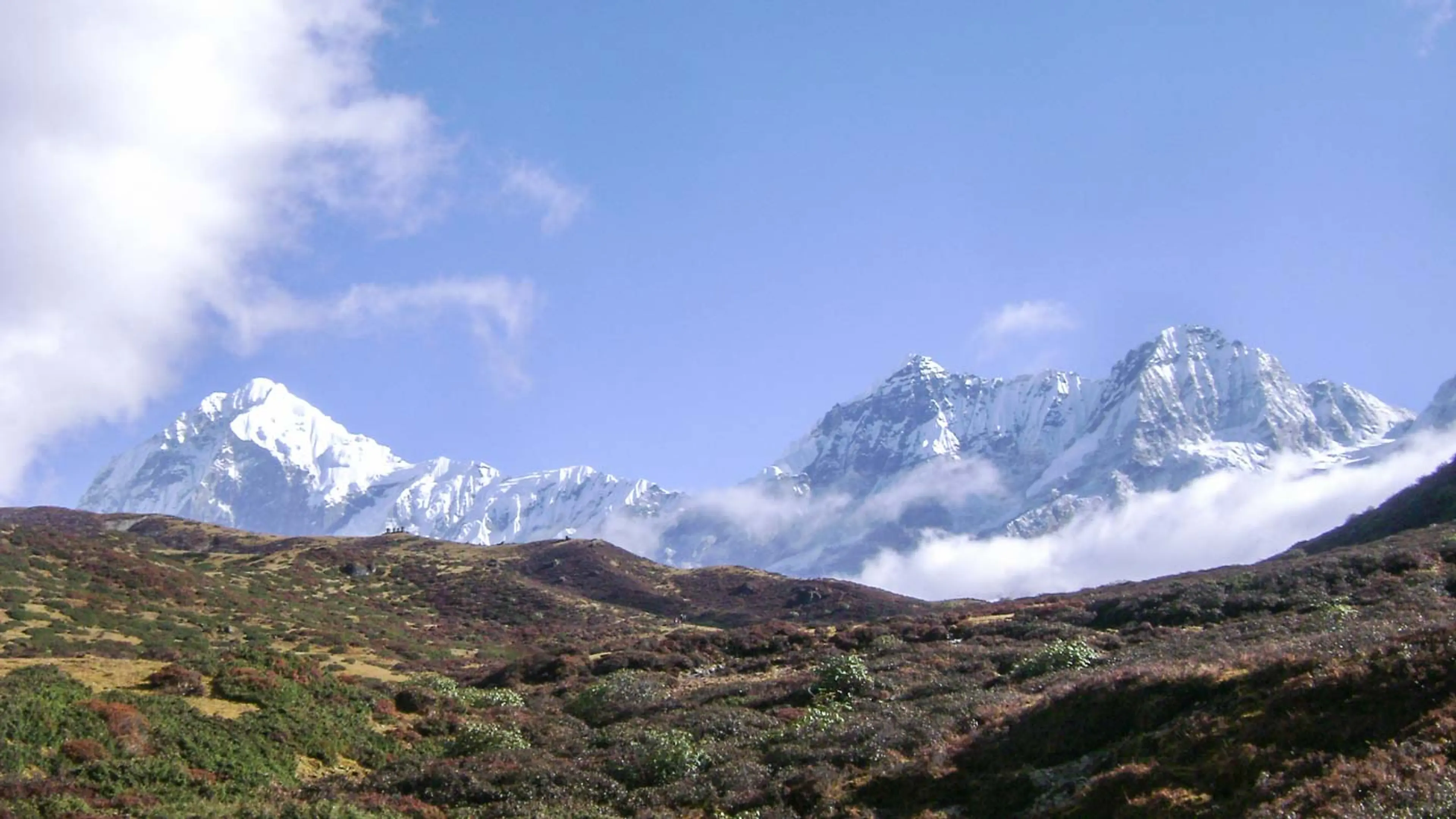
Goechala
Activities in Goechala
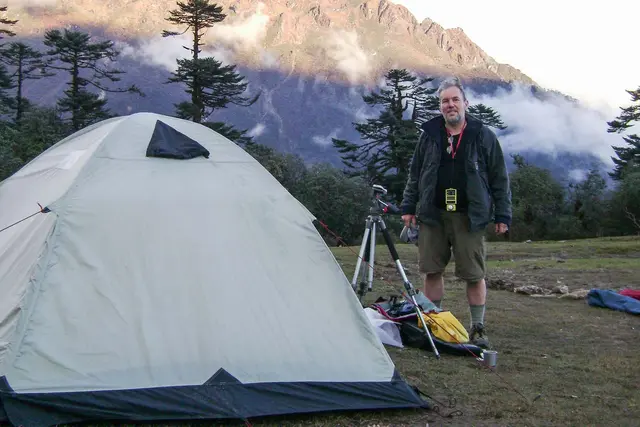
Trekking with Camping - The Goecha La trek is widely regarded as one of the most significant trekking routes in Sikkim. Beginning at Yuksom, the last road-connected village in West Sikkim at an altitude of approximately 1,800 metres, the trail quickly enters the wilderness of the Great Kanchenjunga Biosphere Reserve.MORE
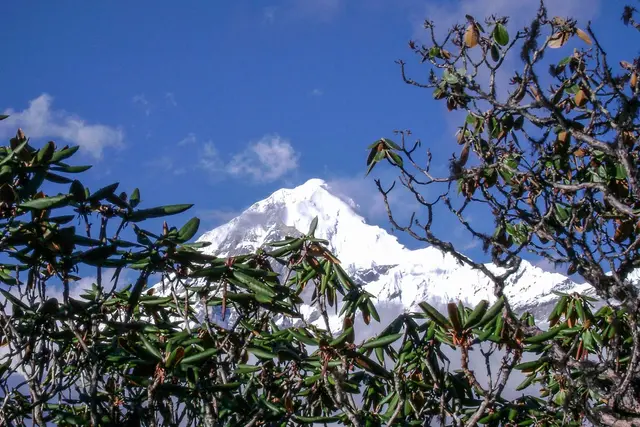
Bird Watching in Goechala - Apart from the Himalayan wilderness hiking experience, the tremendous variety of vegetation types in the Goecha-La trail ranging from broadleaf forests at 1800 meters to the Alpine shrublands above 5000 meters, has made this entire zone a crucial birding area. MORE
Attractions in Goechala
Peaks, Glaciers and Lakes
The Goecha-La trek is known for its stunning natural landscape dominated by many unclimbed and significantly higher peaks of the Kanchenjunga massif. A list of notable peaks between 6000 and 8500 meters, giving the closest possible view all along the trail, includes Mt Kanchenjunga (8586 meters), Mt Kabru North (7353 meters), Mt Talung (7349 meters), Mt Kabru South (7318 meters), Mt Sinolchu (6887 meters), Mt Simvo (6812 meters), Mt Pandim (6691 meters), Mt Rathong (6679 meters), Mt Koktang (6147 meters), Mt Kabru Forked (6100 meters) and Mt Tenchenkhang (6010 meters).
Read More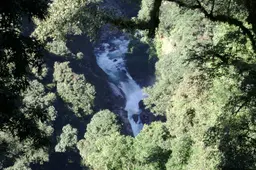
Sachen
At 2100 meters, Sachen is generally used as the first stopover point of the Goechala Trek that begins from Yuksom. On a flat clearing among the dense broadleaf and moist temperate forest Sachen has a small log hut that can accommodate 6 to 8 people. The hike to Sachen from Yuksom passes through the verdant forest of Rhododendron and oaks and usually takes about 3 to 3.5 hours for the steady legs. Situated amid the dense forests, Sachen does not provide an excellent mountain view, but this can be an ideal camping base for the birdwatching trekkers, who may want to restrict the hike to a limited distance to observe the birdlife.
Read More
Tshoka
Located at an altitude of approximately 3,000 metres, Tshoka serves as the second-day campsite on the Goecha La trek. The ascent from Sachen involves a demanding climb of nearly 900 metres through thickly forested hills characterised by moist temperate forests. Along this section, distant snow-covered peaks begin to appear on the horizon, adding depth to the trekking experience.
Read More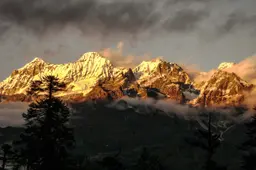
Dzongri
Reaching Dzongri at approximately 3,700 metres is one of the defining moments of the Goecha La trek. The section between Tshoka and Dzongri is the most physically challenging part of the route, though it is also among the most visually engaging. As the trail progresses through the forests of Phedang, trekkers observe a marked transition in forest composition.
Read More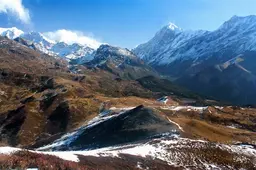
Dzongri Top
The most prized experience in Dzongri is a hike to the highest point on the hill known as Dzongri Top - at almost 4000 meters. Typically, the hike starts early in the morning to observe an unforgettable sunrise view over the Kanchenjunga Massif.
Read More
Thansing Valley
At Thansing, you are in the core of Kunchenjungha National Park. A vast meadow flanked by Prek Chu River, Thansing lay at 3800 meters and an approx. Seven kilometre hike from Dzongri. This part of the hike is relatively easy as you walk down to the river for the first half and then gradually walk up again for the same distance through a nice paved trail passing through the dwarf rhododendron forests and shrublands.
Read More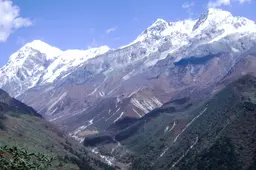
Lamuney
Lamuney at 4400 meters is considered to be the base to reach the Geocha La Pass. This is the last camping site on this route. From Thansing, a short trek of about 2 hours will take you to the upper valley of Kanchenjunga National Park. The area is marked by glacial lakes and moraines, where the vegetation is scarce.
Read More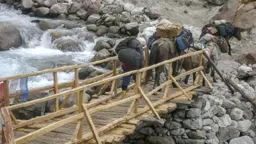
Lampokhri
Lampokhri is the name of a small beautiful glacial lake at an altitude of 4250 meters, which in the local language means Big Pond. This beautiful lake is also a brilliant campsite for trekkers looking for an alternative exit route while returning from Goechala.
Read More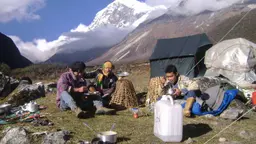
Kasturi Orar
A long day hike from Lampokhri to the opposite of Singalila Range will bring you to Kasturi Orar at 3800 meters. This area used to be a popular mask deer hunting place for the locals who used to take shelter in some saves. Therefore, the site got its name from Kasturi (Musk deer) and Orar (cave). As the name suggests, the area is rich with Himalayan species, including the musk deer.
Read More
Labdang Village
Labdang is the first village that you come across after the arduous Goecha La trek. A small village in the remote corner of West Sikkim, which is only recently connected with a rough jeepable road from Tashiding, Labdang has merely 80 households, mainly of the Gurung community. From Kasturi Orar, it is a long steep downhill hike to Labdang.
Read More