Sundarbans1

Sundarbans

Myths | Mangroves | Cruise 
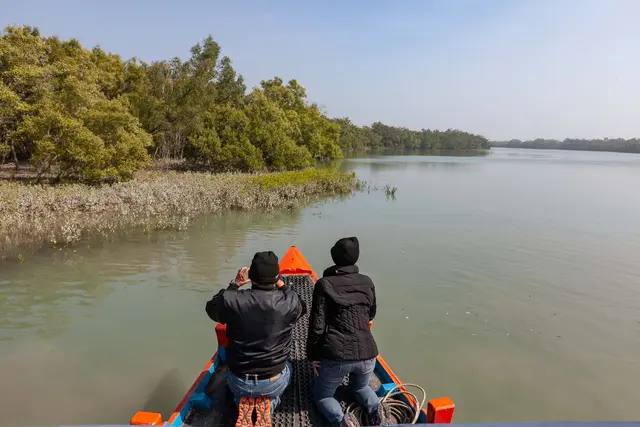
The more your canoe sails through the dense expanse of brackish mangrove water, the deeper you enter into an unknown planet. It feels like another world—one where you sense life all around you, and none of it is human. You instinctively avoid breaking the heavy, muted spell of a wilderness that appears to still be in the making. The dark green wall of the colossal mangrove jungle stands both grim and glowing at the same time, creating an atmosphere that defines every Sundarbans tour and leaves a lasting impression on travellers exploring Sundarbans travel India.
You are in the world’s largest mangrove ecosystem, lying deep within the vast delta along the Bay of Bengal. This extraordinary region, known globally as the Sundarbans, is where legend and daily life intersect seamlessly, and where folklore shapes the delicate relationship between humans and nature.
Here, the tiger preys on humans, and humans dare tigers out of sheer necessity. This stark coexistence defines the Sundarbans mangrove forest, making it one of the most compelling destinations for a Sundarbans wildlife tour, a Sundarbans tiger safari, and an authentic Sundarbans nature tour. The labyrinth of creeks, crooked branches and roots shooting up in the air sucks you into a history that dates back to 200–300 AD. The ruins of a city during the Mughal period bear testimony to it. The British East India Company took it in 1757. This vast freshwater swamp forest has been inscribed as a UNESCO World Heritage site in 1997.
Accommodation
The Sundarbans region has only a limited number of government-run and private accommodations scattered across different islands. In recent years, some moderately comfortable private accommodations have developed in Dayapur and Bali Island. All available accommodations are located strictly outside the forest boundary and provide only basic amenities. There is no premium or luxury accommodation anywhere in the region, and travellers visiting this remote edge of Wild Bengal must be prepared to accept minimal living arrangements. Most tourist accommodations follow traditional rural architecture suited to the local environment and cultural context. High-rise or multi-storeyed concrete structures are not permitted in this fragile ecosystem. Most islands do not receive conventional electricity from the mainland; lodges and camps rely largely on solar power or generators for limited hours. Television is not available in camps or lodges, and mobile phone connectivity exists only in a few villages, not throughout the Reserve—an important reality for those booking a Sundarbans guided tour or Sundarbans boat safari.
Climate
Situated close to the Tropic of Cancer, the Sundarbans delta experiences a hot and humid summer followed by a comparatively pleasant winter. May and June are the hottest months, with temperatures rising to around 40 degrees Celsius. Due to its proximity to the Bay of Bengal, rainfall is high between July and September, with average annual precipitation ranging between 1,600 and 2,200 millimetres. July and August are the wettest months and are often marked by intense cyclonic storms locally known as Kal-Baishakkhi. Wind speeds during these storms can reach up to 150 kilometres per hour, occasionally causing significant damage to the mainland and surrounding villages. Much of the region lies only about seven metres above sea level, making low-lying areas near the sea vulnerable to submersion during high tides. The best time to visit the Sundarbans UNESCO World Heritage region is winter, between October and January, when skies remain clear and conditions are favourable for Sundarbans travel India. Daytime temperatures hover around 20 degrees Celsius, while nights can cool to approximately 8 degrees, creating ideal conditions for exploring the Sundarbans delta India.

Activities in Sundarbans

Wildlife Cruise in Sundarbans
  • Wildlife Cruise in Sundarbans - Spread across nearly 4,200 square kilometres, the vast delta of the Sundarbans Biosphere Reserve displays a remarkable diversity of landscapes, including mudflats, sea beaches, tidal dunes, mangrove swamps, sand shores, tidal creeks and canals, brackish-water islands, and sandy islands. Each of these landscape types supports a distinct ecological system and wildlife habitat, making a Sundarbans boat safari one of the most immersive ways to experience this complex environment.MORE
Birding in Sundarbans
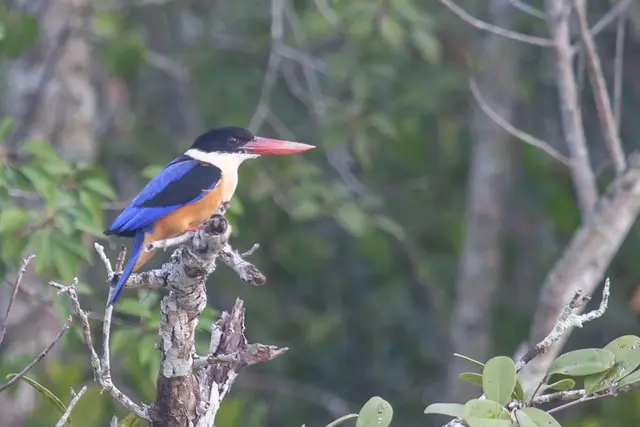
  • Birding in Sundarbans - The Sundarbans is not only about tigers; it is also one of India’s most impressive birding destinations. Dense mangrove canopies and extensive uninhabited coastal zones support a rich and varied bird population, establishing the region as a recognised birding hotspot within Sundarbans travel India.MORE
Watch Tower in Sundarbans
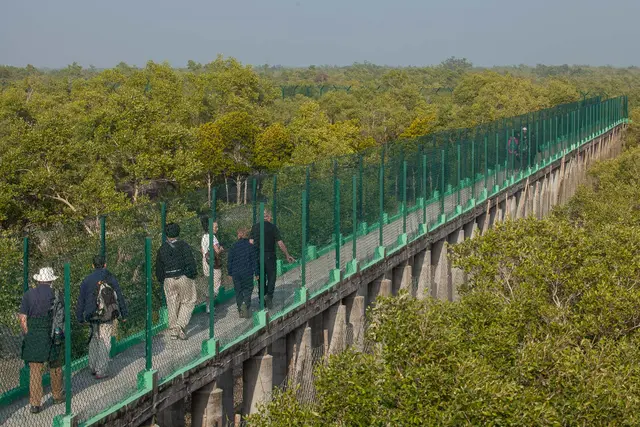
  • Watch Tower in Sundarbans - Large parts of the Sundarbans Tiger Reserve are inaccessible by land, making forest exploration extremely challenging on foot. Cruising through tidal creeks and canals remains the most effective way to explore the mangrove forests, complemented by visits to watchtowers positioned at strategic locations across the Reserve. These towers provide elevated viewpoints that allow a broad, panoramic, bird’s-eye perspective over vast stretches of forest and waterways.MORE


Attractions in Sundarbans

  • Netidhopani Watchtower

    The Netidhopani Watchtower is among the most important watchtowers in the Sundarbans for closely monitoring the mangrove forests and wildlife. Located on the banks of the Bidya River within the core area of the Sundarbans Tiger Reserve, Netidhopani offers a compelling opportunity to observe pristine mangrove landscapes and the wild inhabitants of this fragile ecosystem. It is considered one of the prime locations for tiger sightings during a Sundarbans tiger safari and is a key highlight of any Sundarbans wildlife tour.

    Read More

  • Do-Banki Watch Tower

    Each watchtower in the Sundarbans offers a distinct experience, and Do-Banki Watch Tower, located in the Pirkhali Block, is particularly known for its elevated canopy walk. This watchtower features a fenced corridor raised more than 20 feet above the ground, allowing visitors to study the dense mangrove forests and observe wildlife movement from above—an experience unique within the Sundarbans mangrove forest.

    Read More

  • Sudhanyakhali Watch Tower

    Situated very close to the Sajnekhali Tourist Lodge along a narrow creek, the Sudhanyakhali Watch Tower is one of the most popular locations for experiencing the raw beauty of the Sundarbans. Access involves a short ten-minute boat ride along the Gomdi River, followed by a gentle detour into a creek within the Sajnekhali Wildlife Sanctuary. Visitors walk along a fenced pathway leading to the watchtower, from where uninterrupted views of vast mangrove stretches unfold in every direction. The location, accessibility, and surrounding habitat make Sudhanyakhali an essential attraction on most Sundarbans tour itineraries and a reliable spot for observing wildlife during Sundarbans travel India.

    Read More

  • Sajnekhali Watch Tower

    Sajnekhali is one of the three wildlife sanctuaries under the Sundarbans Biosphere Reserve and, with an area of approximately 365 square kilometres, is the largest sanctuary in the entire Reserve. It is primarily known as a bird sanctuary due to its rich avian diversity. The island is encircled by the Gomdi, Goasaba, and Bidya rivers, which surround its dense, dark-green mangrove forests.

    Read More

  • Gosaba and Bali Island Village

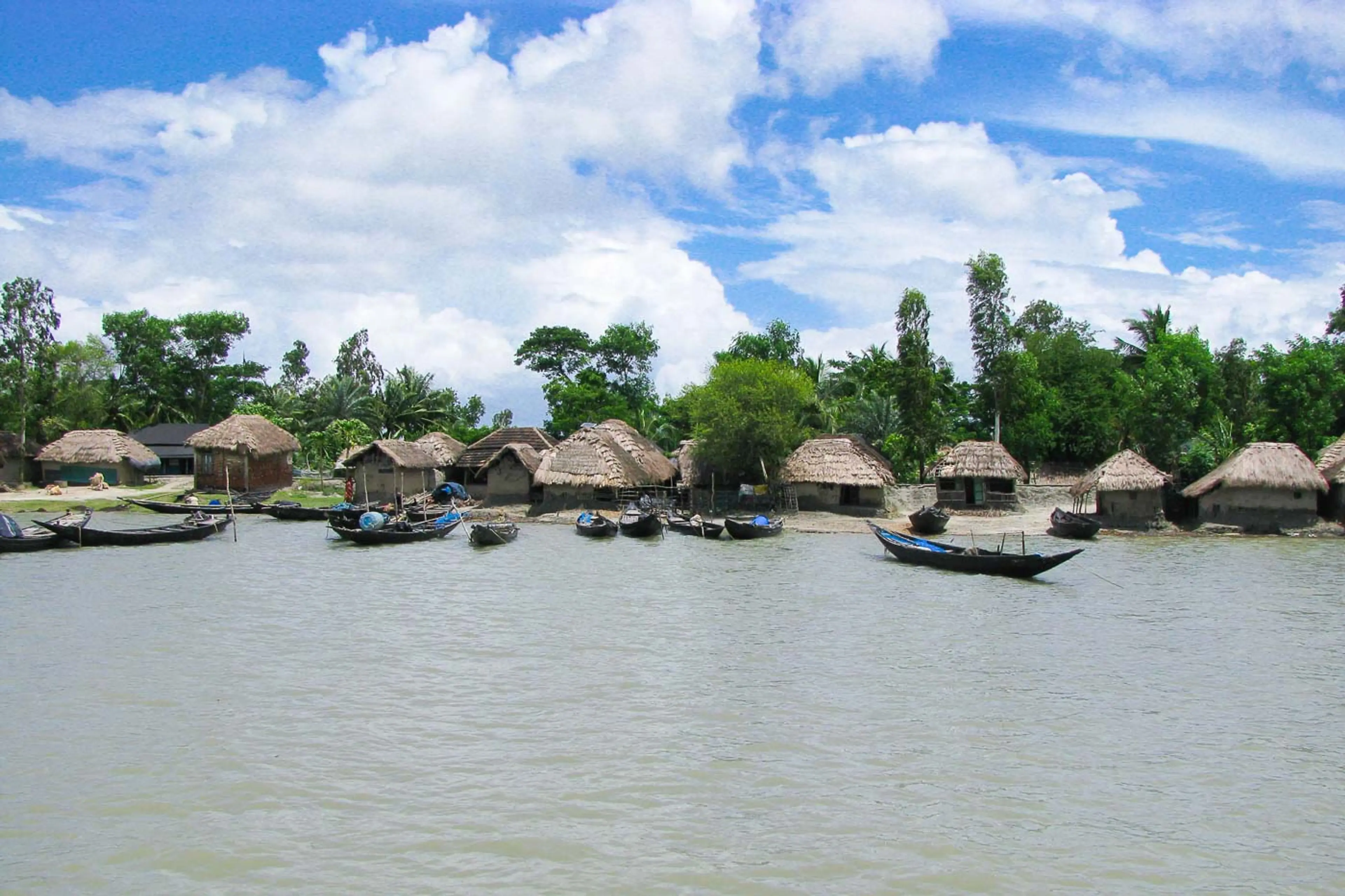
    Gosaba and Bali are among the least populated villages of South Bengal before the dense mangrove forests begin within the Sundarbans Biosphere Reserve. Surrounded by the major tidal rivers of the Sundarbans Delta—including the Matla, Bidya, and Gomdi rivers and their distributaries—these island villages remain geographically isolated from mainland Bengal.

    Read More

  • Kalas Island and Watch Tower

    Located in the extreme southern reaches of the Sundarbans Biosphere Reserve near the mouth of the Bay of Bengal, Kalas Island lies in a timeless and serene wilderness. Shaped like a pot, the island is enveloped by the constant murmur of tidal waves and the whisper of coastal winds passing through dense mangrove forests. The contrast between the deep blue sea and the endless sky creates a fairytale-like setting for visitors on a Sundarbans nature tour.

    Read More

  • Bonney Camp Watch Tower

    Bonney Camp, located at the southern edge of the Sundarbans Tiger Project, features the tallest watchtower in the entire Reserve. Rising to a height of approximately 50 feet, this well-constructed tower offers sweeping views across endless mangrove forests crisscrossed by an intricate web of creeks and tidal channels.

    Read More

Enquiry

Guests

Adults
Child

Rooms

Single
Double
Triple

Accommodation Standard

Expected Budget range for the whole tour

Preferred Destinations

--OR--

Contact ID

Packages


Nearby Places

Connectivity

Sundarbans Tiger Reserve is located in the furthest south of West Bengal and separated from the mainland by tidal rivers. The vast delta ends at the Bay of Bengal, forming a natural boundary. The Sundarbans is a continuous mangrove forest that stretches to Bangladesh, with the Raimangal River forming the natural international border. The Tiger reserve is under the district of 24 Parganas in West Bengal.
Sundarbans can be reached from Kolkata in a 3hrs drive to Godkhali through Basant Highway. From Godhkhali, you have to cross the river Gomdi to reach Goasaba. From Goasaba, you can take a village cart van to get to the other side of Pakhiralaya Island and cross the river again to reach Sajnekhali, the main entrance of Sundarban.
If you are taking a pre-booked tour in Sundarbans, the motorboat will receive you at Gadkhali road head ferry and take you to your specified island accommodation – usually Balli Dwip Island, Sajnekhali or Dayapur Island.


Location of Sundarbans

Image Gallery