
Dzongu’s Protected Status: How Indigenous Autonomy Shapes Sustainable Tourism in Sikkim
In a region increasingly listed under popular Sikkim tourism places to visit, Dzongu stands apart. It is not marketed as a typical Sikkim tour spot. It does not compete with crowded North Sikkim tourist places. It does not appear prominently in most North Sikkim tour packages.
Dzongu is a protected Lepcha reserve.
Located within North Sikkim, Dzongu operates under a permit system designed to restrict access, regulate visitor numbers, and preserve indigenous autonomy. At a time when Sikkim tourism is expanding rapidly and north east Sikkim tour itineraries multiply online, Dzongu remains intentionally limited.
This is not underdevelopment. It is design.
Dzongu’s restricted model reveals how sustainable tourism can function not as marketing rhetoric, but as governance practice rooted in indigenous ecological philosophy.
Permit Systems as Cultural Protection
Dzongu is legally designated as a protected area for the Lepcha community, the indigenous inhabitants of North Sikkim. Entry requires permits, and accommodations are limited to approved community-run establishments.
Unlike mainstream Sikkim tourism places to visit, where free movement defines the travel experience, Dzongu’s regulatory framework filters visitor flow. This filtering mechanism directly counters the volume-driven logic of typical North Sikkim tour packages.
What distinguishes Dzongu within North Sikkim is not remoteness but regulation. In much of Sikkim tourism, destinations rise in popularity through visibility and accessibility, quickly becoming a promoted Sikkim tour spot across travel platforms. Permit requirements in Dzongu interrupt that cycle. They prevent it from being absorbed into standardized north east Sikkim tour circuits that prioritize numbers over nuance. Unlike other North Sikkim tourist places, where expansion follows demand, Dzongu’s cap on entry ensures that sustainable tourism remains measurable and enforceable. Even as Sikkim tourism marketing expands its portfolio of Sikkim tourism places to visit, Dzongu maintains a threshold model. North Sikkim tour packages may reference the region broadly, but entry into Dzongu still requires deliberate compliance. In this way, North Sikkim demonstrates two parallel paths: one growth-driven, the other governance-driven. Dzongu stands firmly in the latter.
Regulated Access and Identity Preservation
Permit systems serve two purposes. First, they cap numbers. Second, they reinforce cultural sovereignty. In many North Sikkim tourist places, commercial development follows popularity. Roads widen, hotels expand, and landscapes transform into high-traffic Sikkim tour spot clusters. Dzongu resists that pattern.
Within the broader expansion of Sikkim tourism, Dzongu’s model ensures that north east Sikkim tour operators cannot scale without community consent. Sustainable tourism here is enforced structurally, not advertised superficially. This distinction matters. Where Sikkim tourism markets destinations, Dzongu manages thresholds.
Across North Sikkim, destinations that appear on mainstream Sikkim tourism places to visit lists often experience accelerated transformation. North Sikkim tour packages quickly incorporate them into wider north east Sikkim tour circuits, increasing footfall. Dzongu’s regulated access prevents that cycle from taking hold.
By refusing to evolve into a conventional Sikkim tour spot, it protects both demographic balance and ecological stability. Sustainable tourism here depends on governance mechanisms rather than promotional narratives. As Sikkim tourism expands and North Sikkim gains greater international attention, Dzongu’s permit framework ensures that identity preservation remains central to policy. Within North Sikkim, this threshold model defines tourism as negotiated participation rather than unrestricted access.
The Lepcha Ecological Worldview
The Lepcha worldview does not separate culture from landscape. Rivers, peaks, and forests are sacred entities.
Within North Sikkim, Dzongu is not merely territory; it is ancestral geography. This sacred understanding shapes how sustainable tourism functions on the ground.
While Sikkim tourism often frames destinations as scenic attractions, the Lepcha philosophy resists reducing land to a Sikkim tour spot. In many North Sikkim tourist places, mountains become viewpoints and rivers become photo backdrops. In Dzongu, however, they remain relational presences. This distinction reshapes how north east Sikkim tour itineraries are structured. Instead of maximizing exposure, sustainable tourism within North Sikkim emphasizes respect and restraint. Even as Sikkim tourism places to visit expand across digital platforms, Dzongu’s sacred geography moderates development intensity. North Sikkim tour packages that highlight lakes and valleys elsewhere do not easily translate here, because the cultural lens differs. Sustainable tourism in Dzongu therefore grows from belief systems rather than branding strategies. As North Sikkim becomes more visible globally, Dzongu’s worldview offers an alternative to conventional Sikkim tourism expansion — one grounded in reverence rather than replication.
Sacred Geography as Environmental Policy
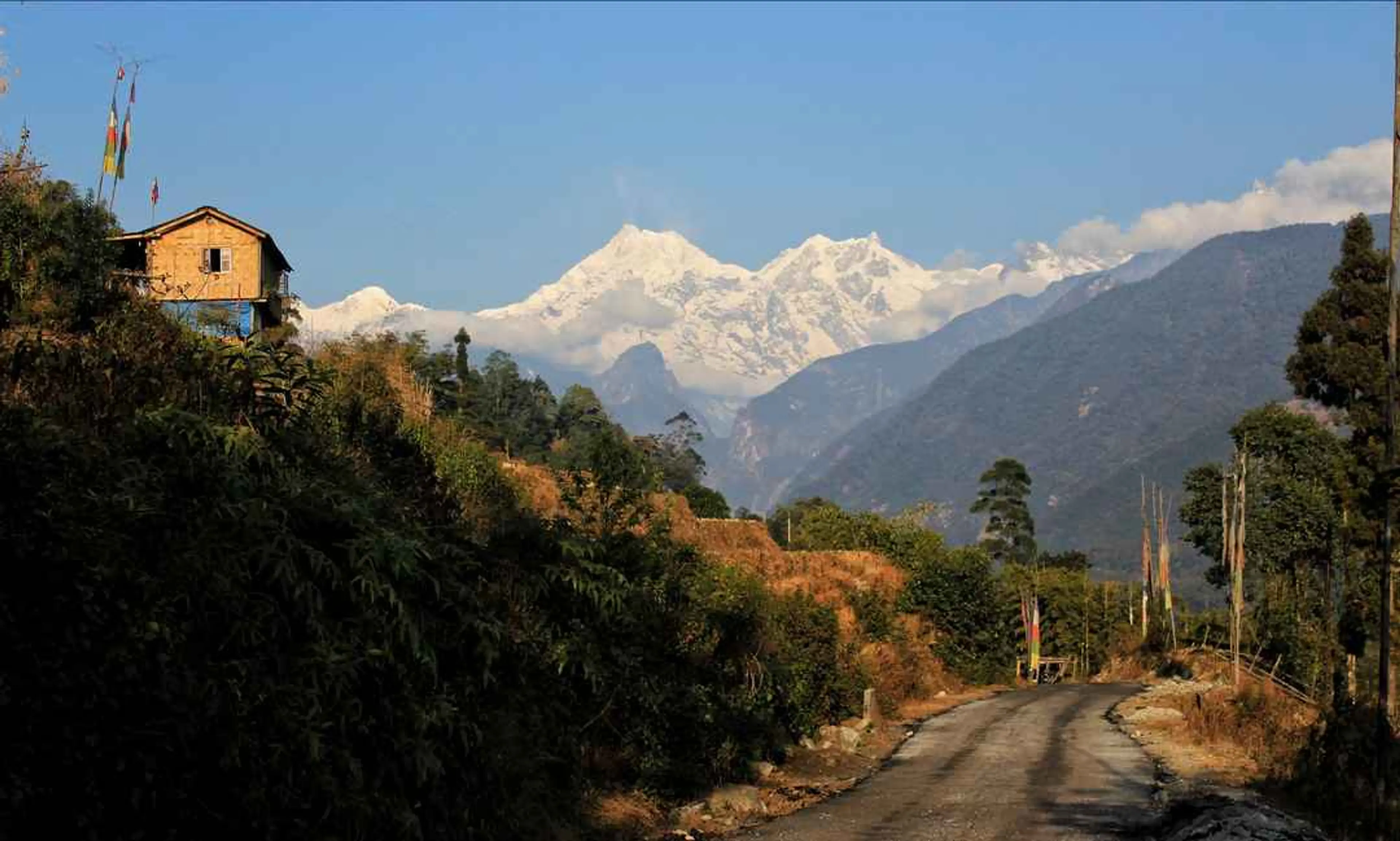
Unlike typical Sikkim tour spot development, where infrastructure adapts to visitor demand, Dzongu’s planning begins with reverence. Mount Kanchenjunga is central to Lepcha cosmology, and rivers such as the Teesta are treated as living presences. While Sikkim tourism often promotes scenic value, Dzongu frames landscape as sacred continuity.
This worldview limits commercial expansion. It restricts large resorts. It prevents the transformation seen in other North Sikkim tourist places. As north east Sikkim tour interest rises globally, Dzongu’s ecological philosophy functions as a cultural firewall. Sustainable tourism here is not an imported framework from international agencies; it is embedded in indigenous cosmology.
Across North Sikkim, many landscapes eventually become recognized Sikkim tourism places to visit once accessibility improves. Roads and viewing platforms convert sacred spaces into popular Sikkim tour spot destinations. Dzongu resists this transition. Its sacred geography defines policy rather than adapting to North Sikkim tour packages. Sustainable tourism remains subordinate to belief systems.
Even as north east Sikkim tour visibility increases and Sikkim tourism marketing expands internationally, Dzongu’s worldview preserves restraint. Within North Sikkim, this reverential planning ensures that environmental protection is not a reactive measure but a foundational principle guiding development boundaries.
Community-Run Homestays as Economic Resistance
Economic sustainability does not require mass scaling.
In Dzongu, most visitor accommodation operates through community-run homestays rather than corporate hotels. This decentralization reshapes how Sikkim tourism revenue circulates.
Across North Sikkim, commercial hospitality models increasingly define North Sikkim tourist places. Larger hotels align easily with standardized North Sikkim tour packages, turning destinations into predictable Sikkim tour spot clusters. Dzongu diverges intentionally. By limiting infrastructure scale, it ensures that sustainable tourism benefits remain localized. A north east Sikkim tour that includes Dzongu typically relies on direct engagement with households rather than third-party operators. This contrasts with broader Sikkim tourism markets where consolidation shapes pricing power. Community-run homestays prevent the conversion of Dzongu into another high-density Sikkim tourism places to visit category. Instead, North Sikkim here demonstrates a micro-economy rooted in cultural exchange. Sustainable tourism thrives because growth is moderated. Even as Sikkim tourism platforms highlight expanding North Sikkim tour packages, Dzongu’s hospitality structure resists uniformity. It is not an accidental outcome of remoteness but a deliberate economic stance embedded within North Sikkim governance.
Small-Scale Hospitality as Structural Choice
Unlike commercial North Sikkim tour packages that bundle high-volume itineraries across multiple North Sikkim tourist places, Dzongu’s model favors slow stays. A visitor entering Dzongu through a north east Sikkim tour permit system typically resides within a Lepcha household. Meals are local. Construction is minimal. Waste management remains controlled.
This contrasts sharply with high-density Sikkim tour spot clusters elsewhere in North Sikkim, where expansion follows visitor spikes. By limiting external ownership, Dzongu ensures that sustainable tourism aligns with cultural continuity rather than short-term profit. The economic model resists the homogenization often seen in Sikkim tourism growth corridors.
In many North Sikkim tourist places, hospitality expands quickly once integrated into popular Sikkim tourism places to visit lists. Large hotels adapt to rising north east Sikkim tour demand, reinforcing standardized North Sikkim tour packages. Dzongu rejects this trajectory. It avoids conversion into a high-volume Sikkim tour spot by keeping accommodation community-based.
Sustainable tourism here redistributes value locally rather than channeling it outward. Within North Sikkim, this approach creates a slower, relational travel experience distinct from broader Sikkim tourism trends. As North East Sikkim tour promotion grows, Dzongu’s small-scale model demonstrates how North Sikkim can support tourism without replicating the infrastructure patterns seen elsewhere.
Why Dzongu Cannot Become Mainstream
The logic of mainstream travel is scale.
Popular Sikkim tourism places to visit rise through visibility, accessibility, and infrastructure investment. Yet Dzongu’s protected status restricts each of those growth drivers.
Mainstream Sikkim tourism converts landscapes into widely circulated Sikkim tour spot categories. North Sikkim tourist places often experience accelerated visibility once integrated into curated north east Sikkim tour itineraries. Dzongu’s permit framework interrupts that escalation. It prevents seamless inclusion within expanding North Sikkim tour packages. Sustainable tourism here depends precisely on those structural limits. While other North Sikkim destinations scale upward through road expansion and marketing campaigns, Dzongu preserves controlled entry.
Even as Sikkim tourism continues to broaden its list of Sikkim tourism places to visit, Dzongu remains intentionally selective. This resistance is not isolation; it is strategic governance within North Sikkim. Sustainable tourism in Dzongu cannot coexist with unchecked expansion. The region’s distinctiveness within North East Sikkim tour narratives derives from restriction. By avoiding high-traffic Sikkim tour spot status, Dzongu protects ecological thresholds that many North Sikkim tourist places struggle to maintain.
Structural Limits as Strength
Dzongu cannot integrate easily into mass North Sikkim tour packages because its permit system caps numbers. It cannot become a high-traffic Sikkim tour spot because expansion requires community approval. While North Sikkim tourist places like Gurudongmar Lake or Lachung experience seasonal crowd surges, Dzongu’s governance model deliberately slows volume. For international travelers seeking sustainable tourism models, this presents a paradox: the very restrictions that reduce accessibility are what preserve authenticity.
As north east Sikkim tour operators promote scenic circuits, Dzongu remains selective. This selectivity protects fragile ecosystems and cultural integrity. The broader Sikkim tourism economy may continue to expand, but Dzongu’s autonomy ensures it will not be absorbed into mainstream growth patterns. Across North Sikkim, rapid inclusion in Sikkim tourism places to visit often leads to commercialization and standardized itineraries. North Sikkim tour packages tend to prioritize efficiency, linking multiple North Sikkim tourist places into compressed schedules.
Dzongu’s refusal to follow that model strengthens its distinct identity. Rather than aspiring to become another promoted Sikkim tour spot, it positions itself as a regulated enclave within North Sikkim. Sustainable tourism benefits precisely because numbers remain moderated. Even as north east Sikkim tour demand increases and Sikkim tourism branding expands globally, Dzongu’s structural limits preserve environmental resilience. In this context, restriction is not weakness — it is strategy embedded within North Sikkim governance.
Sustainable Tourism as Indigenous Autonomy
Global discourse often frames sustainable tourism as environmental management. Dzongu reframes it as political autonomy.
Within North Sikkim, the Lepcha reserve operates through self-determined governance mechanisms. Permit systems, land-use restrictions, and homestay models reinforce local authority over development pace. Unlike other Sikkim tourism places to visit that rely heavily on state-driven promotion, Dzongu’s visibility remains moderated. It is not packaged aggressively in North Sikkim tour packages.
In broader Sikkim tourism strategy, North Sikkim is often marketed as a scenic frontier. However, Dzongu illustrates how sustainable tourism can be community-regulated rather than state-expanded. North east Sikkim tour promotions may highlight waterfalls and valleys, but Dzongu emphasizes governance. The absence of aggressive branding prevents it from becoming another standardized Sikkim tour spot. Unlike other North Sikkim tourist places that depend on rising visitor counts, Dzongu measures success through balance. Sustainable tourism here strengthens indigenous control rather than diluting it. Even as Sikkim tourism evolves and North Sikkim tour packages diversify, Dzongu’s autonomy model ensures that development pace aligns with cultural consent. Within North Sikkim, this approach signals that sustainable tourism is not merely environmental compliance but jurisdictional choice.
A Model of Deliberate Limitation
The absence of mass infrastructure is intentional.
In many North Sikkim tourist places, road widening and hotel construction respond to rising demand. Dzongu’s sustainable tourism model responds differently: by limiting demand itself. This model offers lessons beyond Sikkim tourism. It demonstrates that indigenous governance structures can regulate tourism without eliminating it entirely.
For travelers researching north east Sikkim tour options, Dzongu represents a conscious alternative to high-traffic Sikkim tour spot circuits. The result is balance — economic participation without ecological exhaustion.
In the wider landscape of North Sikkim, destinations often evolve rapidly once they appear in popular Sikkim tourism places to visit lists. Increased visibility typically translates into expanded North Sikkim tour packages and higher visitor turnover. Dzongu deliberately interrupts that trajectory.
By refusing to scale into a conventional Sikkim tour spot, it protects ecological thresholds that many North Sikkim tourist places struggle to maintain. Sustainable tourism here functions as controlled exposure rather than open promotion. Even as Sikkim tourism platforms expand and north east Sikkim tour marketing grows internationally, Dzongu sustains its limited-entry model. This restraint ensures that North Sikkim retains at least one zone where tourism adapts to culture — not the other way around..
Protection as Policy, Not Isolation
Dzongu’s protected status within North Sikkim is neither accidental nor symbolic. It is policy anchored in indigenous autonomy. In a landscape increasingly shaped by Sikkim tourism marketing, Dzongu resists scale. In a region where North Sikkim tour packages multiply annually, Dzongu filters entry. Sustainable tourism here is not branding. It is governance.
By prioritizing permit systems, sacred geography, and community-run hospitality, Dzongu demonstrates how indigenous frameworks can shape the trajectory of Sikkim tourism without surrendering identity. It may never become a mainstream Sikkim tour spot — and that is precisely the point.
As North Sikkim grows in global visibility, many North Sikkim tourist places adapt to rising demand. Dzongu, however, anchors itself in controlled expansion. North east Sikkim tour operators must align with local consent rather than impose itinerary logic. Unlike conventional Sikkim tourism places to visit that scale through accessibility, Dzongu scales through limitation.
Sustainable tourism thrives because numbers remain moderated. The region avoids transformation into a high-density Sikkim tour spot, even as Sikkim tourism platforms amplify North Sikkim imagery worldwide. By resisting automatic inclusion in standardized North Sikkim tour packages, Dzongu affirms that protection is proactive governance. Within North Sikkim, this model offers a rare demonstration that sustainable tourism can coexist with economic participation — provided growth remains community-defined.