
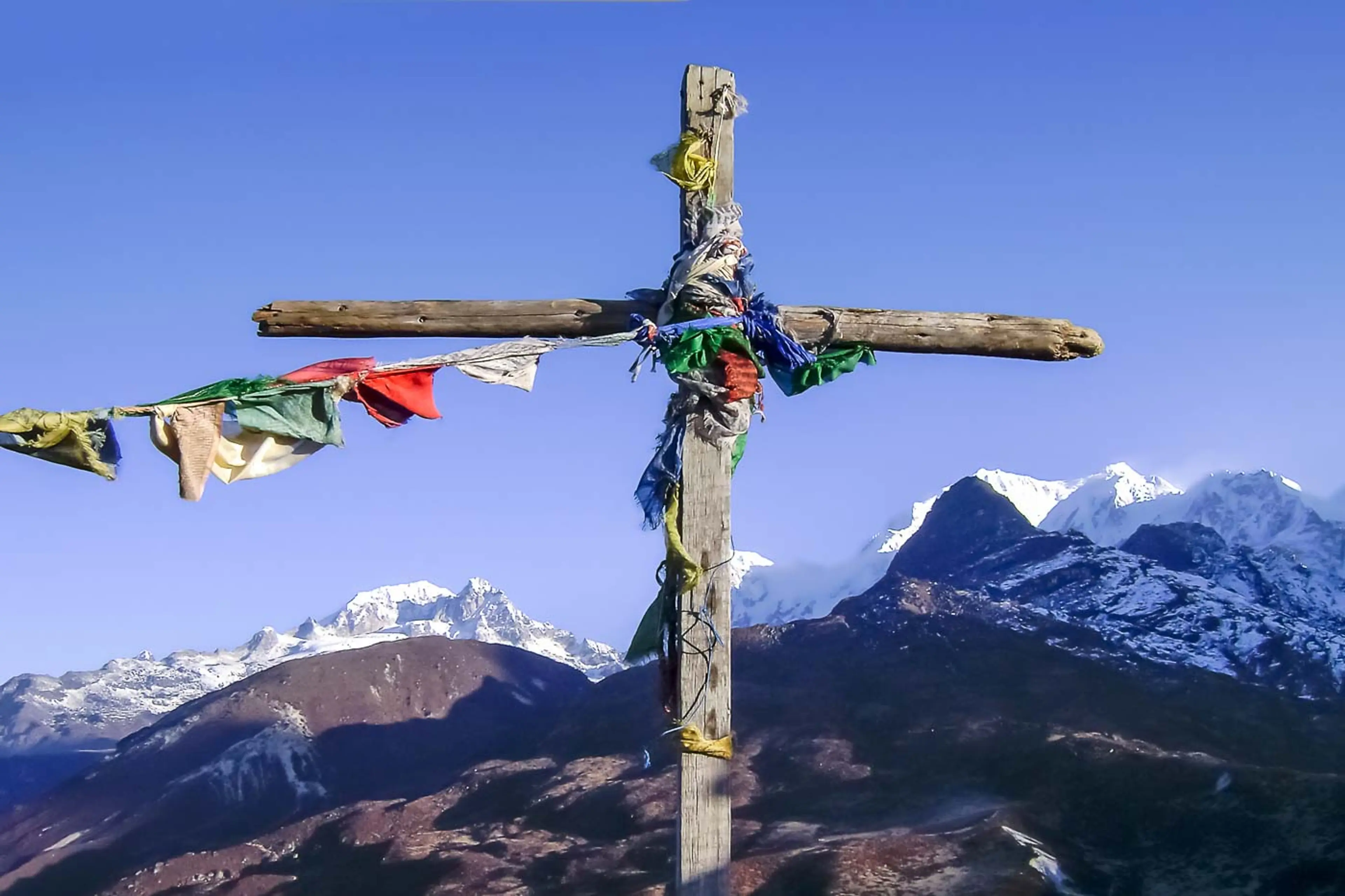
A Sojourn In Singalila’s Solitude
From undefined/daySingalila Ridge Trek, West Sikkim — Uttarey to Yuksom via Dzongri
Destination Covered || Singalila Ridge, Western Frontier of Sikkim
Trek at a Glance || Duration: 10–12 Days | Max Altitude: 4,200m | Difficulty: Moderate to Challenging | Start: Uttarey, West Sikkim | End: Yuksom | Permits Required: Sikkim Inner Line Permit + Kanchenjunga National Park Fee
Introduction to the Singalila Ridge Trek, Sikkim
The Singalila Ridge trek in Sikkim stands among the finest high-altitude treks in India — a remote, crowd-free Himalayan journey along the international boundary between India and Nepal, deep in the western frontier of the state. Trekking at elevations between 3,700 and 4,200 metres across open alpine ridgelines, trekkers are rewarded with a mountain panorama found nowhere else on any Himalayan trekking route in northeast India: Mt. Everest (8,849m), Kanchenjunga (8,586m), Lhotse (8,516m), and Makalu (8,485m) — four of the five highest peaks on earth — simultaneously visible from a single ridge. Unlike the better-known Sandakphu trek on the Darjeeling side of Singalila National Park, this west Sikkim variant of the Singalila Ridge trek begins at Uttarey — one of Sikkim's most remote border villages — giving the route a depth of wilderness and character that more commercial Himalayan trekking circuits cannot match. For those seeking genuinely offbeat Himalayan treks in India, this is among the most rewarding choices in the entire Eastern Himalayas.The Trek Route — Uttarey to Yuksom
The Singalila Ridge trek Sikkim begins at Uttarey, a quiet agricultural village in the westernmost corner of the state on the Nepal border. From here the trail ascends steadily onto the ridge, crossing the India-Nepal international boundary multiple times across its length — a rare and memorable feature shared by no other major trekking route in Sikkim. The high ridge traverse unfolds across extraordinary alpine terrain: glacial lakes on open plateaus, ancient yak grazing grounds, dense rhododendron and pine forests sheltering rare Himalayan wildlife including the Red Panda, and sweeping ridgeline campsites with unobstructed views of the Kanchenjunga massif at close range. The visual drama of this section rivals even the celebrated Goechala trek for sheer mountain spectacle. The trek descends from the ridge to conclude at Yuksom — the historic former capital of Sikkim and the traditional gateway for west Sikkim trekking — via the iconic waypoints of Dzongri and Tshoka, passing through the protected forest of Kanchenjunga National Park, a UNESCO World Heritage Site. Trekkers with experience on the Dzongri trek will find this final descent richly familiar yet approached from a completely new and more dramatic direction.What Makes This Trek Unique
Among all trekking Sikkim routes, the Singalila Ridge trek occupies a category of its own for three reasons no other Himalayan trek in the region combines: hiking across a live international border, simultaneous views of four 8,000-metre peaks, and genuine high-altitude remoteness within a protected UNESCO landscape. The route is crowd-free for the vast majority of its length — a quality increasingly rare on popular Himalayan trekking circuits in India and deeply valued by experienced trekkers.Who Is This Trek For?
This west Sikkim trek is best suited for trekkers with prior high-altitude Himalayan experience above 3,500 metres. Those who have completed the Goechala trek, Dzongri trek, or similar routes in the Indian Himalayas will find the Singalila Ridge trek a natural and deeply satisfying progression. Strong aerobic fitness, comfort with multi-day high-altitude camping, and prior experience on rocky alpine terrain are essential.Best Season for the Singalila Ridge Trek, West Sikkim
October to December: The premier season for trekking in Sikkim. Post-monsoon skies deliver crystal-clear visibility across the entire Himalayan panorama — the best conditions of the year for views of Everest, Kanchenjunga, and the surrounding massifs. Trails are dry and stable. Temperatures at altitude drop sharply at night but days are bright and settled. April to May: Spring brings blooming rhododendrons across the ridge and steadily warming temperatures. A favourite season for Himalaya trekking in the Eastern Himalayas, with good peak visibility in the early mornings before pre-monsoon clouds build through the afternoon. Permits: Sikkim Inner Line Permit and Kanchenjunga National Park entry fees are required. All permits are arranged as part of this trekking package. Best Season | October to December & April to MayA High-Altitude Trek on India's Most Spectacular Himalayan Ridge
DAY 1|| Bagdogra to Kaluk (Alt 2150M) - 125kms in 6Hr.
Nightstay at Kaluk
Dinner included
DAY 2|| Kaluk to Uttarey drive & Uttarey to Chitrey Hike
Nightstay at Chitrey
Breakfast , Lunch , Dinner included
Walking
DAY 3|| Chitrey to Chiwabhanjang
Nightstay at Chiwabhanjang
Breakfast , Lunch , Dinner included
Walking
DAY 4|| Chiwabhanjang – Dhor Hike
Nightstay at Dhor
Breakfast , Lunch , Dinner included
Walking
DAY 5|| Dhor to Pare Megu Hike
Nightstay at Pare Megu
Breakfast , Lunch , Dinner included
Walking
DAY 6|| Pare Megu to Lam Pokhari Hike
Nightstay at Lam Pokhari
Breakfast , Lunch , Dinner included
Walking
DAY 7|| Lam Pokhari to Gomathang Hike
Nightstay at Gomathang
Breakfast , Lunch , Dinner included
Walking
DAY 8|| Gomathang to Tikip Chu Hike
Nightstay at Tikip Chu
Breakfast , Lunch , Dinner included
Walking
DAY 9|| Tikip Chu to Dzongri Hike
Nightstay at Dzongri
Breakfast , Lunch , Dinner included
Walking
DAY 10|| Dzongri to Tshoka
Nightstay at Tshoka
Breakfast , Lunch , Dinner included
Walking
DAY 11|| Tshoka to Yuksom Return trek
Nightstay at Yuksom
Breakfast , Lunch , Dinner included
Walking
DAY 12|| Yuksom to Bagdogra - 145kms in 5Hr.
Nightstay at | NA
Breakfast included
Flight
Enquiry
Guests
Adults
Child
Rooms
Single
Double
Triple
Accommodation Standard
Expected Budget range for the whole tour
Preferred Destinations