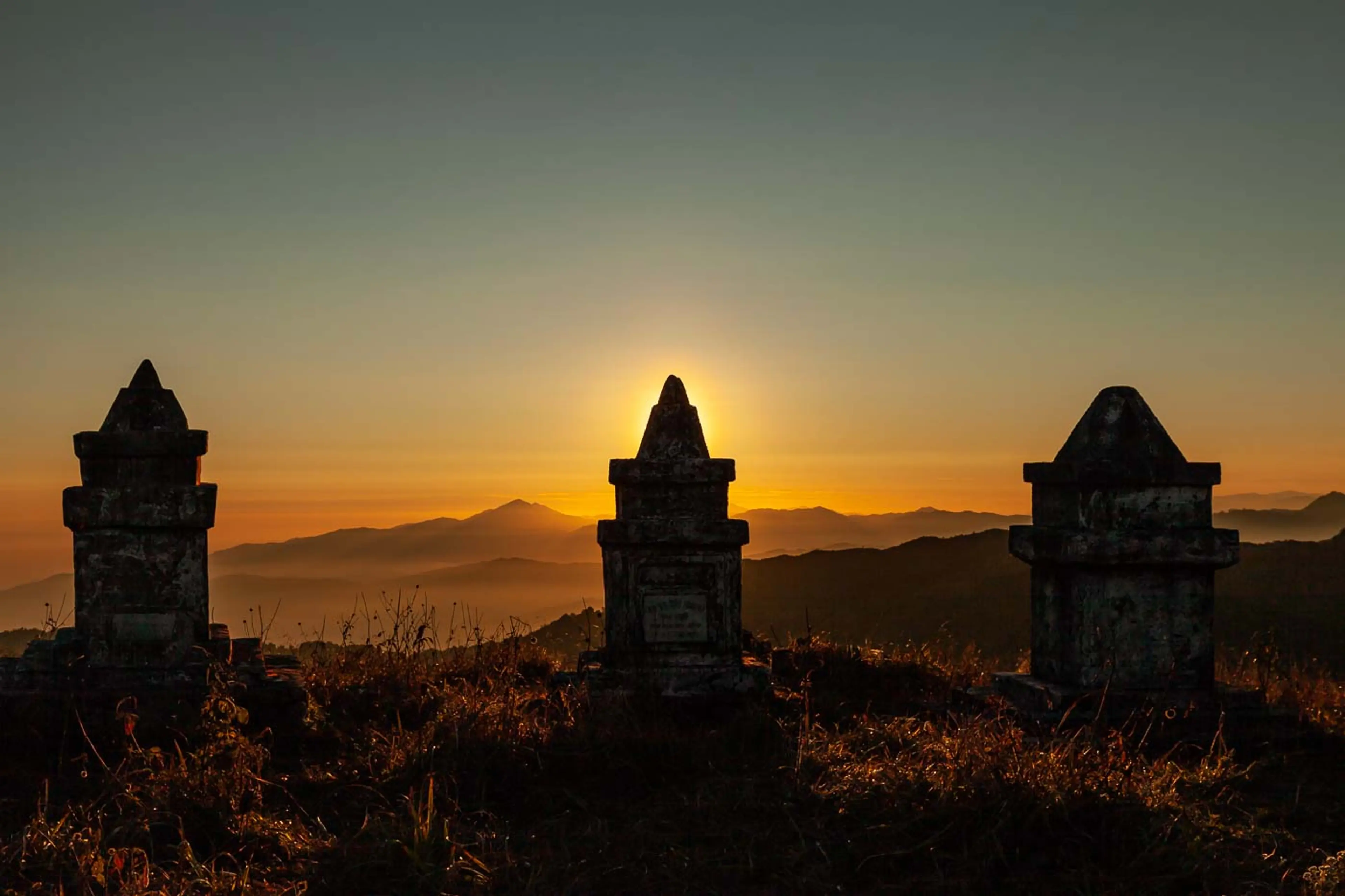
Crown of the Hill Queen
From undefined/dayA Hiking tour in Darjeeling’s Highest ridges
Highlights || Hiking in Rhododendron Valley * Mountains * Tea House Stay * Bird Watching * Darjeeling Orientation
Destination Covered | Darjeeling * Sandakphu
Introduction | Some of the finest Himalayan trekking in India does not require two weeks. This 4-day Sandakphu trek via the Singalila Ridge reaches the highest point in West Bengal — and one of the most extraordinary mountain viewpoints anywhere in the eastern Himalayas — in a compact, focused itinerary that wastes nothing and misses nothing that matters. For international trekkers with limited time, or for experienced walkers seeking a non-commercial Himalayan trek away from the crowded circuits, the Singalila Ridge offers a rare combination: genuine remoteness, extraordinary scenery, and a guided trekking format that keeps the experience safe, logistically smooth, and entirely focused on the trail.
A single night in Darjeeling opens the tour — enough time to arrive, settle at altitude, and absorb the atmosphere of the hill town before the ridge calls. The drive the next morning to Maneybhanjang, a small village on the Indo-Nepal border that serves as the traditional gateway to the Singalila National Park, marks the transition from traveller to trekker. The local trekking crew meets here — guides and support staff who know every section of this trail and manage all logistics, meals, and navigation so that the focus throughout stays entirely on walking. For those asking about the difficulty of this trek: the Singalila Ridge is graded moderate to strenuous on its longest day, with no technical climbing involved. The key challenge is sustained altitude — the summit at 3,636 metres — and a 17-kilometre, 8-hour day to reach it. Gradual acclimatisation through the first day's ascent makes altitude sickness unlikely for reasonably fit trekkers, though sleeping bags are recommended for the Sandakphu night where temperatures drop sharply. The best time to trek Singalila is October to April — October and November for the clearest mountain views, March to May for rhododendron forests in full bloom.
The first day of walking rises steadily from Maneybhanjang through thick pine forest to Chitrey — a broad flat meadow with a small monastery and the first open Himalayan views — before the vegetation shifts to rhododendron as the temperature falls and the altitude climbs. Meghma, a small Nepalese village at 2,900 metres, offers a tea break and the first encounter with the cross-border character of the Singalila Ridge — the trail runs along the India-Nepal border and passes briefly into Nepalese territory at several points, moving through remote villages where daily life continues at a pace entirely indifferent to tourism. Tumling, reached in the late afternoon, provides the first full panoramic view of the Kanchenjunga range and a night at a private teahouse trekking lodge run by a local Tibetan family — warm, simple, and genuinely welcoming in the way that only small mountain families can be.
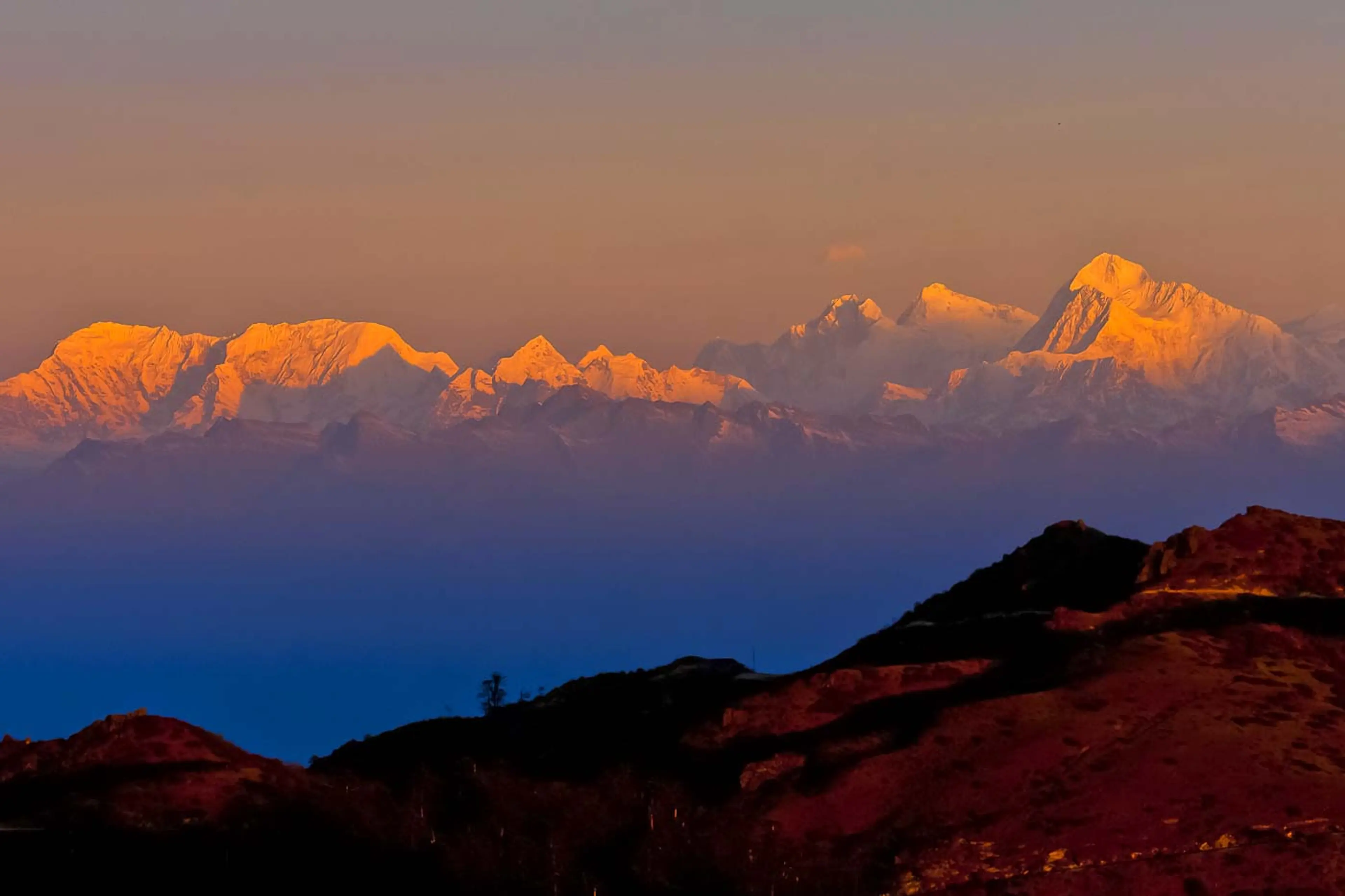
The summit day from Tumling to Sandakphu is the heart of the trek — 17 kilometres, eight hours, and the full drama of the Singalila Ridge at its most expansive. The trail passes through Joubari village and descends into the forest at Gairibans, located at the centre of Singalila National Park in an area of undisturbed bamboo, oak, and rhododendron forest that is one of the finest habitats for the elusive red panda in India. The Himalayan black bear, Satyr Tragopan, and over 300 bird species share these forests — making Gairibans one of the most biodiverse sections of any high altitude trek in India and one of its least visited. The final climb from Kalepokhri to the summit is steep and long, but the panorama that opens at Sandakphu makes every metre earned: four of the world's five tallest peaks — Everest, Kanchenjunga, Lhotse, and Makalu — simultaneously visible across 320 kilometres of Himalayan horizon. The Sleeping Buddha formation of Kanchenjunga, whose ridgeline silhouette resembles a reclining figure, is visible at a proximity and clarity here that no photograph can adequately convey. Mists rising from the valleys below gather into seas of cloud beneath the viewpoint as the last light colours the snow ridges and the temperature drops sharply toward the summit night.
The descent the following morning allows a final, unhurried hour at altitude before the trail drops through the rich vegetation zones of Singalila National Park — with ample opportunity along the way to spot high-altitude Himalayan birds, including the Fire-tailed Myzornis along the forested lower sections — to Srikhola, where the car waits for the return to Darjeeling. Four days. One ridge. The highest point in West Bengal. And a mountain panorama that ranks among the finest views available to any Darjeeling trekker in the eastern Himalayas — concentrated, unhurried, and completely away from the tourist trail.
Ideal Months | October through March