
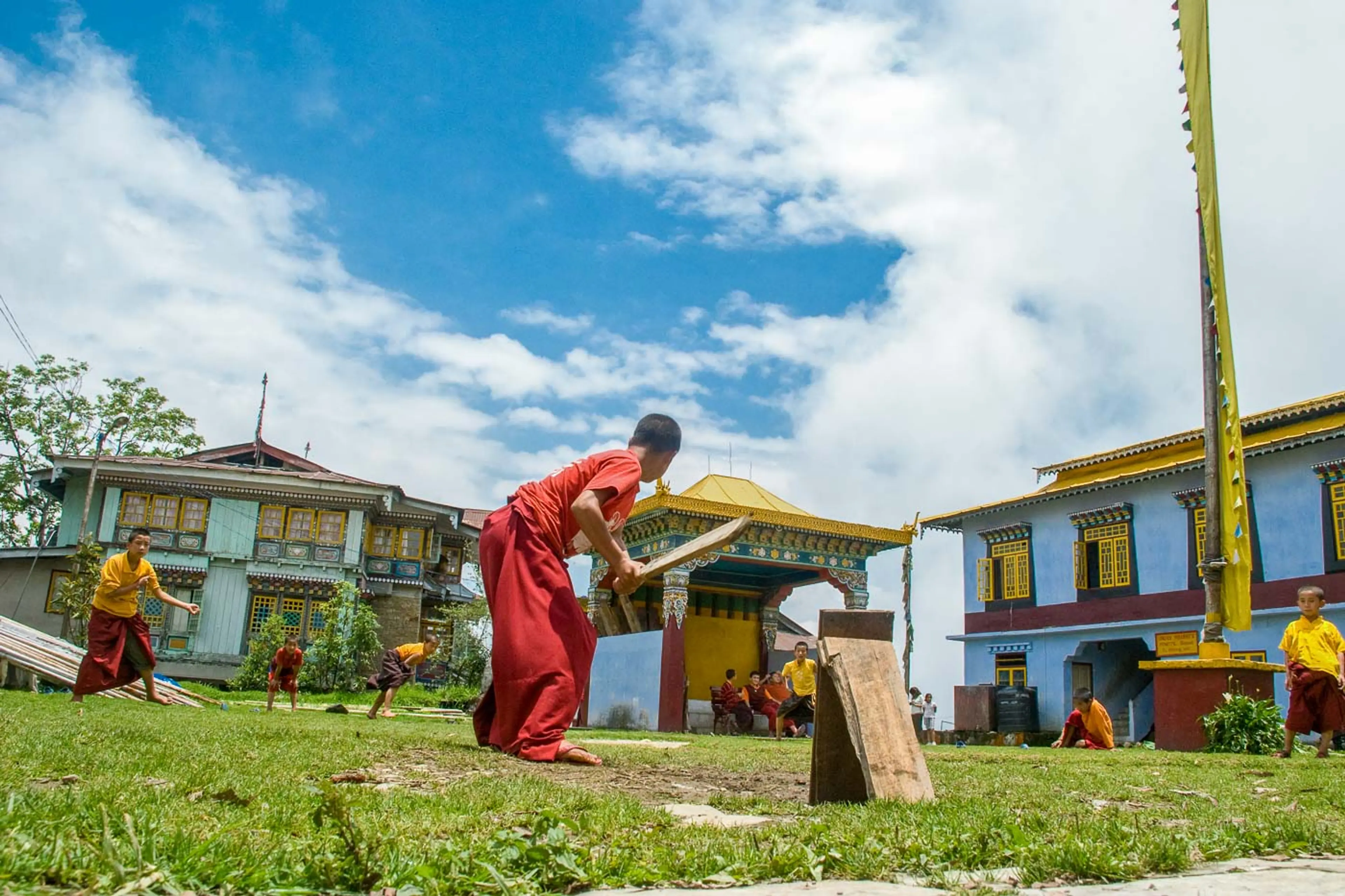
This immersive rural Sikkim travel experience explores the hidden cultural and natural landscapes of West, South, and North Sikkim through village trails, monastery walks, forest hikes, and authentic Himalayan homestays. Structured as a slow travel Sikkim journey through some of the region’s most peaceful mountain settlements, the itinerary combines scenic Himalayan landscapes, Buddhist heritage, indigenous Lepcha culture, organic village life, and meaningful local interaction into a deeply experiential travel India program.
Beginning in the quiet mountain landscapes of Rinchenpong and Kaluk in West Sikkim, the journey introduces travellers to pristine Himalayan villages surrounded by forests, cardamom fields, mountain ridges, and sweeping Kanchenjunga mountain views. Scenic village walks and easy hiking Sikkim trails around Resum and nearby forest paths create an intimate connection with the terrain while offering opportunities for birdwatching Sikkim experiences across oak, chestnut, and rhododendron forests. The region remains one of the quieter corners of rural Sikkim, ideal for travellers searching for offbeat Sikkim tour experiences away from crowded tourist centres.
The journey continues through Pelling and Yuksom, two culturally significant Himalayan settlements associated with the early history of Buddhism in Sikkim. Visits to Pemayangtse Monastery, Dubdi Monastery, Tashiding Monastery, and sacred Khecheopalri Lake create a rich monastery tour Sikkim experience within dramatic Himalayan landscapes. These monastery trails, forest walks, and historic pilgrimage routes reveal the deeper spiritual identity of the Eastern Himalayas while preserving the slower rhythm associated with immersive Himalayan journeys and conscious travel India experiences.
Yuksom — the first capital of Sikkim and gateway to Kanchenjunga National Park — introduces a more intimate expression of Himalayan village experience India journeys. Here, short hikes through forested trails, prayer flag-lined pathways, remote monastery hermitages, and tiny mountain settlements allow close interaction with local communities and monastic culture. The region’s historical and ecological importance also makes it an important destination for travellers interested in sustainable Himalaya travel and nature-led travel India experiences.
In South Sikkim, the experience deepens through extended stays in Kewzing Village, one of the most meaningful examples of community-based rural tourism India. Surrounded by terraced fields, traditional Bhutia homes, monasteries, and snow mountain views, Kewzing offers an authentic Himalayan village experience rooted in local culture and daily life. Village walks Sikkim experiences here include interaction with local schools, monastery visits, organic farming activities, traditional cooking sessions, cultural performances, carpet weaving centres, and hot stone bath rituals using medicinal mountain herbs.
Accommodation throughout Kewzing is arranged in rural homestay Sikkim environments where travellers participate directly in household routines, local cuisine preparation, and village activities. These immersive cultural travel India experiences allow meaningful engagement with Himalayan communities while reinforcing the principles of responsible tourism India and sustainable village tourism India.
The route then moves toward Dzongu Lepcha Reserve in North Sikkim, one of the most culturally protected indigenous landscapes in the Eastern Himalayas. Reserved primarily for the Lepcha community — regarded as the original inhabitants of Sikkim — Dzongu presents a rare opportunity to experience authentic indigenous culture India travel within remote Himalayan surroundings. The region’s forest trails, bamboo bridges, mountain rivers, waterfalls, cardamom farms, and isolated villages create one of the most immersive offbeat North East India experiences for travellers interested in traditional Himalayan village experience journeys.
During the stay in Dzongu, travellers experience Lepcha village life through guided forest walks, cultural interactions, riverside picnics, traditional food preparation, birding North East India trails, and storytelling sessions with local families. The surrounding Himalayan landscape — marked by pristine forests, river valleys, and distant Kanchenjunga views — adds a strong ecological dimension to the cultural immersion.
The final phase of the journey unfolds in Rumtek, home to one of the most important Buddhist monasteries in the Himalayas. Here the experience slows further through countryside walks, organic farming interaction, monastery visits, and quiet Himalayan landscapes overlooking terraced valleys. The stay at Rumtek reinforces the broader philosophy of slow travel India and boutique Himalayan travel by balancing comfort with authentic local engagement.
Blending monastery trails, village walks, organic food experiences, Himalayan homestays, Lepcha cultural immersion, forest hikes, birdwatching opportunities, and peaceful mountain landscapes, this rural Sikkim tour creates a complete Eastern Himalayas cultural journey for travellers seeking meaningful, immersive, and terrain-connected travel experiences in India.