
Introduction
This six-day birdwatching Sikkim expedition explores the high-altitude landscapes of East Sikkim, one of the most unique regions for birdwatching in India within the Eastern Himalayas. Focused on Pangolakha Wildlife Sanctuary and Kyongnosla Alpine Sanctuary, the journey combines alpine ecosystems, ancient mountain trade routes, and specialised habitats that support rare Himalayan bird species.
Beginning from Kolakham and moving toward the Silk Route corridor, the experience gradually ascends into high-elevation terrain stretching from Zuluk to Nathang Valley. This region represents one of the most important zones for birdwatching eastern himalayas, where altitude-driven ecosystems create exceptional opportunities for observing high-altitude bird species.
The Pangolakha and Kyongnosla landscapes form part of the larger birds of North East India ecological corridor, making this route particularly significant for those seeking immersive birding in the himalayas with a focus on remote and undisturbed habitats. :contentReference[oaicite:1]{index=1}
Habitat Diversity & High-Altitude Birding
What sets this itinerary apart is its concentration on alpine and sub-alpine ecosystems, rarely accessed in conventional birdwatching India routes. The terrain transitions from temperate forests to cold desert landscapes, allowing travellers to experience distinct ecological zones within a compact geographic span.
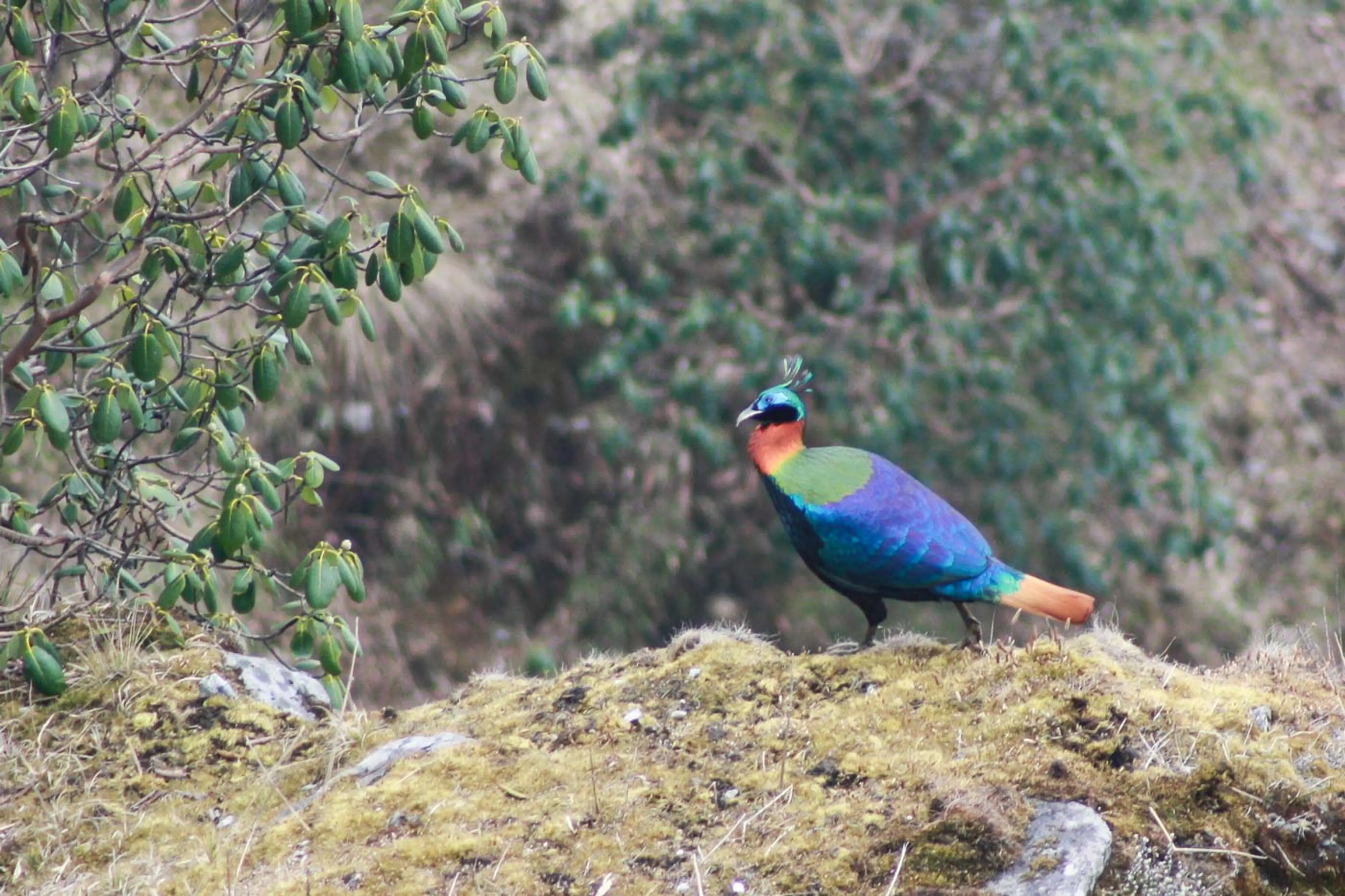
The stretch from Zuluk to Nathang Valley is particularly important for high altitude birding India, where open ridgelines, sparse vegetation, and exposed slopes create ideal habitats for species such as Himalayan Monal, Tibetan Eared Pheasant, Blood Pheasant, and Giant Babax.
These landscapes also support Eurasian Woodcock and Wood Snipe, reinforcing the region’s reputation among serious birders as one of the most rewarding birding hotspots in India for alpine specialists and pheasant-focused exploration. :contentReference[oaicite:2]{index=2}
Experience Flow & Silk Route Transitions
The journey is structured along the historic Silk Route, where gradual elevation gain allows birdlife and habitat to evolve naturally. Starting from forested zones near Kolakham, the route transitions into Pangolakha’s dense mountain forests before opening into the high-altitude valleys of Zuluk and Nathang.
This progression creates a layered birdwatching experience, where each altitude band introduces new species and observation conditions. Trek-based exploration combined with road access ensures deeper engagement with habitat while maintaining efficiency across the itinerary.
The final transition through Kyongnosla Alpine Sanctuary toward Gangtok completes the journey, linking alpine birding zones with lower forest ecosystems and reinforcing the experience as a complete sikkim birding tour across multiple ecological layers. :contentReference[oaicite:3]{index=3}
Seasonal Advantage & Birding Conditions
The most favourable periods for birdwatching in Sikkim along this route are October to December and April to June, when weather conditions and bird activity align effectively across high-altitude landscapes. These windows offer clear visibility and increased chances of observing both resident and migratory species.
Spring and early summer enhance bird movement across alpine zones, while post-monsoon months provide stable weather and improved access to remote regions. These seasonal dynamics significantly improve opportunities to observe rare birds of the Eastern Himalayas.
This alignment of terrain, altitude, and seasonal timing positions the journey among the most distinctive birding in the himalayas experiences, offering a focused exploration of high-altitude birdlife within one of the most visually dramatic birdwatching Sikkim regions. :contentReference[oaicite:4]{index=4}