
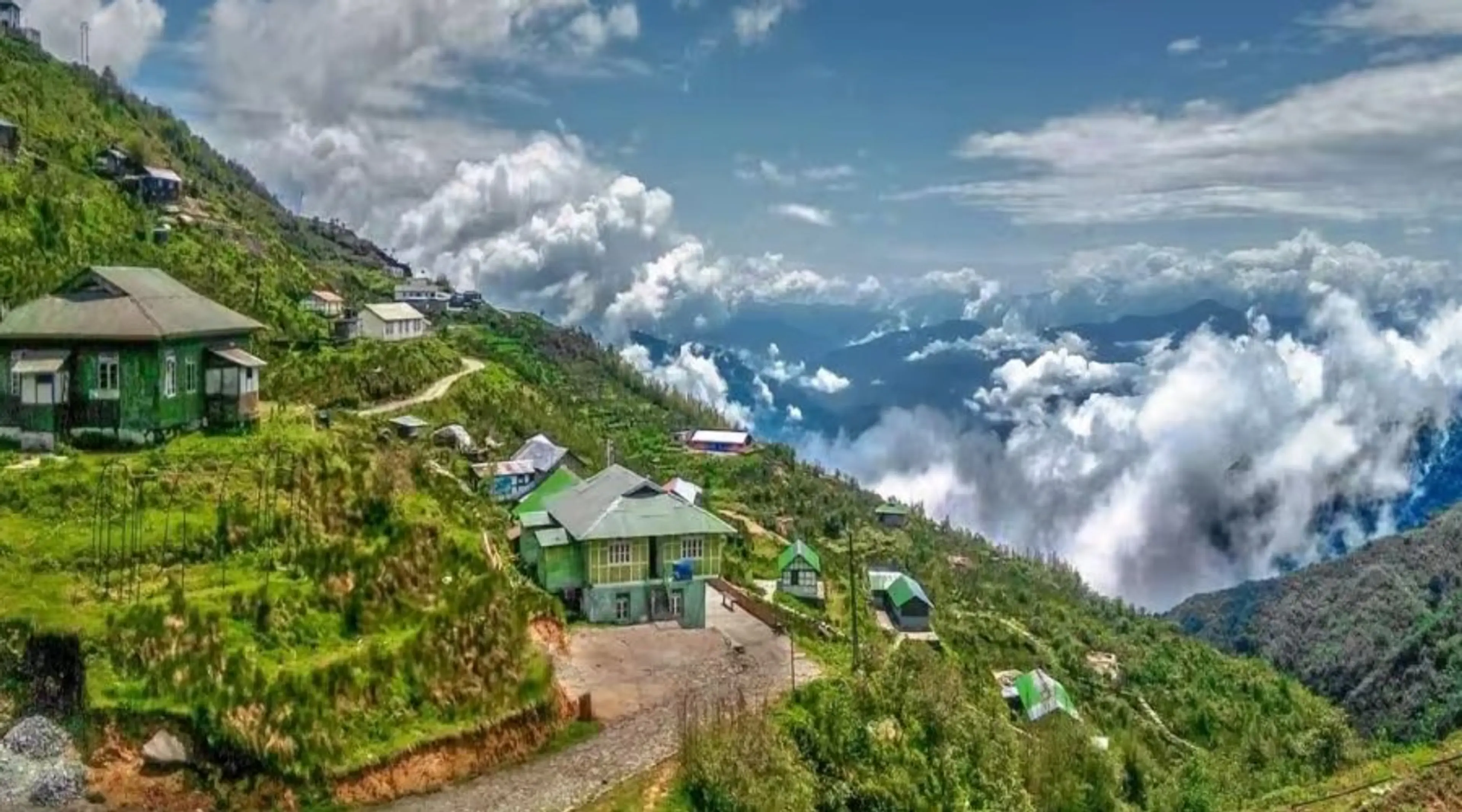
Complete Guide to Village Life in Sikkim: What Tourists Rarely Experience
Village life in Sikkim operates within a structure that is fundamentally different from itinerary-driven tourism. While most travel narratives focus on destinations such as Gangtok or Pelling, village life in Sikkim reflects a system of living shaped by geography, agriculture, and household-based economies. Understanding village life in Sikkim requires looking beyond short-term visits and examining how rural systems function on a daily and seasonal basis.
Rural Sikkim lifestyle is not designed for tourism consumption. Instead, tourism—primarily through homestays—interacts with an already established system. This distinction is important because village life in Sikkim is not staged or curated. It is governed by environmental conditions, availability of resources, and long-standing livelihood practices. For visitors, this creates a partial view of village life in Sikkim, often limited by time and accessibility.
Geographic and Settlement Structure of Rural Sikkim
Village life in Sikkim is closely tied to geography. The state is divided into North, South, East, and West regions, each with distinct settlement patterns. Villages in North Sikkim tend to be more remote due to higher altitude and difficult terrain, while South and West Sikkim have relatively more accessible rural settlements. These geographic differences directly influence village life in Sikkim, including access to resources, transport, and economic activity.
To better understand how geography shapes village life in Sikkim, the regional differences can be structured as follows:
Regional Distribution and Impact
|
Region |
Accessibility |
Terrain Type |
Impact on Village Life in Sikkim |
|
North Sikkim |
Low |
High altitude, rugged |
Limited mobility, shorter agricultural cycles |
|
South Sikkim |
Moderate |
Rolling hills |
More stable farming conditions |
|
East Sikkim |
High |
Semi-urban + rural mix |
Greater tourism interaction |
|
West Sikkim |
Moderate |
Mountainous |
Mixed economy (farming + tourism) |
In rural Sikkim, settlements are not arranged in dense clusters as seen in plains regions. Instead, houses are often dispersed across slopes, reflecting adaptation to mountainous terrain. This pattern affects how village life in Sikkim functions, particularly in terms of movement, communication, and service access. Travel between villages is not always determined by distance but by road conditions and weather, which can significantly extend travel time.
Another important factor shaping village life in Sikkim is altitude. Higher altitude villages experience harsher winters and shorter agricultural cycles, while lower regions have longer growing seasons. These variations create different versions of rural Sikkim lifestyle within the same state. As a result, village life in Sikkim cannot be understood as a single uniform model but as a set of region-specific systems.
Livelihood and Economic Structure in Sikkim Villages
Village life in Sikkim is sustained through a combination of traditional and supplementary income sources. Agriculture remains a primary occupation in most rural areas, with a strong emphasis on organic farming. Crops such as large cardamom, vegetables, and grains play a central role in the Sikkim village economy. Farming practices are largely small-scale and family-operated, forming the backbone of village life in Sikkim.
Livestock is another component of rural Sikkim lifestyle. Households often maintain cattle, poultry, or other animals for both consumption and income. This integrated approach supports the self-sustaining nature of village life in Sikkim, reducing dependence on external supply chains.
Tourism has emerged as a supplementary economic activity, particularly through the homestay model. In many areas, Sikkim homestay experience provides an additional income stream without replacing traditional occupations. This creates a hybrid economy where village life in Sikkim continues to be rooted in agriculture while benefiting from tourism-related earnings.
The distribution of income sources within village life in Sikkim can be understood through the following breakdown:
Income Structure in Village Life in Sikkim
|
Income Source |
Role in Economy |
Dependency Level |
|
Agriculture |
Primary livelihood |
High |
|
Livestock |
Supplementary support |
Medium |
|
Homestay Tourism |
Additional income |
Increasing |
|
Government Jobs |
Stable income |
Limited |
|
Small Trade |
Local income |
Moderate |
Government employment and small-scale trade also contribute to the Sikkim village economy. Some households have members working in government services, education, or local administration. These income sources add stability but do not fundamentally alter the structure of village life in Sikkim, which remains largely dependent on land and local resources.
Daily Life and Household Systems
Daily life in Sikkim villages follows a routine that is closely aligned with natural cycles. Village life in Sikkim typically begins early in the day, with activities structured around daylight availability. Unlike urban environments, where schedules are clock-driven, rural Sikkim lifestyle is influenced by weather conditions and seasonal requirements.
Household systems play a central role in village life in Sikkim. Responsibilities are distributed among family members, with tasks such as farming, cooking, and maintenance forming part of the daily routine. This division of labour ensures that village life in Sikkim remains efficient and self-sufficient at the household level.
Seasonality is another defining factor. Agricultural cycles determine periods of higher and lower activity. During planting and harvesting seasons, daily life in Sikkim villages becomes more labour-intensive, while other periods may involve maintenance or preparation for upcoming seasons.
To illustrate how daily life in Sikkim villages shifts across seasons:
Seasonal Variation in Daily Life
|
Season |
Primary Activities |
Impact on Daily Life in Sikkim Villages |
|
Spring |
Sowing, preparation |
Increased outdoor work |
|
Summer |
Crop maintenance |
Regular farming routines |
|
Autumn |
Harvesting |
Peak labour demand |
|
Winter |
Storage, maintenance |
Reduced farming activity |
This cyclical pattern is a key feature of village life in Sikkim.
Food preparation is integrated into daily routines, with most meals prepared at home using locally available ingredients. This reinforces the household-based nature of rural Sikkim lifestyle. For visitors, observing daily life in Sikkim villages often provides limited insight, as short stays cannot capture the full seasonal variation that defines village life in Sikkim.
Food Systems and Local Consumption Patterns
Food in Sikkim villages is directly linked to local production systems. Village life in Sikkim relies heavily on what is grown within or near the community. This results in a diet that is seasonal, locally sourced, and minimally processed. The local diet in Sikkim reflects the agricultural base of the region, with rice, vegetables, and fermented foods forming key components.
To understand the structure of food systems within village life in Sikkim:
Food Composition in Sikkim Villages
|
Category |
Description |
Source |
|
Staple Food |
Rice, grains |
Local agriculture |
|
Vegetables |
Seasonal produce |
Kitchen gardens |
|
Protein |
Dairy, poultry |
Household livestock |
|
Fermented Foods |
Traditional preparations |
Local methods |
Household-level food preparation is standard in rural Sikkim lifestyle. Unlike urban settings, where food supply chains are complex and commercialized, village life in Sikkim depends on direct sourcing and preparation. This reduces reliance on external markets and strengthens local food systems.
Storage practices are also important, particularly in areas with harsh winters. Households prepare and store food in advance to ensure availability during periods when fresh produce is limited. These practices highlight the functional nature of village life in Sikkim, where food systems are designed for sustainability rather than variety.
For tourists, food in Sikkim villages is often experienced through homestays. However, the Sikkim homestay experience typically represents only a portion of the broader food system. The full scope of local diet in Sikkim is tied to long-term living patterns, which are not fully visible during short visits.
Tourism Integration: Homestays and Visitor Participation
Tourism in rural areas is integrated into village life in Sikkim through the homestay model. Unlike hotels, homestays operate within existing households, allowing visitors to stay in family-run environments. This system ensures that tourism remains connected to the structure of village life in Sikkim rather than functioning as a separate industry.
The Sikkim homestay experience typically includes accommodation and meals, with limited participation in daily activities. Visitors may observe aspects of daily life in Sikkim villages, but their involvement is usually partial. This is because village life in Sikkim continues to operate independently of tourism schedules.
Income generated from homestays supports households without replacing traditional livelihoods. This reinforces the hybrid nature of the Sikkim village economy. Tourism provides financial support while allowing village life in Sikkim to retain its existing structure.
Capacity in homestays is generally limited, reflecting the small-scale nature of rural Sikkim lifestyle. This restricts the number of visitors and maintains balance within the community. As a result, tourism does not dominate village life in Sikkim but remains a supplementary activity.
Practical Considerations for Visitors
For those planning to experience village life in Sikkim, several practical factors need to be considered. Accessibility is one of the primary constraints. Travel to rural areas depends on road conditions, terrain, and weather, all of which influence how easily village life in Sikkim can be accessed.
The cost of homestay in Sikkim village settings typically ranges from basic to moderate, depending on location and facilities. The Sikkim homestay experience is not comparable to hotel accommodation, as it reflects the living standards of rural households.
To clarify visitor expectations versus actual conditions:
Visitor Expectations vs Reality
|
Aspect |
Expectation |
Reality in Village Life in Sikkim |
|
Accommodation |
Hotel-like |
Basic to moderate |
|
Connectivity |
Stable internet |
Limited/inconsistent |
|
Food |
Wide variety |
Seasonal/local |
|
Travel |
Easy access |
Terrain-dependent |
Comfort levels vary, with most homestays offering essential amenities rather than luxury features. Visitors should be aware that staying in rural Sikkim involves adapting to existing conditions rather than expecting standardized services.
Connectivity can also be limited. While some areas have internet access, it may not be consistent. Planning for such limitations is necessary when staying in rural Sikkim. These factors highlight the difference between visiting and fully participating in village life in Sikkim.
What Tourists Typically Do Not Experience
Despite the availability of homestays, tourists experience only a limited portion of village life in Sikkim. Short stays restrict exposure to long-term processes such as agricultural cycles and seasonal changes. As a result, the observed version of village life in Sikkim is often incomplete.
Visitors typically engage with daily routines at a surface level, without participating in the full range of activities that define rural Sikkim lifestyle. This creates a distinction between temporary observation and actual living conditions in Sikkim villages.
Another limitation is time. Village life in Sikkim operates over extended cycles, including planting, harvesting, and seasonal preparation. These processes cannot be fully understood within the timeframe of a typical visit. Therefore, what tourists see represents only a segment of village life in Sikkim.
Understanding this difference is essential for accurately interpreting village life in Sikkim. While tourism provides access, it does not replicate the conditions of long-term residence.