

Orthodox vs CTC: Why Darjeeling’s Leaf Grade System Shapes Global Tea Pricing
At first glance, tea appears simple — leaf, water, infusion. But within the world of darjeeling tea, grading determines everything: flavour clarity, chemical composition, auction value, and international prestige.
The divide between orthodox tea and CTC (crush-tear-curl) processing is not merely mechanical. It is economic, chemical, and geographic. For serious buyers in Europe and Japan, understanding why first flush darjeeling commands dramatically higher prices than mass-market blends such as darjeeling tea lipton or darjeeling tea twinings requires a closer look at leaf grade systems and production scale.
Darjeeling’s steep Himalayan slopes cannot compete with Assam in volume. Instead, they compete in molecular delicacy.
What Makes First Flush Chemically Lighter
The mystique of first flush darjeeling begins with timing. Harvested between late March and April, the first flush emerges after winter dormancy. The leaves are young, tender, and chemically distinct from later harvests.
In the global specialty market for darjeeling tea, this early seasonal timing creates both chemical delicacy and commercial anticipation. Buyers tracking first flush darjeeling understand that the first flush represents the most volatile and aromatic expression of a darjeeling tea plantation. Unlike mass-market blends such as darjeeling tea lipton or darjeeling tea twinings, which prioritize consistency year-round, first flush darjeeling captures a narrow climatic window.
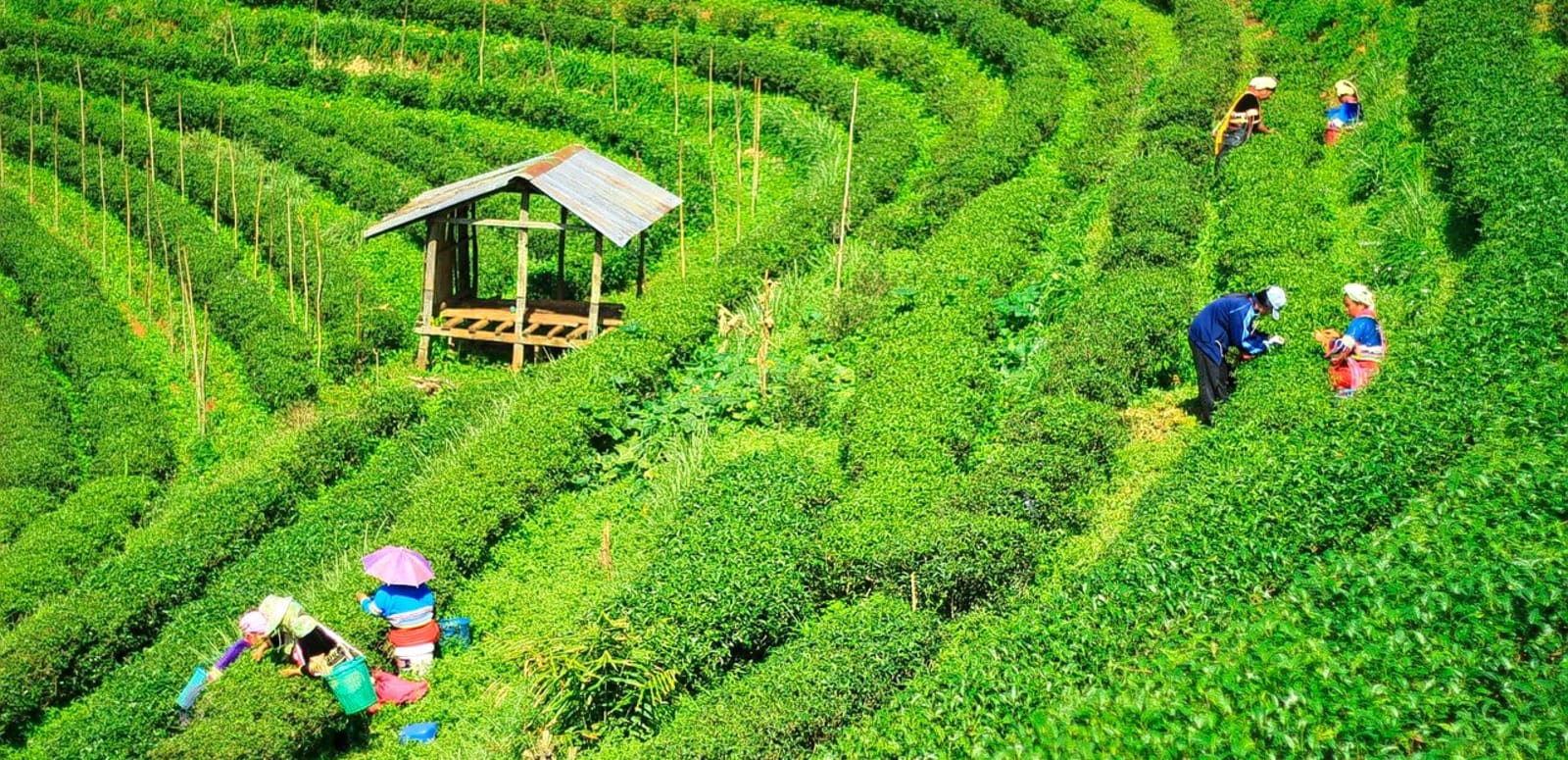
The biochemical lightness of first flush makes it unsuitable for strong darjeeling tea bag formats typically designed for milk-based consumption. Instead, orthodox tea producers focus on preserving the subtle floral compounds that define premium darjeeling tea. Because each darjeeling tea plantation experiences slightly different spring temperatures, the first flush from one estate can differ markedly from another, reinforcing the role of micro-terroir in pricing and reinforcing why first flush darjeeling often commands auction premiums.
Polyphenols, Amino Acids, and Oxidation Timing
During early spring, cool temperatures slow leaf growth. This concentrates amino acids such as L-theanine while limiting oxidation potential. As a result, darjeeling tea from the first flush exhibits lower levels of fully oxidized theaflavins compared to summer harvests.
Because orthodox tea processing involves careful rolling rather than aggressive mechanical disruption, oxidation can be controlled with precision. Minimal oxidation preserves volatile aromatic compounds responsible for floral and muscatel notes. In contrast, CTC methods used in many mass blends — including products marketed as darjeeling tea bag formats — prioritize rapid processing and uniform colour. The chemical profile shifts toward strength and briskness rather than nuance.
This biochemical difference explains why authentic first flush darjeeling often tastes lighter, brighter, and more aromatic than bulk-market alternatives. Even within a single darjeeling tea plantation, slight variations in oxidation timing alter final auction valuation.
From a pricing perspective, these oxidation differences separate estate orthodox tea from commercial darjeeling tea lipton or darjeeling tea twinings blends. The latter rely on predictable color extraction, especially in darjeeling tea bag applications where brewing time must remain short and standardized. In contrast, first flush darjeeling rewards slower infusion and careful temperature control. For European and Japanese connoisseurs of darjeeling tea, this lighter oxidation profile is precisely what signals authenticity. A few minutes too long in the oxidation trough at a darjeeling tea plantation can shift flavor balance, reducing delicacy and lowering perceived value. Thus, first flush darjeeling pricing reflects both chemical precision and the disciplined craftsmanship inherent in orthodox tea manufacturing.
H2: Elevation and the Concentration of Flavor Compounds
Darjeeling’s gardens sit between 600 and 2,000 meters above sea level. Elevation shapes chemistry as much as craftsmanship. Altitude directly influences the metabolic pathways inside the Camellia sinensis leaf, making darjeeling tea fundamentally different from lower-grown alternatives. At higher sections of a darjeeling tea plantation, slower growth cycles allow flavor precursors to accumulate before plucking.
This is particularly evident in first flush darjeeling, where cool mountain air preserves amino acid concentration while moderating tannin development. Unlike darjeeling tea lipton or darjeeling tea twinings blends, which may include leaf from varied elevations to maintain consistency, estate-specific orthodox tea captures elevation-specific identity. The lighter body of first flush is therefore not a weakness but a reflection of altitude stress chemistry.
Because darjeeling tea bag production typically favors strong liquors that withstand milk, lower-grown teas are often preferred in mass blending. In contrast, premium first flush darjeeling thrives in its high-altitude constraints, reinforcing why darjeeling tea plantation geography is inseparable from global pricing dynamics.
High Altitude Stress and Flavor Density
At higher elevations, cooler air and greater UV exposure increase stress on tea bushes. Stress stimulates polyphenol synthesis. This contributes to the layered complexity that distinguishes premium darjeeling tea from lowland varieties.
The finest first flush darjeeling lots often originate from upper sections of a darjeeling tea plantation, where slow leaf maturation intensifies aromatic concentration. Because orthodox tea manufacturing preserves whole leaf integrity, these compounds remain intact during brewing. CTC systems, commonly used for stronger breakfast blends, break the leaf into uniform granules — ideal for darjeeling tea lipton-style blends but unsuitable for high-end specialty markets.
European and Japanese buyers often pay a premium precisely because altitude-limited darjeeling tea plantation output cannot scale without compromising flavour density.
The physics of elevation limits yield. A darjeeling tea plantation cannot simply increase production without diluting the characteristics that define first flush darjeeling. While darjeeling tea twinings and darjeeling tea lipton succeed through blending strategies, orthodox tea producers rely on altitude-driven scarcity. Darjeeling tea bag formats may prioritize brisk extraction, but high-elevation first flush emphasizes aroma clarity. The interplay between altitude, orthodox tea processing, and first flush chemistry sustains the premium aura of darjeeling tea in global specialty auctions.
Auction Pricing and Global Perception
Unlike commodity teas traded in bulk, darjeeling tea operates within a reputation-driven pricing ecosystem. Global buyers do not evaluate darjeeling tea purely on volume metrics. Instead, they assess provenance, seasonal timing, and chemical freshness — factors especially relevant for first flush darjeeling. A single darjeeling tea plantation can build a global reputation based on a few standout lots of orthodox tea. While darjeeling tea twinings and darjeeling tea lipton function within mass retail systems, estate-driven darjeeling tea commands prices through narrative and scarcity.

Darjeeling tea bag blends are typically priced for accessibility, but early-season first flush is priced for exclusivity. The signaling power of a high auction bid reinforces brand equity for a darjeeling tea plantation and influences subsequent contract negotiations. Thus, pricing in darjeeling tea reflects not just leaf grade but perception.
Why First Flush Commands a Premium
The first invoice of the season — especially for early first flush darjeeling — often sets record-breaking auction benchmarks. Buyers compete not for quantity but for exclusivity. Because orthodox tea production requires hand-plucking and controlled withering, yields remain limited. A single darjeeling tea plantation may produce only a few hundred kilograms of top-grade first flush in peak weeks.
In contrast, large-scale CTC operations supply mass retailers. Products labeled under brands such as darjeeling tea twinings or darjeeling tea lipton blend leaf from multiple sources to achieve consistency and volume.
While such blends dominate supermarket shelves, they operate in a fundamentally different pricing tier than estate-specific first flush darjeeling. Auction houses respond to scarcity, provenance, and chemical freshness — not volume. That scarcity sustains price differentiation in global markets.
For connoisseurs of darjeeling tea, the first flush functions almost like a vintage release in wine. Orthodox tea lots from a respected darjeeling tea plantation may sell out within days. Meanwhile, darjeeling tea bag products maintain stable pricing because their supply chains depend on scalability. The divergence between boutique first flush darjeeling and mass darjeeling tea lipton offerings underscores how grading and processing methods define value.
Hand-Plucking vs Machine Harvesting Economics
Labour structure directly influences cost. Beyond chemistry, the economics of darjeeling tea are rooted in terrain and tradition. The steep slopes of a darjeeling tea plantation make mechanization impractical. First flush darjeeling requires selective plucking, preserving leaf tenderness essential for orthodox tea quality.
By contrast, CTC-driven darjeeling tea bag production favors efficiency over selectivity. Brands such as darjeeling tea twinings and darjeeling tea lipton depend on supply chains that reward throughput. In specialty markets, however, the labour-intensive identity of darjeeling tea enhances its narrative value. Buyers recognize that first flush from a hillside darjeeling tea plantation reflects thousands of individual human decisions, not mechanical standardization.
The Human Factor in Orthodox Production
Premium darjeeling tea relies on the “two leaves and a bud” plucking standard. This method is labour-intensive and slow. Each kilo of fine first flush darjeeling represents thousands of carefully selected leaf tips.
Because orthodox tea cannot be harvested mechanically without damaging leaf structure, estates absorb higher wage costs. In a typical darjeeling tea plantation, terrain prevents large harvesting machines from operating efficiently. Conversely, CTC systems — commonly supplying darjeeling tea bag products — depend on mechanical efficiency and high throughput. Machine harvesting reduces labour expense but sacrifices whole-leaf integrity.
For global buyers, the economics become clear: high-altitude darjeeling tea costs more because it requires more human intervention per gram. The premium on first flush darjeeling is therefore not marketing — it reflects structural labour intensity. Unlike darjeeling tea lipton or darjeeling tea twinings blends, which standardize flavor across markets, orthodox tea from a darjeeling tea plantation retains hand-crafted variability. This variability strengthens brand identity in first flush markets, reinforcing why darjeeling tea remains a premium product category.
Why Boutique Estates Survive Despite Low Yield
Darjeeling produces less than 1% of India’s total tea output. Yet its international prestige remains unmatched. Scarcity underpins survival. A darjeeling tea plantation cannot rival Assam in bulk supply, but it does not need to.
By focusing on first flush darjeeling and orthodox tea craftsmanship, estates cultivate a niche among high-end consumers. Darjeeling tea bag formats target convenience markets, while darjeeling tea lipton and darjeeling tea twinings serve global supermarket demand. Boutique estates instead market terroir. The limited output of first flush reinforces exclusivity, strengthening auction prices. Thus, darjeeling tea maintains its premium identity despite low overall yield.
Scarcity as a Value Strategy
A small darjeeling tea plantation cannot compete with Assam’s industrial scale. Instead, it competes on terroir and timing. The limited harvest window for first flush darjeeling ensures scarcity.
Because orthodox tea emphasizes craftsmanship over volume, estates position themselves as boutique producers. European and Japanese consumers often seek traceability — knowing which garden produced their darjeeling tea. Mass brands such as darjeeling tea twinings and darjeeling tea lipton succeed through distribution power. However, connoisseurs gravitate toward estate-labeled first flush offerings rather than blended darjeeling tea bag products.
This dual market structure allows boutique producers to survive. They sell less, but at significantly higher margins. Ultimately, the leaf grade system reinforces this hierarchy. Whole-leaf orthodox tea from a single darjeeling tea plantation cannot scale like CTC without losing identity.
That limitation becomes its strength.
In this structure, darjeeling tea thrives not by volume but by differentiation, with first flush darjeeling remaining the clearest expression of that premium strategy.
The Structural Divide Between Orthodox and CTC
The comparison between orthodox tea and CTC processing defines the global pricing narrative.
At its core, darjeeling tea occupies a structural niche. CTC systems support darjeeling tea bag scalability, enabling brands like darjeeling tea lipton and darjeeling tea twinings to distribute globally. Orthodox tea, by contrast, supports estate-level storytelling and first flush darjeeling exclusivity. The limited acreage of each darjeeling tea plantation ensures that supply remains constrained. As a result, first flush functions as both seasonal harvest and branding milestone.
CTC maximizes uniformity, strength, and scalability — ideal for everyday consumption and tea bag convenience. Orthodox processing prioritizes leaf integrity, oxidation control, and aromatic complexity.
In the case of darjeeling tea, where altitude, climate, and small acreage constrain supply, orthodox production aligns naturally with scarcity economics. The higher price of first flush darjeeling reflects chemistry, geography, labour, and branding converging into a single valuation system.
For serious tea enthusiasts, understanding this divide clarifies why estate-specific darjeeling tea commands premiums that mass-market formats — including darjeeling tea bag, darjeeling tea lipton, and darjeeling tea twinings — cannot replicate.
The grade system is not merely technical classification. It is the foundation upon which global perception and pricing rest.