
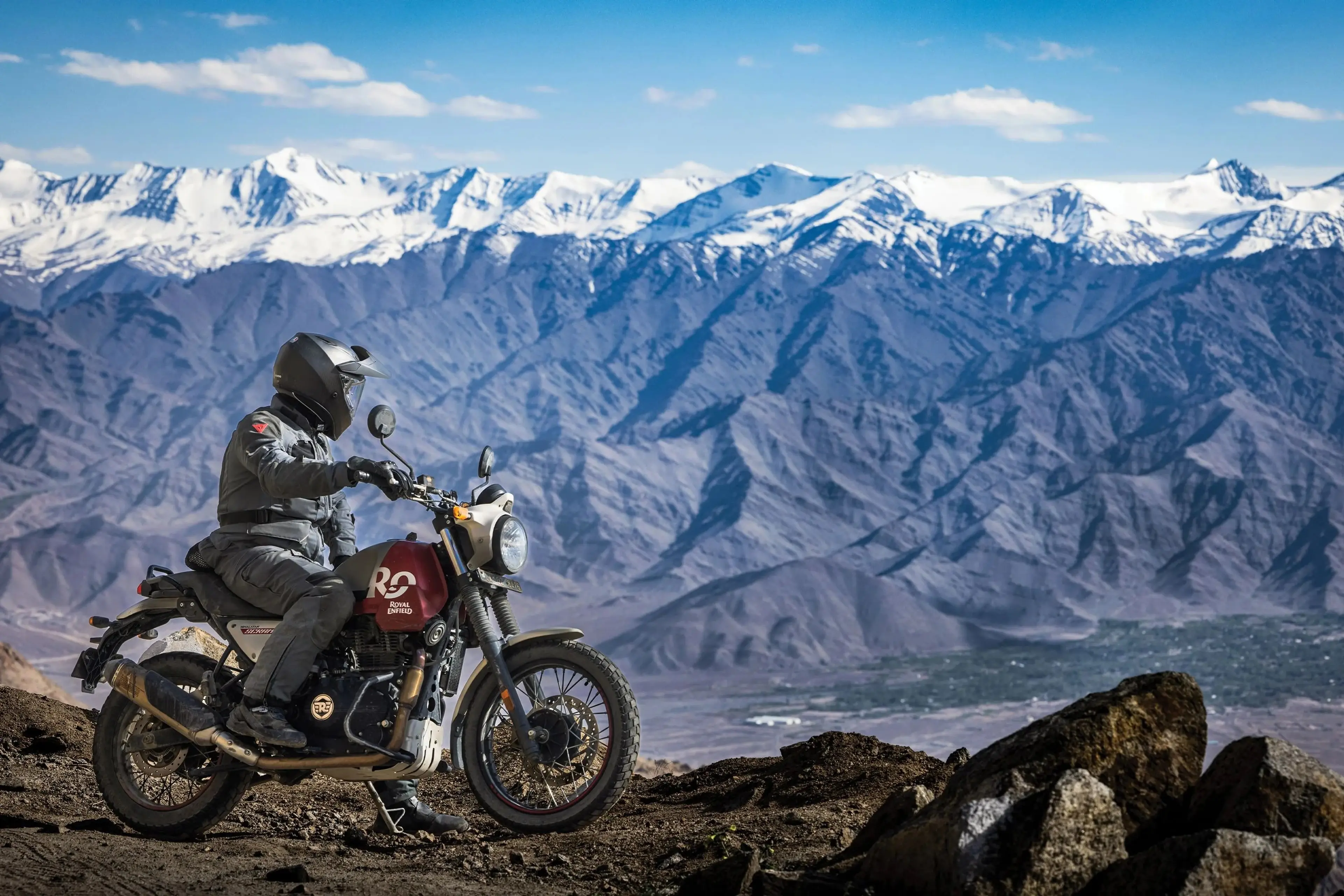
Riding in the Eastern Himalayas: Terrain, Altitude, Permits, and Ground Realities Foreign Riders Must Understand
Motorcycling in the Himalayas is often described as a journey. In the eastern Himalayas, however, it is more accurately understood as a system of constraints—terrain, altitude, regulation, and environment all interacting at once.
For foreign travellers planning a motorcycle tour india himalayas, the eastern sector—covering Sikkim and North Bengal—presents a distinct set of realities. Unlike the more commercialised western Himalayan circuits, this region operates under stricter regulation, higher ecological sensitivity, and more variable terrain.
Terrain and Road Systems: Understanding the Physical Landscape
The eastern Himalayas are geologically younger and more unstable than their western counterparts. This has direct implications for road conditions, riding difficulty, and overall travel planning.
Roads here are not continuous highways but fragmented mountain routes that connect valleys, ridgelines, and border zones. Climbs are frequent, gradients are steep, and surfaces vary significantly. In many stretches, what appears as a paved road may abruptly transition into loose gravel or broken asphalt.
Core Terrain Characteristics
- Narrow mountain roads with sharp switchbacks
- Frequent landslides, especially during monsoon
- Mixed surfaces: asphalt, gravel, mud
- Continuous ascent and descent cycles
Cycling and biking routes in the region often involve steep gradients between 8–12%, sustained over long distances. This creates a riding environment where technical control becomes more important than speed.
Road Condition Reality
|
Condition Type |
What Riders Experience |
|
Asphalt |
Present but often broken or eroded |
|
Gravel |
Common in high-altitude stretches |
|
Mud |
Frequent during rainfall periods |
|
Landslides |
Seasonal but unpredictable |
|
Visibility |
Reduced due to fog and cloud cover |
For those planning a bike trip to sikkim, it is important to understand that distance does not translate directly into time. A 100 km stretch can take several hours depending on terrain and weather.
Altitude and Physical Stress: The Invisible Challenge
One of the most underestimated aspects of riding in this region is altitude. Unlike plains or low hills, the eastern Himalayas introduce physiological stress that directly affects both rider and machine.
Elevations in Sikkim range from approximately 1,500 meters to over 5,000 meters in certain areas. As altitude increases, oxygen levels decrease, affecting stamina, concentration, and reaction time.
Altitude Impact on Riders
- Reduced oxygen leads to fatigue and slower reflexes
- Increased dehydration due to dry, cold air
- Higher risk of Acute Mountain Sickness (AMS)
- Reduced decision-making efficiency
Altitude Zones (Simplified)
|
Altitude Range |
Effect on Rider |
|
1,000–2,000 m |
Mild fatigue, manageable riding |
|
2,000–3,500 m |
Noticeable exertion, reduced stamina |
|
3,500+ m |
High fatigue, risk of AMS |
Practical Riding Implications
- Frequent breaks are necessary above 3,000 m
- Hydration becomes critical even in cold conditions
- Overexertion increases risk of altitude sickness
- Riding speed must be reduced for safety
For those undertaking a high altitude biking india experience, acclimatisation is not optional—it is essential. Riders often underestimate how quickly fatigue can set in, especially when combined with difficult terrain.
Motorcycles are also affected. Reduced oxygen impacts engine combustion efficiency, leading to lower power output. Carbureted engines may struggle more at altitude compared to fuel-injected systems.
Permits and Regulations: A Controlled Riding Environment
Unlike most regions in India, large parts of Sikkim are classified as protected or restricted zones due to their proximity to international borders.
This makes riding here not just a physical activity, but an administrative process that must be understood in advance.
Types of Permits Required
|
Permit Type |
Purpose |
|
Protected Area Permit (PAP) |
Required for high-altitude and border regions |
|
Restricted Area Permit (RAP) |
Mandatory for foreign nationals |
|
Route-specific permits |
Control access to sensitive zones |
Key Regulatory Realities
- Foreign travellers cannot freely access all regions
- Permits are mandatory for North Sikkim and certain eastern sectors
- Checkpoints are frequent and strictly monitored
- Solo travel may be restricted in certain areas
Practical Permit Considerations
- Permits are typically arranged through registered operators
- Passport and visa copies are required
- Multiple printed copies must be carried
- Travel is often allowed only on designated routes
For those planning a sikkim bike tour, this regulatory framework defines the structure of the journey. Unlike open-road travel, movement is pre-determined and controlled.
Equipment, Machine, and Logistics
Riding in the eastern Himalayas requires preparation that goes beyond standard touring conditions. Mechanical reliability and logistical planning are critical.
Motorcycle Requirements
- Minimum 150cc engine for high-altitude routes
- Strong torque for steep inclines
- Reliable braking system for downhill control
- Essential Riding Considerations
- Carry spare fuel for remote stretches
- Basic repair tools are necessary
- Protective riding gear is essential due to terrain risk
Logistics Reality
|
Factor |
Condition |
|
Fuel Stations |
Limited beyond major towns |
|
Repair Shops |
Rare in remote areas |
|
Mobile Connectivity |
Intermittent or absent |
|
Weather Impact |
High variability affecting routes |
Fuel availability becomes a major concern in remote areas. Riders often need to plan refuelling points in advance or carry extra fuel containers. For those considering north bengal biking, similar constraints apply, particularly on less-travelled routes.
Breakdowns can be challenging to manage due to limited mechanical support. This makes preventive maintenance and preparedness critical.
Environmental and Climatic Conditions
The eastern Himalayas receive significantly higher rainfall compared to western Himalayan regions. This creates a more dynamic and often unpredictable riding environment.
Weather Characteristics
- Heavy rainfall during monsoon (June–September)
- Frequent fog reducing visibility
- Sudden temperature drops with altitude
Seasonal Riding Conditions
|
Season |
Riding Condition |
|
Spring |
Stable weather, moderate temperatures |
|
Summer |
Wet, landslide-prone |
|
Autumn |
Best riding conditions |
|
Winter |
Cold, limited high-altitude access |
Environmental Risks
- Landslides can block roads without warning
- Fog can reduce visibility to a few meters
- Water crossings may become impassable after rain
For those planning the best time for sikkim bike trip, autumn (October–November) generally offers the most stable conditions. However, even during optimal seasons, unpredictability remains a defining feature.
Interpreting the Riding Experience as a System
What distinguishes riding in this region is not difficulty alone, but the interaction of multiple variables:
- terrain instability
- altitude stress
- regulatory constraints
- climatic unpredictability
This creates a riding environment that cannot be approached casually.
For those exploring riding in himalayas india, especially in the eastern sector, the experience becomes less about speed and more about adaptation.
Key Realisations for Riders
- Distance is not equal to time
- Terrain dictates pace
- Regulations dictate route
- Weather dictates feasibility
Understanding these factors transforms the journey from a recreational ride into a structured expedition.
Contextualising the Eastern Himalayan Riding Experience
For foreign travellers, the eastern Himalayas present a different narrative compared to other global riding destinations.
Unlike open-road environments, this region operates within constraints that are both environmental and administrative. This makes it particularly relevant for those seeking offbeat biking routes india, where experience is defined not by ease, but by depth.
It also reframes expectations. Riding here is not about covering maximum distance—it is about navigating conditions effectively.
This is why many structured journeys, such as a bike trip north east india, are designed with controlled pacing, guided routes, and logistical support.
Reframing Adventure Riding in the Eastern Himalayas
In many parts of the world, adventure riding is associated with freedom—open roads, minimal restrictions, and self-directed travel.
In the eastern Himalayas, the definition shifts.
Here, adventure is not freedom from constraints, but engagement with them.
- permits regulate access
- terrain regulates movement
- altitude regulates endurance
This creates a form of travel that is less about spontaneity and more about awareness.
For those undertaking a himalaya biking india experience, this distinction becomes critical. The journey is not simply about riding—it is about understanding the environment within which riding takes place.
Final Perspective on Riding the Eastern Himalayas
To ride in the eastern Himalayas is to operate within a system that does not simplify itself for the traveller.
It demands preparation, awareness, and adaptability.
But in return, it offers something rare:
- landscapes that are not overexposed
- routes that are not standardised
- experiences that are not easily replicated