
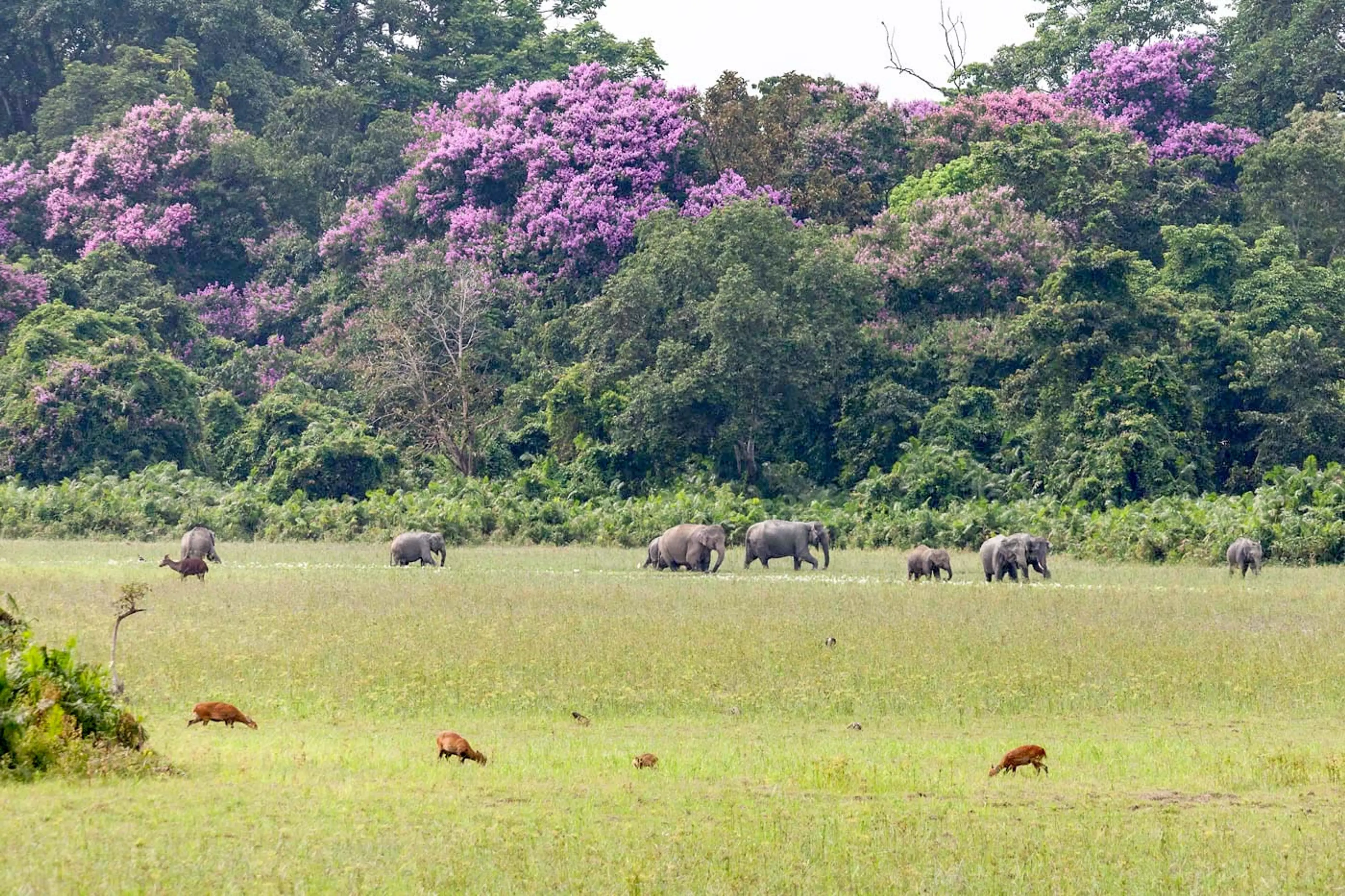
Kaziranga National Park: From Floodplain Wilderness to Global Wildlife Stronghold
Kaziranga National Park is one of India’s most important conservation landscapes, where wildlife protection, ecological balance, and long-term stewardship converge. Situated in the floodplains of Assam, Kaziranga National Park is globally recognised for its extraordinary biodiversity and its role in safeguarding endangered species within a dynamic riverine ecosystem. Unlike protected areas shaped primarily for scenic tourism, Kaziranga National Park is defined by natural processes, seasonal flooding, and conservation-oriented management.
The historical importance of Kaziranga National Park lies in its evolution from an exploited grassland region into a highly protected wildlife reserve. Over time, conservation efforts transformed this landscape into a sanctuary where habitat integrity and species survival are prioritised above commercial exploitation. This transformation has positioned Kaziranga National Park within global wildlife conservation frameworks, influencing how protected areas are managed across similar floodplain environments.
For tourists, Kaziranga National Park offers far more than wildlife sightings. It provides insight into how conservation, ecological rhythms, and responsible tourism coexist within a fragile yet resilient ecosystem. Understanding the park’s history is essential to appreciating its present-day significance as both a conservation stronghold and a tourism destination.
How Kaziranga Evolved into One of India’s Most Protected Landscapes
The origins of Kaziranga National Park are closely linked to early conservation awareness in Assam. What began as concern over declining wildlife populations gradually developed into formal protection for a unique grassland ecosystem. As ecological value became increasingly recognised, stronger safeguards were introduced, expanding the protected area and limiting activities that threatened wildlife habitats.
Seasonal flooding plays a defining role in the history of Kaziranga National Park. Annual inundation by the Brahmaputra River replenishes soil nutrients, sustains grassland regeneration, and shapes wildlife movement across the landscape. Rather than being treated as a disruption, flooding is understood as a vital ecological process, reflecting principles often discussed within river-floodplain ecology research.
As protection intensified, Kaziranga National Park became a refuge for species facing habitat loss elsewhere. Conservation strategies focused on anti-poaching enforcement, habitat management, and long-term species monitoring. These measures established the park as a model for conservation rooted in ecological realism rather than artificial landscape control.
Beyond formal conservation milestones, the historical evolution of Kaziranga National Park reflects a broader shift in how landscapes were valued within Assam. Early perceptions treated grasslands as expendable terrain, but sustained ecological observation revealed their critical role in supporting large herbivore populations. This shift positioned Kaziranga National Park within grassland conservation discourse, where open ecosystems are increasingly recognised as biodiversity-rich rather than degraded.
Scientific monitoring gradually became integral to management practices. Population surveys, habitat mapping, and flood-impact assessments began guiding policy decisions, aligning the park with evidence-based conservation planning. These methods allowed Kaziranga National Park to move beyond reactive protection toward long-term ecological forecasting.
The historical trajectory of Kaziranga National Park also illustrates how conservation priorities evolve over time. Initial urgency around species survival expanded into ecosystem-level thinking, reinforcing the park’s relevance within adaptive conservation models that respond to environmental uncertainty rather than resist it.
Legal Protection, Flood Cycles, and Early Conservation Choices
Kaziranga National Park’s transition from a reserved forest to a fully protected landscape marked a crucial turning point in its conservation journey. Legal protection enabled structured management, ecological zoning, and restrictions on activities that posed risks to wildlife. This transition reflects protected area governance models that emphasise legal authority combined with ecological planning.
Early management recognised the importance of maintaining habitat diversity. Grasslands, wetlands, and forest patches were preserved as interconnected components rather than isolated units. This mosaic structure supports high biodiversity and is frequently highlighted in habitat diversity studies that examine species richness in heterogeneous landscapes.
Human–wildlife relationships also evolved during this period. Buffer zones, controlled access, and conflict mitigation strategies were gradually introduced to balance conservation goals with surrounding communities’ needs. These strategies continue to influence how Kaziranga National Park functions today, demonstrating that conservation success often depends on negotiated coexistence rather than exclusion.
Why Kaziranga’s Ecosystem Works the Way It Does
Kaziranga National Park is internationally renowned for its wildlife density and ecological complexity. While the park is most closely associated with the conservation of the one-horned rhinoceros, its ecological importance extends far beyond a single species. The interaction of grasslands, wetlands, and riverine forests creates habitats that support a wide range of mammals, birds, reptiles, and aquatic species.
The ecological strength of Kaziranga National Park lies in its functioning as a dynamic system. Seasonal floods reshape vegetation patterns, redistribute nutrients, and maintain high primary productivity. These natural cycles contribute to ecosystem resilience and are frequently emphasised in ecosystem process studies examining flood-dependent landscapes.
Predator–prey relationships further reinforce ecological balance within the park. Large herbivores support carnivore populations, while wetlands sustain fish and bird communities. This interconnectedness positions Kaziranga National Park as a living laboratory for trophic interaction research and ecological monitoring.
Kaziranga National Park’s ecological importance is also defined by its role as a refuge during environmental stress. Seasonal flooding displaces wildlife temporarily, but surrounding highlands and corridor habitats allow species movement and recovery. This spatial flexibility is often discussed in landscape connectivity research, where uninterrupted movement paths are essential for genetic diversity and long-term population stability.
Wetlands within the park act as ecological anchors, supporting aquatic species and migratory birds dependent on floodplain hydrology. These systems play a key role in nutrient cycling and food-web stability, reinforcing Kaziranga National Park’s relevance within freshwater ecosystem studies.
Importantly, long-term ecological monitoring in Kaziranga National Park has generated valuable data sets that inform conservation practice beyond the region. Such longitudinal insights strengthen the park’s position within applied conservation science, where real-world ecosystems shape theory and policy alike.
Flagship Species, Grasslands, and the Logic of Habitat Balance
Flagship species play a central role in shaping Kaziranga National Park’s conservation identity. The protection of iconic wildlife has helped secure broader habitat preservation, ensuring that entire ecological communities benefit. This approach reflects umbrella species conservation theory, where safeguarding one species supports many others.
Habitat balance is equally critical. Grasslands require active management to prevent woody encroachment, while wetlands must be protected from excessive sedimentation. Conservation teams continuously monitor habitat conditions, integrating scientific observation with adaptive management strategies.
These practices demonstrate how intervention can support natural processes without undermining them. For visitors, understanding this balance deepens appreciation for Kaziranga National Park as a carefully managed yet fundamentally wild landscape shaped by both natural forces and human responsibility.
What Kaziranga Represents for Wildlife Tourism Today
Kaziranga National Park occupies a central position in Assam’s tourism economy, attracting visitors interested in wildlife, conservation, and ecological learning. Tourism here is structured around regulated access, guided safaris, and seasonal controls designed to minimise environmental disturbance. This approach aligns closely with responsible wildlife tourism principles.
Tourism revenue plays a vital role in supporting conservation infrastructure, anti-poaching measures, and habitat management. By linking visitor activity to conservation outcomes, Kaziranga National Park demonstrates how tourism can function as a support system rather than a threat. This model is widely discussed within sustainable tourism frameworks focused on long-term ecological viability.
For travellers, the park offers immersive experiences that prioritise observation, patience, and respect for wildlife. Safaris follow designated routes and timings, reinforcing the idea that wildlife encounters are privileges rather than guaranteed spectacles.
Modern tourism has also reshaped how Kaziranga National Park communicates its value. Visitors increasingly seek ethical engagement and learning-oriented experiences, encouraging interpretive tourism approaches aligned with conservation-led tourism approaches.
Tourism has diversified local livelihoods around Kaziranga National Park. Alongside agriculture, residents now engage in guiding, interpretation, handicrafts, and hospitality services. This diversification supports rural livelihood resilience, reducing reliance on extractive land use.
Equally important is tourism’s role in advocacy. Visitors often become informal ambassadors, extending the park’s conservation narrative beyond Assam. This influence places Kaziranga National Park within global nature tourism networks, where awareness grows through experience rather than promotion.
Visitor Experience, Regulation, and Conservation-First Tourism
Responsible tourism is essential to preserving the ecological integrity of Kaziranga National Park. Visitor numbers are regulated, movement is controlled, and seasonal closures allow habitats to recover after flooding. These measures reflect visitor carrying capacity models used in sensitive conservation areas worldwide.
Tourists are encouraged to engage thoughtfully with the environment, learning about species behaviour, habitat dynamics, and conservation challenges. Interpretive experiences position the park within experiential learning tourism, where understanding is valued over consumption.
Beyond wildlife viewing, tourism supports surrounding communities through employment, guiding, and hospitality services. These connections embed Kaziranga National Park within broader regional development narratives, often reinforced through regional wildlife circuits and Assam eco-tourism routes that promote responsible travel across the state.
Ultimately, Kaziranga National Park represents a convergence of conservation history, ecological function, and sustainable tourism. Its importance for tourists lies not only in what can be seen, but in what can be understood about coexistence between humans and the natural world.