
The Sundarbans Travel Guide — Entering the World’s Largest Mangrove Forest
A Sundarbans travel guide begins not with landmarks, but with movement. For travellers outside India, this Sundarbans travel guide introduces a landscape where water replaces roads, tides replace timetables, and forests breathe with the rhythm of the sea. The Sundarbans of West Bengal are not a destination that reveals itself instantly. They unfold gradually, demanding patience, attention, and a willingness to travel differently.
Spread across the delta where some of Asia’s largest rivers meet the Bay of Bengal, the Sundarbans form the world’s largest mangrove forest. This fact alone gives the region global significance, but a meaningful Sundarbans travel guide goes beyond scale. It explains why this forest exists, how it survives, and what makes it unlike any other wilderness most international travellers have encountered.
This Sundarbans travel guide is designed as an entry point—helping visitors understand the geography, ecology, and underlying forces that shape every experience inside the forest.
Where Geography Creates the World’s Largest Mangrove Forest
The Sundarbans occupy one of the most dynamic landscapes on Earth: the lower reaches of a massive river delta shaped by constant sediment flow, erosion, and tidal pressure. For readers using this Sundarbans travel guide, it is essential to understand that the land here is never fixed. Islands expand and shrink, river channels change course, and coastlines are redrawn every year.
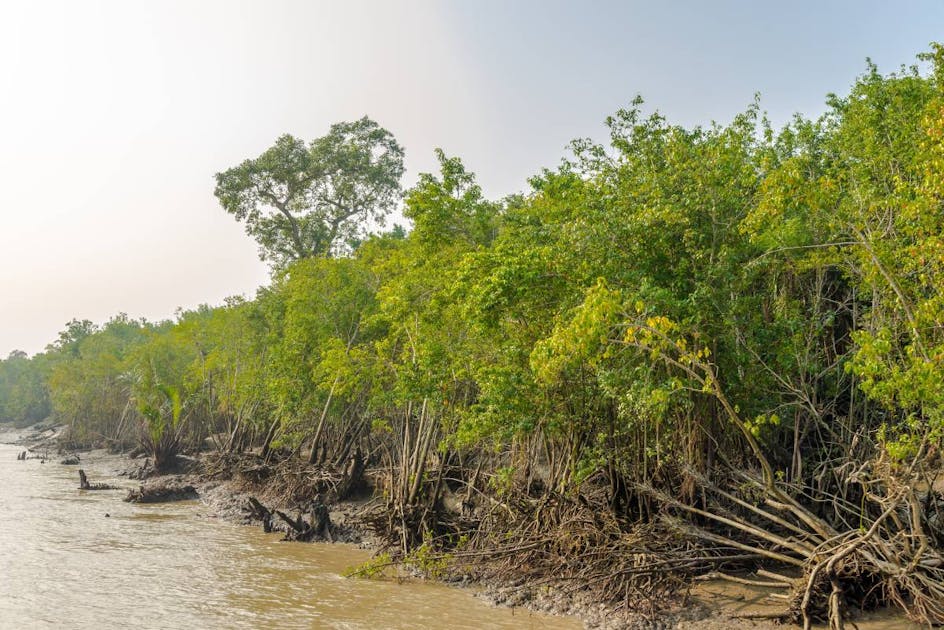
Mangroves dominate this region because they are among the few plant species capable of surviving in saline, waterlogged soil. Their tangled roots stabilise mudflats and absorb wave energy, allowing the world’s largest mangrove forest to function as both an ecosystem and a natural shield. A reliable Sundarbans travel guide frames this forest as a living system rather than a scenic backdrop.
Unlike mountain or savannah landscapes, the Sundarbans cannot be explored on foot. Boats are the only way through, and navigation depends on tides rather than maps. This water-bound geography shapes the pace of travel and explains why many visitors pair the Sundarbans with broader eastern India journeys such as destinations across East and Northeast India, where contrasts between mountains, plains, and deltas deepen the overall travel experience.
Sundarbans National Park and the Meaning of Protection
At the core of the Indian Sundarbans lies Sundarbans National Park, a protected area that anchors the region’s conservation framework. Any responsible Sundarbans travel guide makes clear that this is not a park designed for human convenience. There are no walking trails through the forest and no guarantees of wildlife sightings. Entry is regulated, movement is restricted, and observation happens from a distance.
This approach is precisely why the region has earned recognition as a UNESCO World Heritage Site Sundarbans. The designation reflects ecological value, not visitor infrastructure. For travellers accustomed to more accessible wildlife reserves, this Sundarbans travel guide reframes expectations: here, preservation takes precedence over spectacle.
Those seeking slower, landscape-driven experiences often explore travel ideas shaped around nature-led journeys, where the Sundarbans stand out as a place that rewards quiet observation rather than constant activity.
Wildlife, Waterways, and the Reality of the Forest
No Sundarbans travel guide is complete without addressing wildlife, yet focusing solely on the tiger would distort the reality of the forest. While the region is famous for the Royal Bengal tiger, sightings are rare—not because tigers are scarce, but because dense mangroves offer endless cover. A Royal Bengal Tiger safari in the Sundarbans is therefore defined by anticipation rather than certainty.
The forest supports a wide range of life adapted to brackish conditions:
- Estuarine crocodiles and monitor lizards along muddy banks
- Spotted deer and wild boar moving silently through the undergrowth
- Dolphins surfacing briefly in wide river channels
- Hundreds of resident and migratory bird species
A thoughtful Sundarbans travel guide highlights this biodiversity to help travellers appreciate the ecosystem as a whole, rather than measuring success by a single sighting.
Boat Safari Sundarbans — Travelling at the Forest’s Pace
A boat safari in the Sundarbans experience defines how visitors interact with the region. Boats glide through narrow creeks where overhanging branches block direct sunlight, creating a sense of enclosure that is both immersive and humbling. Engines are often cut to reduce disturbance, allowing natural sounds to dominate.
Watchtowers rise above the canopy at key points, offering rare views across the world’s largest mangrove forest. From these elevated platforms, travellers gain perspective on the sheer scale and complexity of the delta. Those browsing wildlife-focused travel experiences often find the Sundarbans compelling precisely because the experience resists predictability.
For additional context, many travellers consult wildlife conservation travel guidelines and protected mangrove ecosystem overviews before arriving, helping them align expectations with conservation realities.
Climate, Conservation, and Why the Sundarbans Matter
A modern Sundarbans travel guide must address why this forest matters beyond tourism. Mangroves absorb storm surges and reduce the impact of cyclones, protecting millions of people living inland. They also store large amounts of carbon, making the world’s largest mangrove forest a critical component in global climate regulation.
This environmental importance explains why eco-friendly travel practices in the Sundarbans are not optional. Lodges, boats, and guides operate under strict regulations designed to minimise impact. Travellers interested in responsible and sustainability-led travel narratives often view the Sundarbans as a benchmark for low-impact tourism in fragile ecosystems.
International visitors frequently compare the region with global mangrove conservation regions, climate-resilient coastal landscapes, and sustainable wildlife tourism models, finding the Sundarbans uniquely instructive.
Best Time to Visit Sundarbans and Seasonal Shifts
Seasonality shapes every aspect of travel here. Winter months are widely considered the best time to visit Sundarbans, offering cooler temperatures and calmer waters. Summer brings heat but fewer visitors, while monsoon season transforms the delta, restricting access as rivers swell.
A balanced Sundarbans travel guide avoids presenting a single “ideal” season. Instead, it explains how each period reveals a different character of the forest. Understanding the best time to visit Sundarbans depends on comfort levels, wildlife interests, and tolerance for unpredictability.
Travellers planning extended journeys often integrate the Sundarbans into customisable India tour packages, allowing flexibility around weather and travel pace.
Positioning the Sundarbans Within a Larger Journey
For first-time visitors to India, the Sundarbans may appear remote. Yet when framed correctly, they become a powerful contrast to cities, temples, and mountain regions. A well-structured Sundarbans travel guide positions the forest as a reflective pause—a place where nature, rather than itinerary, sets the rhythm.
In this sense, the Sundarbans travel guide is not merely about visiting a forest. It is about understanding how one of the planet’s most fragile yet resilient ecosystems continues to shape life at the shifting edge of land and sea.
Life Inside the Sundarbans — Communities Living With the Forest
A Sundarbans travel guide that focuses only on landscapes and wildlife remains incomplete. The Sundarbans are also home to millions of people whose lives are shaped by tides, forests, and uncertainty. For travellers from outside India, this Sundarbans travel guide introduces a human geography unlike most other destinations—villages that exist not beside nature, but within it.
Settlements in the Sundarbans are scattered across islands connected primarily by waterways. Roads are rare, electricity can be intermittent, and daily life is structured around the rhythm of tides. Any accurate Sundarbans travel guide must explain that these communities are not recent arrivals; they have adapted to this environment over generations, learning how to live alongside one of the planet’s most challenging ecosystems.
Houses are often built on raised plinths to cope with flooding. Boats function as lifelines for transport, trade, and emergency access. This lived reality shapes how travellers experience the region, especially those who approach the Sundarbans through slow-travel destinations across eastern India, where immersion matters more than speed.
Living With Wildlife, Not Just Near It
One of the most striking aspects covered in any serious Sundarbans travel guide is the coexistence between humans and wildlife. The forest is home to predators, including tigers and crocodiles, yet people continue to fish, farm, and collect forest produce at its edges. This coexistence is not romanticised locally; it is managed through caution, tradition, and collective memory.
Villagers entering forest zones for work often follow rituals meant to seek protection. Masks are sometimes worn on the back of the head to deter tiger attacks, reflecting a blend of belief and practical adaptation. A Sundarbans travel guide helps visitors understand that fear and respect are intertwined here, forming a relationship with nature that differs sharply from wildlife tourism models elsewhere.
Travellers interested in cultural depth often combine the Sundarbans with travel ideas focused on indigenous and rural landscapes, where daily life offers as much insight as scenery.
Bonbibi, Belief, and the Spiritual Geography of the Forest
Spiritual belief plays a central role in how people relate to the Sundarbans. Bonbibi, the forest’s guardian deity, represents protection and balance between humans and wildlife. Any culturally sensitive Sundarbans travel guide introduces Bonbibi not as folklore alone, but as a framework through which communities interpret risk and survival.
Shrines dedicated to Bonbibi are found near forest entrances and inside villages. Before entering risky zones, people often pause to seek blessings, acknowledging forces beyond human control. This belief system reinforces humility—an attitude that resonates strongly with visitors seeking meaning beyond surface-level travel.
For international travellers accustomed to separating religion from daily life, this Sundarbans travel guide reveals how belief systems function as survival tools. Those exploring experiential travel narratives rooted in culture often find the Sundarbans particularly powerful for this reason.
Livelihoods Shaped by Tides and Seasons
Economic life in the Sundarbans is deeply seasonal. Fishing, crab harvesting, honey collection, and small-scale agriculture dominate local livelihoods. These activities depend on water levels, salinity, and weather conditions, all of which can change rapidly. A grounded Sundarbans travel guide explains that survival here involves constant adaptation rather than long-term predictability.
Many forest-dependent activities carry significant risk, especially during cyclone season. This vulnerability explains why conservation policies and tourism regulations are taken seriously. For travellers, understanding this context adds depth to interactions with local guides and boat crews, turning observation into informed appreciation.
Visitors often contextualise this experience alongside community-based conservation models, human–wildlife coexistence frameworks, and sustainable rural tourism practices, which highlight the Sundarbans as a living case study rather than an abstract concept.
Tourism as an Alternative, Not a Replacement
Tourism in the Sundarbans is carefully regulated and deliberately limited. Unlike mass-market destinations, the region prioritises low-impact travel. A responsible Sundarbans travel guide frames tourism not as a solution to all economic challenges, but as one of several livelihood options.
Local guides, boat operators, and small lodges benefit directly from visitors, creating incentives for conservation. However, visitor numbers remain controlled to prevent ecological damage. For travellers accustomed to unrestricted access, this approach may feel restrictive, but it preserves the integrity of the world’s largest mangrove forest.

Those planning journeys through responsibly designed wildlife travel routes often find the Sundarbans align naturally with values of restraint and respect.
What Travellers Should Expect From Local Interactions
Encounters in the Sundarbans are typically understated. Hospitality is sincere but not performative. Cultural interactions happen organically—during boat rides, village walks, or shared meals. A realistic Sundarbans travel guide prepares visitors for simplicity rather than spectacle.
Key expectations include:
- Limited luxury, with emphasis on functionality
- Strong reliance on local knowledge and guides
- Conversations shaped by lived experience rather than tourism scripts
For many international travellers, this authenticity becomes the most memorable part of the journey. Those combining the Sundarbans with customisable cultural and nature-focused packages often cite these interactions as defining moments.
Why Human Stories Matter in the Sundarbans
Understanding people is essential to understanding the forest. A complete Sundarbans travel guide places human stories alongside ecological facts, showing how survival, belief, and environment intersect. The Sundarbans are not a wilderness untouched by humanity; they are a shared space negotiated daily between nature and people.
For travellers willing to slow down, listen, and observe, this human dimension transforms the journey from sightseeing into insight. In that sense, a Sundarbans travel guide becomes not just a tool for travel, but a lens through which one of the world’s most complex landscapes can be understood.
Planning Your Journey Using a Sundarbans Travel Guide
For travellers outside India, practical planning determines whether the experience feels seamless or overwhelming. A well-structured Sundarbans travel guide recognises that the region’s remoteness is part of its character, not an obstacle to be eliminated. Reaching the Sundarbans requires layered travel—urban gateways, rural roads, and finally waterways that penetrate the forest itself.
Most journeys begin in Kolkata, the nearest major international hub. From there, travel continues by road to the edge of the delta before transitioning to boats that navigate tidal rivers. Any reliable Sundarbans travel guide prepares visitors for this gradual shift, where infrastructure thins and dependence on local expertise increases. This progression is intentional: it eases travellers into the ecological and cultural realities of the world’s largest mangrove forest.

Travellers often integrate the Sundarbans into broader itineraries using destination routes across eastern India, allowing the forest to serve as a counterbalance to urban and mountain experiences.
Understanding Access, Permits, and Guided Travel
Independent exploration is not permitted in core forest areas, making guided travel essential. A responsible Sundarbans travel guide frames this requirement not as a restriction, but as a safeguard for both visitors and the ecosystem. Licensed guides navigate tidal timings, wildlife protocols, and forest regulations that are invisible to outsiders.
Entry permits regulate access to Sundarbans National Park, while boat movements follow fixed routes designed to minimise disturbance. These controls explain why mass tourism has never taken hold here. For travellers accustomed to flexibility, this structure may feel rigid, but it preserves the integrity of the world’s largest mangrove forest.
Those seeking curated entry points often explore expert-led wildlife and nature travel ideas, where planning centers on conservation boundaries rather than convenience.
Best Time to Visit Sundarbans — A Seasonal Overview
Seasonality shapes every Sundarbans experience. Climate, water levels, and wildlife behaviour shift dramatically throughout the year. A precise Sundarbans travel guide avoids oversimplification, instead presenting seasonal trade-offs clearly so travellers can make informed choices.
Seasonal Overview for Travellers
|
Season |
Conditions |
Travel Implications |
|
Winter (Nov–Feb) |
Mild temperatures, calmer waters |
Widely considered the best time to visit Sundarbans |
|
Summer (Mar–May) |
High heat, fewer visitors |
Intense but quieter experience |
|
Monsoon (Jun–Sep) |
Heavy rain, strong currents |
Limited access, heightened ecological activity |
(Sources: India Meteorological Department (IMD); West Bengal Forest Department)
A nuanced Sundarbans travel guide explains that while winter is often promoted as the best time to visit Sundarbans, each season reveals different ecological dynamics. Monsoon months, though inaccessible for most travellers, are vital for forest regeneration—an insight that deepens respect for the ecosystem even from afar.
Travellers planning around climate often consult regional monsoon behaviour patterns and coastal delta climate data to align expectations with on-ground realities.
Accommodation and Eco-Sensitive Stays
Accommodation options in the Sundarbans are intentionally modest. Lodges prioritise proximity to waterways and adherence to environmental guidelines rather than luxury. A realistic Sundarbans travel guide sets expectations early: comfort here is functional, designed to support exploration rather than replace it.
Eco-sensitive stays limit waste, regulate water use, and operate within designated zones. These measures support eco-friendly travel in the Sundarbans, practices that protect fragile habitats. Travellers seeking alignment with conservation values often compare options through eco-lodge certification frameworks and sustainable tourism accommodation standards before finalising plans.
Many visitors fold the Sundarbans into customisable nature-forward travel packages, allowing flexibility while maintaining environmental responsibility.
Responsible Travel in the World’s Largest Mangrove Forest
Responsibility in the Sundarbans is not an abstract principle—it is enforced by necessity. The world’s largest mangrove forest operates on a delicate balance where disruption has immediate consequences. A credible Sundarbans travel guide, therefore, places responsibility at the centre of the visitor experience.
Key expectations include:
- Maintaining silence during boat safaris
- Avoiding plastic and non-biodegradable waste
- Respecting wildlife distance protocols
- Following the guide instructions without exception
These practices are not symbolic gestures; they are survival mechanisms for an ecosystem already under pressure. Travellers interested in responsible, conservation-led travel philosophies often view the Sundarbans as a benchmark for how tourism can coexist with ecological limits.
International comparisons are frequently drawn with global mangrove conservation initiatives and protected wetland management models, reinforcing the Sundarbans’ global relevance.
Who the Sundarbans Are — and Are Not — For
A candid Sundarbans travel guide clarifies suitability. The Sundarbans reward patience, curiosity, and restraint. They are ideal for travellers interested in ecosystems, cultural coexistence, and slow observation. They are not designed for fast-paced itineraries or luxury-first expectations.
Visitors who thrive here often value silence over stimulation and uncertainty over control. Those expectations align naturally with immersive landscape-driven travel journeys, where the experience is shaped as much by waiting as by witnessing.
The Sundarbans as a Closing Reflection
As the journey draws to a close, the Sundarbans resist tidy conclusions. A Sundarbans travel guide cannot promise dramatic wildlife encounters or postcard-perfect views. What it offers instead is perspective. Time spent in the world’s largest mangrove forest alters how travellers think about land, water, and coexistence.
The absence of certainty—about tides, sightings, or schedules—becomes the lesson itself. In the Sundarbans, humans are temporary participants in a system far older and more resilient than any itinerary. This understanding lingers long after the final boat ride ends.
For travellers willing to engage on those terms, the Sundarbans travel guide becomes more than a planning tool. It becomes an invitation to witness how life persists at the shifting edge of land and sea.