
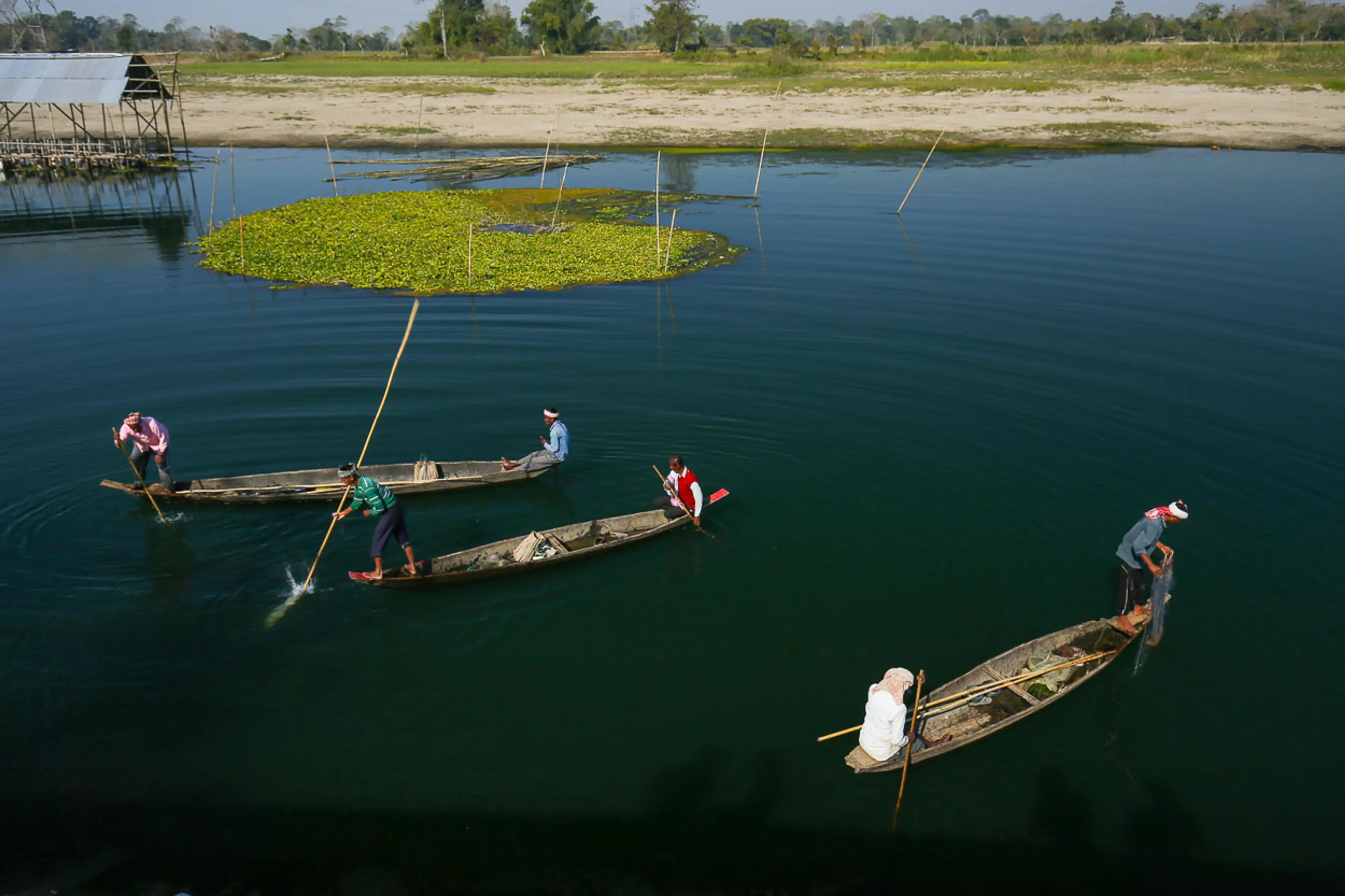
Majuli Island, Assam: Cultural History, River Landscape, and Tourism Value
Majuli Island, Assam, is not simply a geographical formation shaped by the Brahmaputra River; it is a living historical and cultural landscape where nature, belief, and human adaptation have evolved together over centuries. Often recognised as the world’s largest river island, Majuli Island in Assam occupies a singular place in India’s cultural geography, defined not by monumental architecture but by continuity of life. The island’s identity is inseparable from water, movement, and resilience.
The historical importance of Majuli Island, Assam, lies in its uninterrupted human presence despite repeated environmental disruptions. Floods, erosion, and shifting river channels have never erased settlement here. Instead, communities adapted their architecture, agriculture, and social organisation to work with the river’s rhythms. This adaptive heritage places Majuli Island, Assam, within broader conversations on sustainable heritage landscapes, where survival depends on coexistence rather than control.
In recent decades, Majuli Island in Assam, has gained prominence among travellers seeking cultural depth, ecological understanding, and slower forms of tourism. Its appeal reflects global shifts toward meaningful travel experiences, often discussed within slow travel philosophy, where authenticity matters more than speed or luxury.
River Geography and Early Human Settlement on Majuli Island
The origins of Majuli Island in Assam are deeply tied to the dynamic behaviour of the Brahmaputra River. Over centuries, sediment deposition and erosion reshaped the river’s course, gradually forming a vast river island system. Historical memory suggests that Majuli Island, Assam, was once connected to the mainland before dramatic hydrological changes separated it into an island.
This unstable geography did not discourage early settlement. Instead, it fostered resilience and innovation. Communities on Majuli Island of Assam relied on agriculture, fishing, and river-based trade, developing a sophisticated understanding of flood cycles and soil fertility. Seasonal flooding enriched the land, enabling rice cultivation and supporting a stable food system. These practices align closely with principles found in traditional agrarian systems.
As settlements expanded, Majuli Island of Assam developed strong communal structures. Shared labour during floods, harvesting, and rebuilding reinforced collective responsibility. This cooperative organisation remains central to island life and is frequently examined within community resilience frameworks that study long-term adaptation in vulnerable landscapes.
Beyond its physical formation, Majuli Island, Assam developed historical significance as a space of continuity in a landscape defined by impermanence. Over generations, families remained tied to specific stretches of land despite erosion and relocation, preserving oral histories and place-based identities. This continuity has made Majuli Island Assam a valuable reference point in riverine settlement studies, where long-term habitation under unstable environmental conditions is rarely sustained.
Historical livelihoods on Majuli Island Assam were closely linked to seasonal cycles rather than fixed calendars. Agricultural planning, fishing practices, and even social events were timed according to river behaviour, reinforcing a culture of environmental literacy. Such practices are often examined within traditional ecological knowledge systems, particularly in regions where formal infrastructure arrived late.
The island’s historical trajectory also highlights how decentralised communities function without urban cores. Villages operated autonomously yet remained socially interconnected, a pattern increasingly relevant to decentralised rural development models. These historical patterns continue to influence how Majuli Island Assam adapts to present-day challenges.
Brahmaputra River Dynamics and the Development of Riverine Communities
The physical formation of Majuli Island Assam reflects centuries of geomorphological change driven by shifting river channels. Early settlements were intentionally flexible, constructed with bamboo, cane, and timber rather than permanent materials. Homes were raised on platforms to allow floodwaters to pass beneath, reducing damage and enabling quick reconstruction. This approach is often highlighted in flood-adaptive architecture discussions.
River trade also played a key role in shaping early settlement patterns. Boats transported rice, fish, handwoven textiles, and artisanal products between Majuli Island Assam and the mainland, integrating the island into regional economic networks. These exchanges preserved cultural autonomy while encouraging interaction, a system frequently analysed in indigenous river economies.
The legacy of these early settlements remains visible today in village layouts, agricultural rhythms, and community organisation. For visitors interested in historical landscapes and human ecology, Majuli Island Assam offers a rare example of long-term coexistence with a powerful river system, often explored through human–environment interaction studies.
Living Cultural Traditions and Religious Heritage of Majuli Island
The cultural prominence of Majuli Island Assam reached its height during the medieval period with the rise of the neo-Vaishnavite movement. This spiritual reform reshaped Assamese society by emphasising devotion, equality, and artistic expression. Majuli Island Assam emerged as the movement’s principal centre, hosting monastic institutions known as satras.
These satras transformed Majuli Island Assam into a cultural heartland. Beyond religious practice, they functioned as centres of education, performance, and artistic training. Classical dance, devotional music, theatre, and manuscript traditions flourished, positioning the island within intangible cultural heritage studies that focus on living traditions rather than preserved artefacts.
What distinguishes the cultural heritage of Majuli Island Assam is continuity. Traditions are not maintained as static symbols but practiced daily as part of community life. Rituals and festivals remain embedded in everyday routines, reinforcing the island’s cultural depth and aligning with cultural continuity models.
The cultural endurance of Majuli Island Assam lies not only in its institutions but in everyday cultural transmission. Artistic skills such as weaving, mask-making, and music are passed through observation and participation rather than formal instruction. This informal pedagogy has allowed cultural knowledge to survive disruption, aligning Majuli Island Assam with living heritage frameworks that prioritise practice over preservation.
Cultural life on Majuli Island Assam is also deeply spatial. Performance spaces, prayer halls, courtyards, and riverbanks function as cultural nodes where art and spirituality intersect. These shared spaces foster collective memory and social cohesion, often discussed in community space theory within cultural geography.
Importantly, Majuli Island Assam has avoided excessive cultural commodification. While tourism has increased visibility, rituals remain rooted in local meaning rather than visitor expectation. This balance is frequently highlighted by heritage sustainability discourse, which examines how communities retain agency over their traditions while engaging with external audiences.
Monastic Institutions and Cultural Transmission on Majuli Island
The satras of Majuli Island Assam continue to serve as custodians of Assam’s most important cultural traditions. Dance, music, theatre, and mask-making are practiced regularly, with masks becoming emblematic of the island’s artistic identity. These practices are frequently referenced in indigenous art preservation discourse.
Festivals hosted at the satras transform Majuli Island Assam into a vibrant cultural landscape. These events are integral to social and spiritual life rather than staged tourism products. Visitors encounter traditions in their original context, a quality recognised by cultural preservation initiatives and heritage education platforms concerned with safeguarding living heritage.
Through its satras, Majuli Island Assam demonstrates how religious institutions can act as cultural anchors, sustaining knowledge systems while remaining socially relevant across centuries, a model often discussed within community-based heritage management.
Majuli Island as a Sustainable and Community-Led Tourism Destination
In the contemporary tourism landscape, Majuli Island Assam has emerged as a destination aligned with sustainable and responsible travel values. Its appeal lies not in luxury infrastructure but in immersive experiences rooted in community interaction. Travellers visit Majuli Island Assam to stay in homestays, cycle through villages, observe farming practices, and engage with local artisans, approaches promoted by responsible tourism networks.
Tourism on Majuli Island Assam supports local livelihoods by creating demand for traditional crafts and regional cuisine. Community-led tourism ensures that economic benefits remain within the island, strengthening resilience against environmental pressures. This model is widely discussed in eco-travel forums and slow travel movements focused on ethical tourism.
Nature-based tourism also plays a growing role. Wetlands and grasslands surrounding Majuli Island Assam attract migratory birds and diverse ecosystems, making the island appealing to conservation-minded travellers often associated with wetland conservation travel.
Beyond its physical formation, Majuli Island Assam developed historical significance as a space of continuity in a landscape defined by impermanence. Over generations, families remained tied to specific stretches of land despite erosion and relocation, preserving oral histories and place-based identities. This continuity has made Majuli Island Assam a valuable reference point in riverine settlement studies, where long-term habitation under unstable environmental conditions is rarely sustained.
Historical livelihoods on Majuli Island Assam were closely linked to seasonal cycles rather than fixed calendars. Agricultural planning, fishing practices, and even social events were timed according to river behaviour, reinforcing a culture of environmental literacy. Such practices are often examined within traditional ecological knowledge systems, particularly in regions where formal infrastructure arrived late.
The island’s historical trajectory also highlights how decentralised communities function without urban cores. Villages operated autonomously yet remained socially interconnected, a pattern increasingly relevant to decentralised rural development models. These historical patterns continue to influence how Majuli Island Assam adapts to present-day challenges.
Modern tourism has introduced new opportunities and responsibilities for Majuli Island Assam. Visitors increasingly arrive with expectations of ethical engagement rather than passive consumption. This shift has encouraged locally managed tourism initiatives that prioritise cultural respect, environmental sensitivity, and community benefit, principles often promoted within ethical tourism standards.
Tourism has also diversified income sources for residents of Majuli Island Assam. Alongside agriculture, households now engage in hosting, guiding, craft production, and cultural interpretation. These supplementary livelihoods enhance resilience without replacing traditional practices, a balance frequently explored in rural livelihood diversification models.
Equally important is visitor education. Tourism on Majuli Island Assam increasingly emphasises learning — about river ecology, climate adaptation, and cultural continuity. This educational dimension positions the island within experiential tourism models, where travel becomes a form of knowledge exchange rather than entertainment. Such approaches strengthen long-term sustainability while enriching the visitor experience.
Ethical Travel Practices and Community Engagement in Majuli
Responsible tourism is essential to preserving the fragile balance of Majuli Island Assam. Visitors are encouraged to respect local customs, minimise waste, and choose community-run accommodations. Homestays allow travellers to experience traditional food systems and daily routines while contributing directly to household incomes, reflecting community-based tourism models.
Majuli Island Assam also functions as an educational destination. Visitors gain insights into climate adaptation, river ecology, and cultural resilience through engagement with sustainable tourism councils, river conservation programmes, and handloom promotion bodies that connect tourism with long-term stewardship.
Across Assam’s wider tourism narrative, Majuli Island Assam is increasingly connected through regional heritage circuits, Assam cultural trails, eco-travel guides, and heritage learning journeys, positioning the island as a cornerstone of meaningful travel in the region.
Ultimately, Majuli Island Assam represents a convergence of history, belief, and environment. Its importance for tourists lies in the opportunity to engage with a living cultural landscape shaped by centuries of adaptation. As global travel continues to shift toward authenticity and sustainability, Majuli Island Assam stands as a compelling example of how heritage and tourism can coexist without compromise.