
How Colonial, Indigenous, and Himalayan Buddhist Cultures Intersect Across Eastern India: A Regional Reading for Foreign Travellers
For many first-time visitors, India appears as a single cultural entity—dense, complex, sometimes overwhelming. But that perception begins to unravel the moment one moves across regions. Nowhere is this shift more visible than in eastern India, where a journey from Kolkata to the Himalayan belt gradually reveals how geography reshapes culture.
What starts as an encounter with colonial history kolkata travel evolves into a lived experience of tea estates, and eventually settles into the quiet rhythms of monastery life. This is not simply travel—it is a transition across civilizational layers.
Kolkata: Colonial Legacy Meets Contemporary Urban Identity
Kolkata is not just a city—it is an archive. As the former capital of British India until 1911, it retains a deeply embedded colonial framework that continues to influence its identity today.
Walking through the city, one encounters a layered urban fabric: Victorian buildings stand alongside crowded bazaars, while tramlines cut through streets that have hosted political debates, literary movements, and intellectual revolutions for over a century. This is where cultural travel eastern india often begins—not in quiet observation, but in immersion.
What defines Kolkata culturally is not just its past, but its continuity. The city’s engagement with literature, politics, and art has created a distinctly reflective social character. For foreign travellers, this can feel intense, even disorienting, but it is also deeply revealing.
Cultural Markers of Kolkata
|
Aspect |
Observation |
|
Architecture |
Colonial-era buildings, administrative institutions |
|
Language |
English widely understood alongside Bengali |
|
Social Culture |
Intellectual discourse, literature, political awareness |
|
Urban Rhythm |
Dense, fast-moving, layered |
This is also where travellers begin to realise that authentic travel experiences india are rarely passive. Kolkata demands participation—through conversation, observation, and engagement.
Darjeeling: Tea, Hills, and a Hybrid Cultural Identity
As one moves northward, the landscape shifts dramatically. The plains give way to hills, the air cools, and the pace slows. But the more important transformation is cultural.
Darjeeling represents a unique convergence of influences. Built as a colonial hill station, it later evolved into a tea-producing region that shaped both its economy and its identity. Today, the region reflects a blend of Nepali, Tibetan, and colonial legacies.
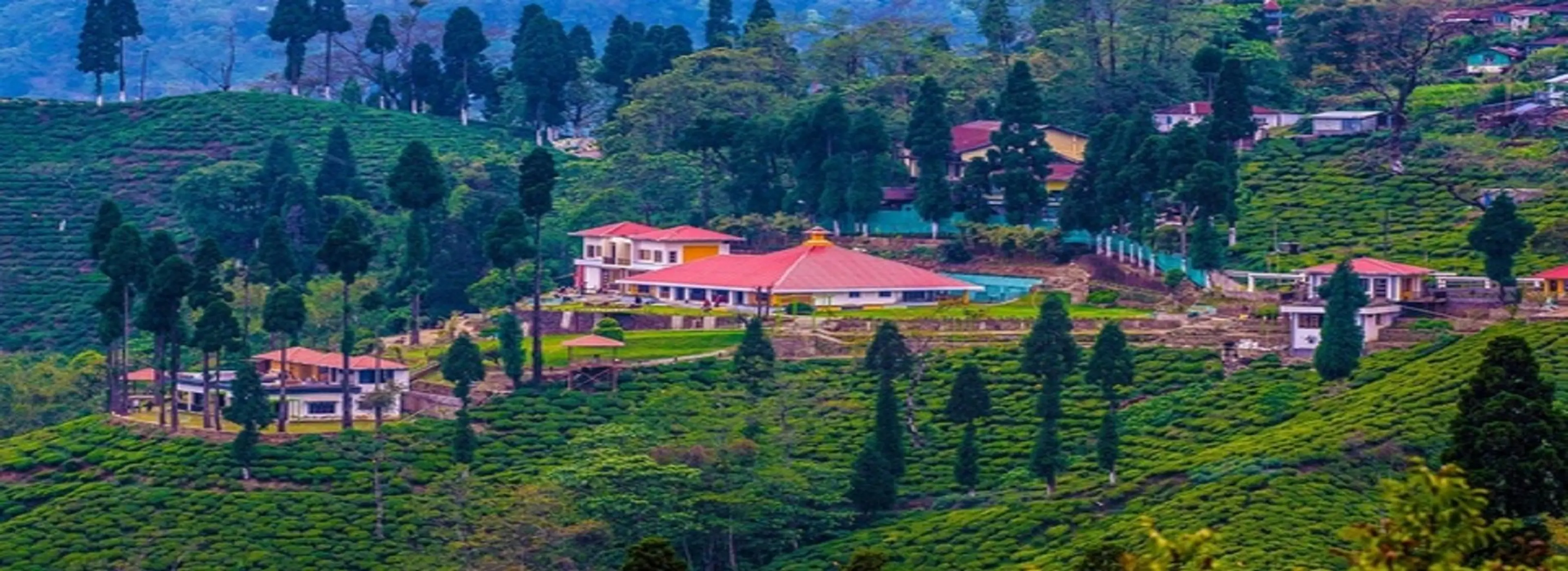
The presence of the darjeeling tea garden is not just aesthetic—it is structural. Tea estates define land use, labour systems, and even social hierarchy. For a foreign traveller, understanding this context is essential to interpreting the landscape beyond its scenic beauty.
What Defines Darjeeling Culturally
- Tea estates as the economic backbone
- Nepali-speaking majority shaping local identity
- Colonial institutions still visible in architecture and education
- Strong hill culture distinct from the plains
Here, the darjeeling tea garden experience becomes more than a visual attraction—it becomes a window into how global demand has historically shaped local lives.
This is also where travellers begin to encounter local life darjeeling hills, which is quieter, more community-oriented, and less confrontational than Kolkata’s urban energy.
Sikkim: Buddhist Worldview and Mountain Ecology
Crossing into Sikkim introduces an entirely different cultural framework. The shift is not just visual—it is philosophical.
Rooted in Tibetan Buddhism, Sikkim’s cultural life revolves around monasteries, rituals, and a deeply embedded respect for nature. The landscape is not merely physical—it is spiritual. Mountains are not just formations; they are presences.
The influence of monasteries in sikkim culture is visible everywhere—from architecture to daily routines. Prayer flags, chants, and festivals are not performances for tourists, but integral elements of life.
At the same time, communities such as the Lepcha and Bhutia maintain traditions that predate modern state structures, offering insight into the traditional lifestyle eastern himalayas.
Cultural Contrast: Darjeeling vs Sikkim
|
Aspect |
Darjeeling |
Sikkim |
|
Cultural Base |
Hybrid (colonial + Nepali) |
Buddhist Himalayan |
|
Economy |
Tea-driven |
Agriculture + tourism |
|
Social Rhythm |
Moderate |
Slow, reflective |
|
Worldview |
Social-economic |
Spiritual-ecological |
For travellers exploring village life sikkim india, the experience often feels quieter, more introspective, and deeply connected to the environment.
Understanding the Cultural Gradient Across Regions
The most important insight for a foreign traveller is this: culture in eastern India is not static—it is shaped by geography.
As one moves from Kolkata to Darjeeling to Sikkim, several factors shift simultaneously:
- Altitude
- Climate
- Economic structure
- Historical exposure
- This creates what can best be described as a cultural gradient.
What Travellers Typically Experience
- Kolkata → intense, intellectual, historically layered
- Darjeeling → transitional, scenic, culturally hybrid
- Sikkim → calm, spiritual, internally cohesive
This progression reflects how culture changes across regions india, not as an abstract idea, but as a lived experience.
It also explains why slow travel eastern himalayas is far more meaningful than rushed itineraries. The transitions themselves are the experience.
For those seeking offbeat places in sikkim and darjeeling, understanding this gradient becomes essential. Without it, destinations remain surface-level; with it, they become deeply contextual.
Why This Journey Matters for Foreign Travellers
Many international travellers arrive in India expecting diversity—but few anticipate its intensity across such short distances.
In eastern India, the journey is not about ticking locations. It is about observing how:
- colonial systems shaped urban identity
- global trade influenced hill economies
- spiritual traditions continue to guide mountain societies
This layered understanding transforms travel into interpretation.
It also reframes expectations. Instead of asking “what to see,” travellers begin to ask:
- what to expect in indian villages
how people live, think, and relate to their environment
This is where rural tourism sikkim and similar experiences gain depth—not as tourism products, but as cultural encounters.
Reflecting
To travel across Kolkata, Darjeeling, and Sikkim is to move through different ideas of life itself.
In one region, culture is debated.
In another, it is worked.
And in the mountains, it is lived quietly.
For a foreign traveller, this journey does not simplify India—it complicates it in the best possible way. And in doing so, it offers something rare: not just movement across space, but movement across understanding.